You're shopping condos on the north end of the Grand Strand and quickly realizing that "North Myrtle Beach condo" covers wildly different products at wildly different price points. Here's how to actually compare them. Whether you're buying to retire, to rent out, or as a second home you'll use part of the year, the differences between buildings matter far more than the marketing suggests. Complexes like Coquina Harbour Condos feel completely different than direct oceanfront resort towers even though they're a short drive apart.
The Four Condo Categories You'll Encounter
North Myrtle Beach condo inventory splits into a few distinct buckets.
- - Direct oceanfront resort condos. High-rise buildings on Ocean Boulevard with hotel-like amenities, front desk service, rental infrastructure, and premium pricing. Vacation-rental focused.
- - Ocean-block low-rise condos. Smaller buildings a block or two from the ocean, mix of rental and full-time ownership, more residential feel than the towers.
- - Marina and Intracoastal Waterway condos. Water-facing but not oceanfront, boat access, working-harbor character.
- - Inland golf and amenity community condos. Communities like Barefoot Resort with amenity access at lower entry prices, further from the actual sand.
Each category serves a different buyer. Sort which one fits before comparing specific buildings.
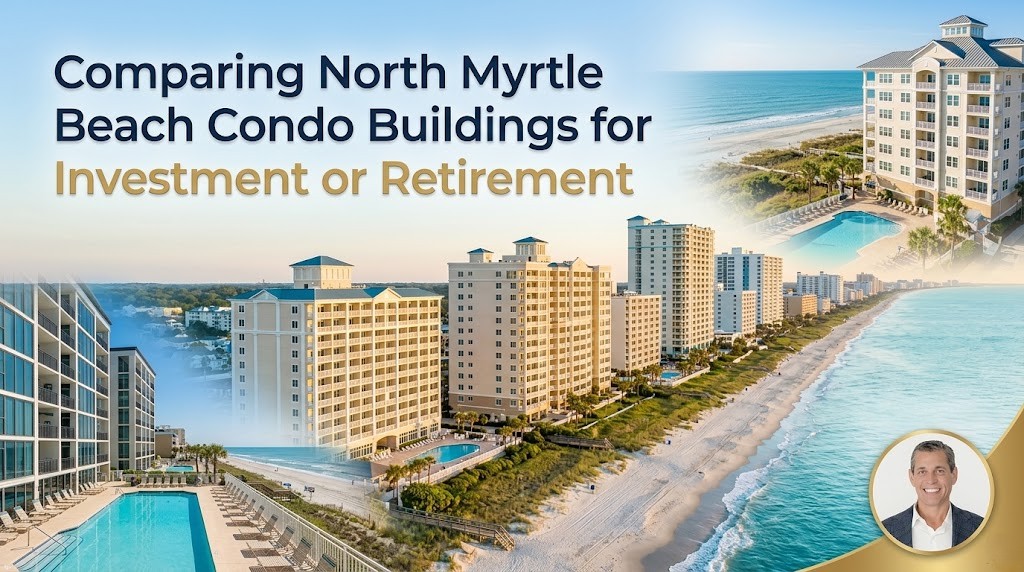
Direct Oceanfront Resort Condos
These are the buildings most out-of-state buyers picture when they imagine "Myrtle Beach condo." Hotel-style operations, elevators, pools, lobby services, rental programs. Prices depend heavily on view (direct oceanfront versus side view versus city view), floor, and building age.
Who fits: buyers who want vacation-rental income, buyers who'll use the property a few weeks a year and rent the rest, and buyers who value hands-off management.
What to verify: HOA reserve health (older resort buildings often carry special assessment risk), rental program economics (on-site programs typically take 40-60 percent commission), master insurance coverage versus your HO-6 responsibility, and any pending capital projects.
Ocean-Block Low-Rise Condos
Smaller buildings one to three blocks from the ocean have a distinctly different feel. Less resort intensity, more residential character, mix of full-time and part-time owners. Many are in neighborhoods like Cherry Grove or the Ocean Drive corridor.
Who fits: buyers who want beach proximity without hotel-style building operations, buyers who plan to live there part-time or full-time, retirees who value walkability over amenity intensity.
What to verify: rental rules if you'll rent occasionally, parking arrangements (limited in some pockets), flood zone status, and building age since many of these are older stock.
Marina and Intracoastal Waterway Condos
The character shifts significantly when you move to marina-community condos. Working harbor feel, actual boat access, less tourist intensity, different buyer demographics. Coquina Harbour delivers the working-harbor version. Cypress Bay Condos offers a more affordable entry into the marina lifestyle. Gardens at Cypress Bay Condos serves a specific quieter niche within the same general area.
Who fits: boaters, retirees who want water access without oceanfront pricing, buyers who value the working-harbor character.
What to verify: dock and slip arrangements (some convey with the unit, some are separate), water depth at low tide if you own a boat, HOA rules on rental if applicable, and specific building maintenance history for marina-adjacent construction that faces salt and water exposure.
Inland Amenity Community Condos
Complexes in Barefoot Resort and similar inland amenity-community developments offer resort-scale amenities at price points below beach-block alternatives. Golf, pools, community facilities, sometimes gated entry.
Who fits: buyers who value amenity depth over daily beach proximity, snowbirds who use the amenities more than the ocean, buyers who want gated community feel.
What to verify: which amenities are actually included in the HOA versus fee-based, community financial health, and the realistic use pattern for you (some amenities that look great in the brochure get used weekly by residents; others sit).
What Matters More Than Location
Location is what first-time condo buyers focus on. Experienced condo buyers focus on the building itself.
- - Reserve funding percentage. Well-funded reserves mean special assessments are less likely.
- - Meeting minutes from the last two years. Reveal what the community is actually dealing with day to day.
- - Rental restrictions. Can you rent short-term, long-term, or not at all? Matters even if you don't plan to rent.
- - Owner-occupancy ratio. Affects both community feel and conventional financing eligibility.
- - Master insurance coverage details. What's covered by the building policy versus your unit policy.
- - Assessment history over the last 5-10 years. Patterns predict future assessments.
Buyers who evaluate the building itself consistently outperform buyers who fell for the unit's finishes without checking the fundamentals.
Financial Realities Investors Should Consider
Investor buyers need to layer additional analysis.
Property tax at 6 percent non-primary residence rate versus 4 percent primary. On a $400,000 unit this difference alone runs into thousands per year.
Rental program commission versus independent management. On-site programs take 40-60 percent of gross for hands-off operation. Independent management runs 20-30 percent but requires more owner involvement.
Insurance layered coverage. Coastal wind and hail plus flood if applicable adds meaningfully to monthly carrying costs.
Realistic rental income versus marketing claims. Get actual rental history for the specific unit, not building-wide averages.
Special assessment probability given reserve position and building age. Investors who don't account for this often see returns evaporate mid-hold.
What Retiree Buyers Should Consider Differently
Retirees have a different set of priorities.
Age-in-place features. Elevator access, unit layout, and building accessibility all matter over 20 years of ownership.
HOA financial predictability. Fixed incomes don't easily absorb surprise special assessments.
Community demographic mix. Some buildings skew heavily retiree; others are mostly vacation renters. Match to how you want to live.
Actual daily-life amenities within reach. Grocery, healthcare, restaurants, community activities.
For broader Little River-area inventory context, browse Little River real estate alongside the specific building comparisons.
Two Things I Tell Every NMB Condo Buyer
First, tour multiple building categories before committing to one. Direct oceanfront feels different than ocean-block low-rise, which feels different than a marina condo, which feels different than an inland amenity community. Buyers who commit to one category without seeing others sometimes wish they'd known other options existed.
Second, read the HOA documents like you mean it. Reserve study, last two years of meeting minutes, master insurance policy, rental rules, and assessment history. The buildings where these documents raise concerns are the buildings where ownership becomes painful. Better to find out during the inspection period than in year three.
Key Takeaways
- - NMB condo inventory splits into direct oceanfront resort, ocean-block low-rise, marina/ICW, and inland amenity community categories — each serves different buyers
- - Direct oceanfront resort condos work for vacation-rental focus and hands-off management, with special assessment risk to verify
- - Ocean-block low-rise offers residential feel with beach proximity, better fit for full-time or serious part-time owners
- - Marina and ICW condos (Coquina Harbour, Cypress Bay, Gardens at Cypress Bay) serve boaters and buyers wanting water without oceanfront pricing
- - Inland amenity community condos deliver resort-scale amenity access at lower entry prices, further from the sand
- - The building itself matters more than the unit finishes — verify reserves, meeting minutes, rental rules, owner-occupancy ratio, master insurance, and assessment history
- - Investors should layer property tax at 6 percent, rental program economics, layered insurance, actual unit rental history, and assessment probability
- - Retirees should prioritize age-in-place features, HOA financial predictability, demographic mix, and daily-life amenities
- - Tour multiple building categories before committing and read HOA documents seriously
About Greg Harrelson
Greg Harrelson is a seasoned Realtor® with more than 30 years of experience serving the Myrtle Beach and Grand Strand markets. As the founder of Century 21 The Harrelson Group, Greg has built his career helping buyers, sellers, and investors achieve success in every corner of the coastal Carolina real estate market. His expertise spans residential homes, investment properties, land development, and coastal condos. Known for his deep local knowledge, innovative marketing strategies, and commitment to personal service, Greg consistently helps clients reach their real estate goals while navigating the ever-changing market with confidence and precision.