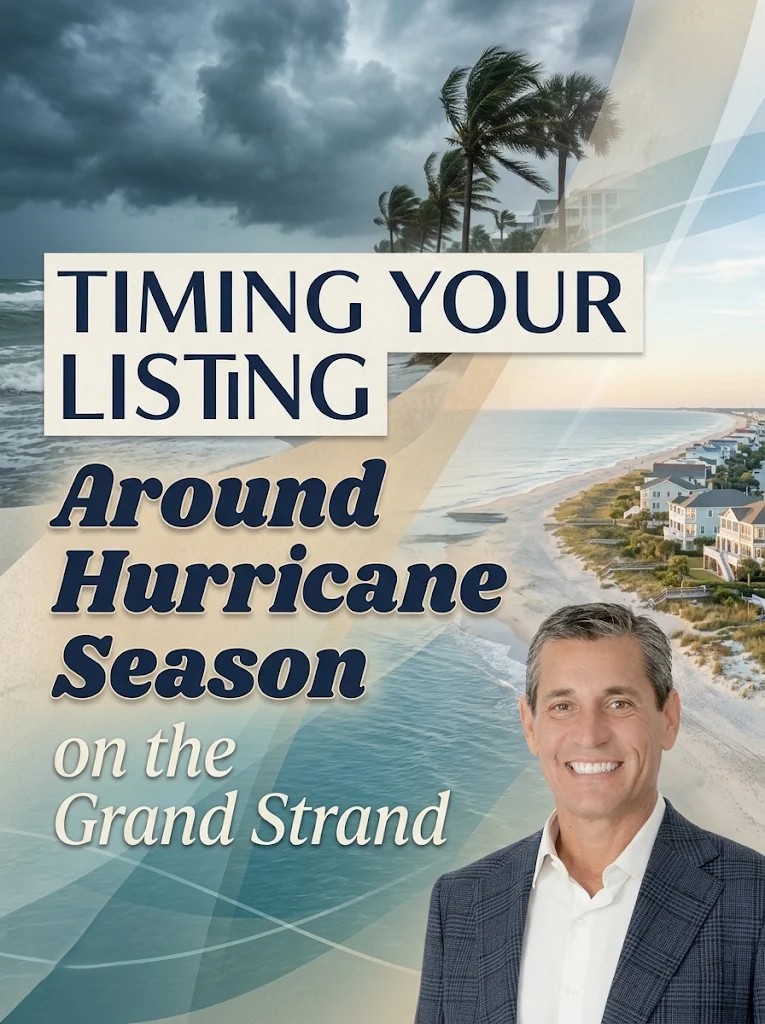
The best time to list on the Grand Strand is usually late winter through spring, before the Atlantic hurricane season starts on June 1. That doesn't mean you can't sell in the fall. It means a listing that goes live in August or September carries a storm risk that a March listing doesn't. If you're thinking about selling your home in Horry County, here's how to time it and protect your deal.
Does Hurricane Season Hurt Home Sales on the Grand Strand?
It slows some deals and stalls others, and it rarely kills a well-prepared one. The season runs June 1 through November 30, with the most active stretch usually in late summer and early fall. When a named storm heads toward the Carolinas, showings stop, inspections get postponed, and closings sometimes slip a few days while everyone deals with evacuations and power.
The real trouble is insurance. When a storm threatens the coast, insurance companies stop binding new policies. A buyer who didn't lock in coverage before the storm can't close until the hold lifts. I've seen contracts held up for a week or more over exactly this, and the seller carried the stress.
When Is the Best Time to List a Home Near Myrtle Beach?
For most sellers, I'd aim for a listing date between February and April. Snowbirds and spring visitors are in town, out-of-state buyers are planning summer moves, and you've got months before storm season starts. A contract signed in April has plenty of room for inspection, appraisal, insurance, and closing before June.
A fall listing can still work, especially in the weeks after the season winds down in late November. Buyers who spend the summer shopping and the fall deciding often come back ready to act. Look at what's moved recently using the recently sold Conway homes list, and check comparable timing near you, because a golf community and an inland neighborhood don't always follow the same calendar.
What Should Sellers Do to Protect a Deal During Storm Season?
Build a few safeguards into the contract and the prep.
- - Gather your wind mitigation report, roof age, and any recent insurance claims before you list. Buyers' insurers will ask for them.
- - Ask your insurance agent for your current policy details and be ready to share them. A transferable policy history helps the buyer.
- - Build a closing window with room in it. A 45-day close beats a 25-day close in September.
- - Keep the yard clean and secure loose items. A storm-damaged listing photo isn't a good start.
If a storm does hit during your contract, call your agent first, then your insurance carrier. Document any damage with photos before you touch anything. A buyer is entitled to a final walk-through before closing, and you're better off showing them a home you've already inspected than one you haven't seen since the storm.
How Does Insurance Change Your Pricing and Your Buyer Pool?
Insurance costs shape what buyers can afford on the coast. A buyer who gets a high quote on wind and hail or flood coverage has a smaller price range than the same buyer last year. Many Grand Strand sellers don't think about it until the first buyer drops out. Talk to a local agent or an insurance agent about property insurance in the Conway area so you know what a buyer will face.
Homes in lower-risk flood zones with newer roofs and clean mitigation reports usually have an easier path. If your home has an older roof, price it with that in mind, or fix it before you list. Buyers in Myrtle Beach real estate shop with insurance quotes in hand, and they'll walk away from a house whose coverage costs more than their mortgage can bear.
Key Takeaways
List between February and April if you can, so your contract closes well before storm season begins on June 1. If you list in the fall, build extra time into the closing window and have your roof age, wind mitigation report, and insurance history ready. Insurance holds during a storm can stall a buyer, so protect the deal with flexible dates and good communication. Know what coverage costs in your zone, because it shapes your buyer pool and your price.
Frequently Asked Questions
Can a buyer back out of a contract because of a hurricane?
It depends on the contract terms and what the storm actually does. If the home is damaged before closing, the contract usually addresses repair or termination, so talk to your agent and attorney right away.
Do I need to tell buyers about past storm damage?
Yes. South Carolina sellers must disclose known material defects, including prior damage and repairs, on the disclosure statement. Be complete and be accurate.
Will insurance stop my buyer from closing during a storm?
It can. Insurers often stop binding new coverage when a storm threatens the coast, so a buyer without a bound policy may have to wait. A closing window with some give protects you.
Is the fall a bad time to sell on the Grand Strand?
No, but it carries more risk until the season ends November 30. After that, many sellers find motivated buyers who are ready to move before spring.
About Greg Harrelson
Greg Harrelson is a seasoned Realtor® with more than 30 years of experience serving the Myrtle Beach and Grand Strand markets. As the founder of Century 21 The Harrelson Group, Greg has built his career helping buyers, sellers, and investors achieve success in every corner of the coastal Carolina real estate market. His expertise spans residential homes, investment properties, land development, and coastal condos. Known for his deep local knowledge, innovative marketing strategies, and commitment to personal service, Greg consistently helps clients reach their real estate goals while navigating the ever-changing market with confidence and precision.