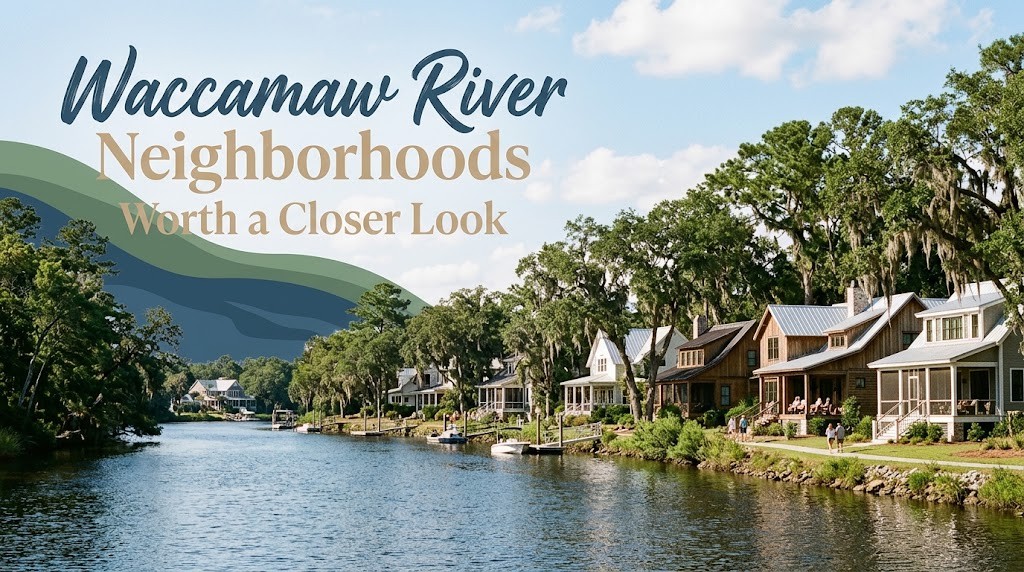
The Waccamaw River threads through the back of Conway and shapes a specific slice of the local housing market. Buyers who want water proximity but not coastal-tourist intensity often end up walking properties along or near the river. Here's what most buyers miss. The Waccamaw corridor isn't one uniform market — it's a series of distinct neighborhoods, each with its own character, its own flood profile, and its own trade-offs. Whether you're chasing true river frontage in Conway riverfront homes or a quieter river-adjacent option, here's the honest map.
What the Waccamaw Actually Delivers as a Housing Feature
Understand what you're actually getting when you buy near this river. The Waccamaw is a blackwater river — dark, slow-moving, tannin-stained, lined with cypress trees. It supports kayaking, small-boat cruising, fishing, and paddleboarding, but it's not a working navigable channel like the Intracoastal. Water levels rise and fall meaningfully with rainfall.
Living near the Waccamaw means quiet water, wildlife views, and a specific aesthetic that most coastal SC housing doesn't offer. It also means dealing with flood zones, insurance layers, and the specific maintenance realities of homes near freshwater.
Cat Tail Bay for Waccamaw-Adjacent Character
Cat Tail Bay offers a distinctive natural setting that leverages the surrounding Waccamaw ecosystem. Water features, wildlife presence, tree cover, and lot depth combine to create a residential experience that feels genuinely rural despite being close to Conway proper.
Who fits: buyers who value natural setting over standard subdivision feel, retirees who enjoy the water and wildlife, families with kids who'll actually use the outdoors.
Beach Gardens for Established Residential Feel
Beach Gardens sits in a settled Conway pocket with real neighborhood identity. Mature landscaping, established neighbor relationships, and the kind of community feel that pure new subdivisions can't manufacture yet. Not directly on the river for most homes, but part of the Waccamaw-adjacent lifestyle that draws buyers to this side of Conway.
Pottery Landing for Distinctive Character
Pottery Landing gets less marketing attention than some of the more prominent Conway pockets, but the character of the homes and lots stands out from typical suburban builder inventory. Deeper lots, more architectural variety, and a location that feels connected to the river system without necessarily being oceanfront.
Conway Plantation for Established Community
Conway Plantation represents another Waccamaw-corridor option that combines established community feel with proximity to the river system. Buyers who want the neighborhood identity of a mature development alongside the natural setting of the Waccamaw area often land here.
The Direct Riverfront Category
Not every Waccamaw home is directly on the water. True riverfront properties — homes with actual frontage on the Waccamaw or its tributaries — form their own category with premium pricing and specific due diligence needs.
What to verify on true riverfront:
- - Elevation certificate and flood zone status (most true riverfront sits in AE zones)
- - Dock permits and whether an existing dock conveys
- - Water access practicality — some frontage supports boats, some only kayaks
- - Erosion patterns along the bank over time
- - Flood insurance costs specifically for the property
- - Historic flooding at the address, particularly from major events like Hurricane Florence
The Conway riverfront homes inventory captures most of the true-frontage options. Buyers should tour multiple frontage types before committing to a specific parcel.
Historic Downtown Conway's River Connection
Downtown Conway sits along the Waccamaw and the historic district's Riverwalk connects the neighborhood directly to the water. This isn't riverfront ownership in the traditional sense — most historic district homes don't have direct water frontage — but daily walks, community events, and the general lifestyle here are shaped by the river's presence.
Retirees, remote workers, and families who value walkable urban-adjacent living without leaving the river's influence often prefer historic Conway to specific waterfront communities.
Insurance and Flood Zone Realities Across the Corridor
Waccamaw-area insurance varies significantly by exact address.
True riverfront in AE or A flood zones requires flood insurance and typically carries higher premiums. Elevation certificates matter significantly.
Waccamaw-adjacent homes a block or two off the water often sit in Zone X with standard insurance. The dividing lines can be surprising — verify by exact address.
Historic downtown Conway homes have varied flood zone designations depending on specific street elevation.
Local flood history matters. The 2015 flood and Hurricane Florence in 2018 affected different pockets differently. Ask about specific historic impact on the property.
The Lifestyle Fit Question
Waccamaw-area living suits specific buyer types.
Nature-oriented buyers who value wildlife, quiet water, and tree cover over resort intensity.
Retirees who want river views, walkable community engagement (particularly in the historic district), and a slower daily rhythm.
Remote workers with home offices who benefit from a genuinely peaceful setting.
Families with kids who'll use the outdoors — kayaking, fishing, exploring — as part of daily life.
Boaters with smaller boats designed for river cruising rather than ocean use.
Buyers who need daily beach access, tourist-corridor retail depth, or resort-style amenities usually don't find their fit here. That's not a criticism of the corridor — it's just a different housing product than coastal-strip alternatives.
What Waccamaw Buyers Underestimate
Two patterns.
Mosquitoes and bugs during peak summer. Freshwater environments support more insect life than the salt-air coast. This shapes outdoor use patterns in ways buyers who visit only in spring or fall don't fully appreciate. Screened porches, insect control, and yard design matter more here than in coastal neighborhoods.
Winter water levels versus summer water levels. The Waccamaw's flow varies significantly with rainfall. Buyers touring during dry periods may not appreciate what the same property looks like when the river runs high. Ask about historic water levels at the property before committing.
Two Things I Tell Every Buyer Considering the Waccamaw Corridor
First, visit the specific property in different seasons if you can. The Waccamaw looks and feels different in April versus August versus November. Buyers who see only one season sometimes discover surprises later. If you can only make one trip, prioritize a visit in late summer when the water is often high, the bugs are active, and the humidity is real. That's the version of the corridor you'll live with for months every year.
Second, verify the specific address's flood zone and elevation before falling in love with the home. The corridor has meaningful variation in flood risk within short distances. A home that looks similar to a neighbor's property can have completely different insurance implications based on FEMA zone assignment and finished floor elevation.
Key Takeaways
- - The Waccamaw River corridor is a series of distinct neighborhoods with different character, flood profiles, and lifestyle fits
- - Cat Tail Bay delivers natural setting with wildlife and water features integrated into the residential experience
- - Beach Gardens offers established residential feel with proximity to the Waccamaw-adjacent lifestyle
- - Pottery Landing provides distinctive character and deeper lots than typical suburban inventory
- - Conway Plantation combines mature community identity with river-corridor location
- - True riverfront homes require specific due diligence on elevation, dock permits, water access, erosion, insurance, and flood history
- - Historic downtown Conway offers Waccamaw lifestyle without traditional waterfront ownership
- - Insurance and flood zone status vary significantly by exact address across the corridor
- - The corridor works well for nature-oriented buyers, retirees, remote workers, active families, and river-boat owners
- - Verify seasonal water levels, mosquito realities, and flood zone by exact address before committing
About Greg Harrelson
Greg Harrelson is a seasoned Realtor® with more than 30 years of experience serving the Myrtle Beach and Grand Strand markets. As the founder of Century 21 The Harrelson Group, Greg has built his career helping buyers, sellers, and investors achieve success in every corner of the coastal Carolina real estate market. His expertise spans residential homes, investment properties, land development, and coastal condos. Known for his deep local knowledge, innovative marketing strategies, and commitment to personal service, Greg consistently helps clients reach their real estate goals while navigating the ever-changing market with confidence and precision.