If you're shopping rural homes in Horry County — Aynor, Loris, Galivants Ferry, the deeper pockets of Longs, or the back roads off Highway 905 — most of what you tour will run on well water rather than city water. That's normal and works fine for the vast majority of properties, but the well water conversation is one where I've watched too many out-of-state buyers underestimate what they're getting into. After decades of walking rural buyers through this piece of the transaction, I want to lay out what actually matters about well water in this market and how to protect yourself before closing.
How Well Water Works in Rural Horry County
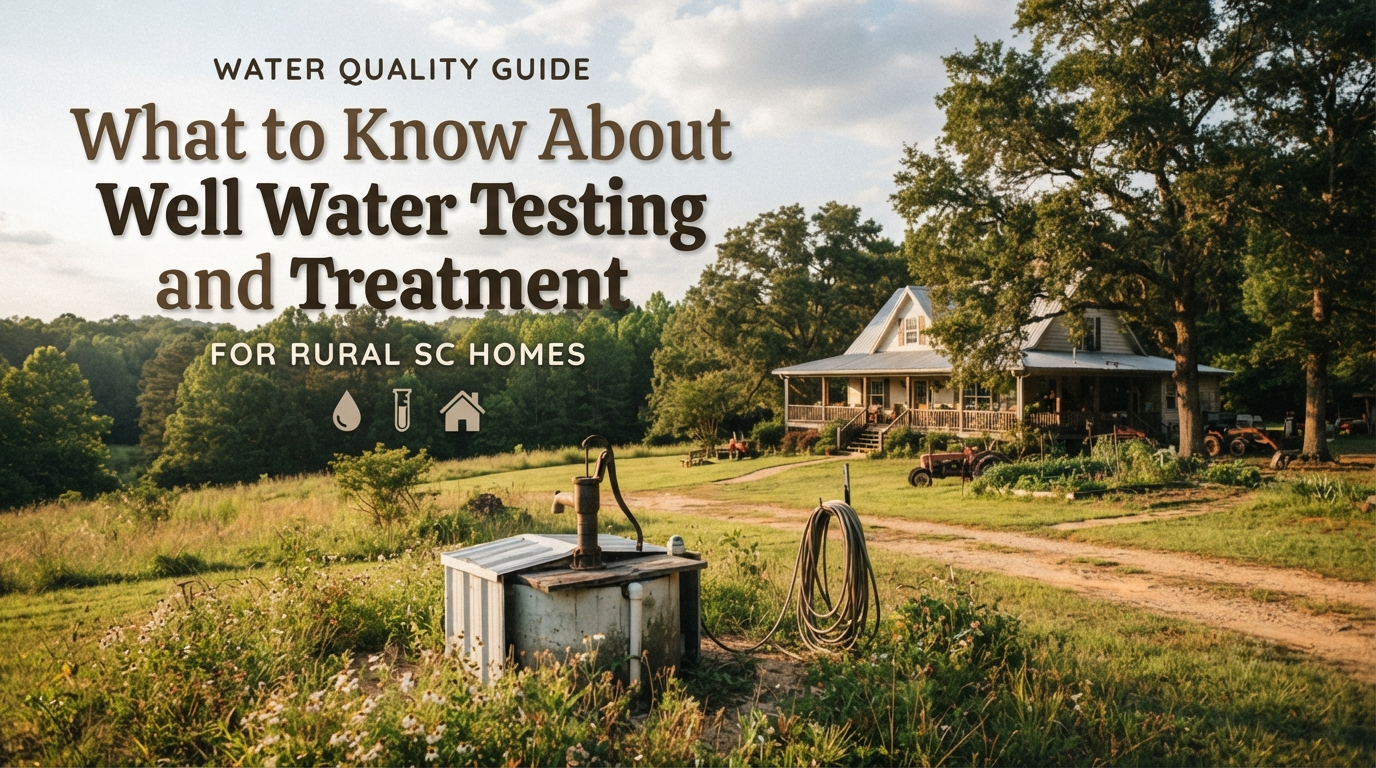
Most rural Horry County wells draw from shallow aquifers, typically 60 to 200 feet deep, tapping into layers of sand and clay that filter the water naturally over time. A pump moves water from the well into a pressure tank, and the pressure tank feeds the home's plumbing.
The system works reliably when it's properly maintained. Wells routinely last 30-50 years. Pumps last 8-15. Pressure tanks last 10-20. Most rural owners never think about their well until something goes wrong.
The catch: what comes out of the well depends heavily on the specific aquifer at that specific location. Iron content, sulfur, hardness, tannins, and bacterial risks all vary from lot to lot. A well 500 feet away from your target property can have completely different water than the one under your driveway.
The Common Water Quality Issues in This Market
The most frequent water quality issues I see in Horry County wells:
- - Iron content that stains sinks, tubs, and laundry orange or brown
- - Sulfur that creates a rotten-egg smell, particularly when the hot water runs
- - Hardness that leaves mineral scale on fixtures and shortens appliance life
- - Tannins from decaying vegetation that give water a yellowish-brown color
- - Low pH (acidic water) that corrodes copper plumbing over time
- - Occasional bacterial contamination, particularly in shallower wells
- - Radon or other trace elements in some specific areas
None of these are automatic deal-killers, but each has an addressable solution if you know what you're dealing with before you buy.
 The Water Testing Process
A pre-purchase water test is separate from the standard home inspection and worth every dollar. Basic testing includes:
Bacteriological analysis for coliform and E. coli. This is critical for safety.
Mineral panel — iron, manganese, hardness, TDS (total dissolved solids), pH, and typical trace elements.
Aesthetic factors — odor, taste, and color.
Specific concerns based on the property — if the neighborhood has known well issues, test for those specifically.
Cost typically runs $75-$250 for a basic panel, up to $500 for more comprehensive testing that includes radon, arsenic, and less common contaminants.
The test should be done during the inspection period so results influence the purchase decision. Never accept a seller's water test — get your own from a certified lab.
Treatment Systems and What They Cost
Once you know what's in the water, treatment systems address specific issues:
Sediment filters — basic, $50-$200, remove particles and rust.
Iron removal systems — $1,500-$4,000 installed, handle iron-heavy water.
Water softeners — $1,000-$3,500 installed, address hardness.
Sulfur removal (typically iron and sulfur combined systems) — $2,500-$6,000 installed.
Reverse osmosis for drinking water — $300-$1,500 for a point-of-use system at the kitchen sink.
UV disinfection for bacterial issues — $800-$2,000 installed.
Whole-home multi-stage treatment for complex water — $5,000-$12,000+.
Most rural Horry County homes benefit from at least a basic iron and hardness treatment system. Fully untreated well water in this area is more the exception than the rule.
Ongoing Maintenance Costs
Beyond the initial testing and treatment installation, ongoing well and treatment system maintenance runs:
- - Annual water test for bacterial contamination — $75-$150
- - Filter replacements every 6-12 months — $100-$300 annually
- - Water softener salt refills every 4-8 weeks — $10-$25 per bag
- - UV bulb replacement annually if you have UV disinfection — $75-$200
- - Pump replacement every 8-15 years — $800-$2,500
- - Pressure tank replacement every 10-20 years — $400-$1,000
- - Occasional pump inspection or well cleaning — $300-$800
Total ongoing well and water treatment costs commonly run $500-$1,500 per year for most rural homes.
What Well Buyers Should Verify at Any Target Property
The specific items that matter during due diligence:
Well depth and age. Older shallow wells (less than 100 feet) are more prone to contamination and less durable than newer deeper wells.
Well construction records if available. Grouting, casing type, and static water level all matter.
Pump age and specifications. A pump that's 15 years old is approaching end of life.
Pressure tank age and condition.
Existing treatment systems — what's installed, how old, and what they treat.
Water flow rate under real use — the well should sustain reasonable water pressure when multiple fixtures are running.
Location of the septic system relative to the well. State code typically requires minimum separation distances, and violations create ongoing contamination risk.
Historic water quality issues if the seller or neighbors have any information.
For broader rural market context, browsing Aynor real estate and Loris real estate inventory shows the variety of rural properties where well water applies. Coastal-adjacent properties in Longs real estate and rural Conway addresses also often depend on well systems.
Water Treatment Investment Timing
New buyers often ask when to invest in treatment. My guidance:
If the water test shows bacterial contamination, treat before you move in. This is a safety issue.
If the water is aesthetically unpleasant (staining, odor, taste), install treatment within the first month or two. Living with unpleasant water erodes quality of life fast.
If the water is functional but not ideal, consider whether treatment is worth the investment during the first year of ownership. Sometimes you adjust to the water. Sometimes you don't.
Don't buy the seller's assurance that the water is fine. Test it yourself and make treatment decisions from the results.
Two Things I Tell Every Rural SC Buyer About Wells
First, budget for at least $1,500-$5,000 in first-year well and water investments beyond the purchase price. Testing, filter installation, minor treatment upgrades, and setup for ongoing maintenance are almost always necessary. Buyers who don't budget for this get surprised in the first six months.
Second, establish a relationship with a good local well and water treatment contractor early. When something goes wrong — and it eventually will — having a trusted local expert who knows your specific system and its history is invaluable. Emergencies in year one are much easier to handle when you already have someone you can call.
Key Takeaways
- - Most rural Horry County homes run on well water, and water quality varies significantly from lot to lot
- - Common issues include iron, sulfur, hardness, tannins, low pH, and occasional bacterial contamination
- - Pre-purchase water testing ($75-$500) is separate from the home inspection and worth every dollar
- - Treatment systems range from basic sediment filters ($50-$200) to whole-home multi-stage systems ($5,000-$12,000+)
- - Annual ongoing well maintenance costs typically run $500-$1,500
- - Verify well depth, pump age, pressure tank condition, treatment systems, and septic separation during due diligence
- - Budget $1,500-$5,000 for first-year well investments beyond the purchase price
- - Establish a relationship with a local well contractor within the first few months of ownership
About Greg Harrelson
Greg Harrelson is a seasoned Realtor® with more than 30 years of experience serving the Myrtle Beach and Grand Strand markets. As the founder of Century 21 The Harrelson Group, Greg has built his career helping buyers, sellers, and investors achieve success in every corner of the coastal Carolina real estate market. His expertise spans residential homes, investment properties, land development, and coastal condos. Known for his deep local knowledge, innovative marketing strategies, and commitment to personal service, Greg consistently helps clients reach their real estate goals while navigating the ever-changing market with confidence and precision.