North Myrtle Beach vacation rentals are their own market inside the broader Grand Strand rental economy, and they behave differently than Myrtle Beach rentals in ways that matter to investors. Rental income patterns are different. Buyer competition is different. HOA rules are different. After thirty-plus years of writing offers on both investor-target properties and owner-occupied homes in North Myrtle Beach, I can tell you which specific pockets actually deliver the returns investors want. Here's the honest breakdown of where vacation rental economics work best and what buyers should know before writing an offer on an investment property.
Why North Myrtle Beach Vacation Rentals Work
The rental economy in North Myrtle Beach is driven by a specific type of visitor — family groups, extended family reunions, golf groups, and repeat vacationers who return to the same area year after year. This visitor mix is meaningfully different from the shorter-stay, higher-volume tourism that dominates parts of Myrtle Beach proper.
The advantages for investors:
Longer average stays. Families booking a week for the extended clan generate less turnover cost than three-night stays and often produce more predictable revenue.
Repeat guest patterns. Well-maintained North Myrtle Beach properties often get the same families year after year, which reduces marketing costs and vacancy risk.
Golf group demand. The Grand Strand's golf reputation attracts substantial group business, and North Myrtle Beach houses with enough bedrooms for a foursome or eightsome capture this segment well.
Seasonal spread. Peak summer plus a real spring and fall shoulder season creates a longer rental year than pure vacation destinations that only work in summer.
Cherry Grove for Family-Rental Volume
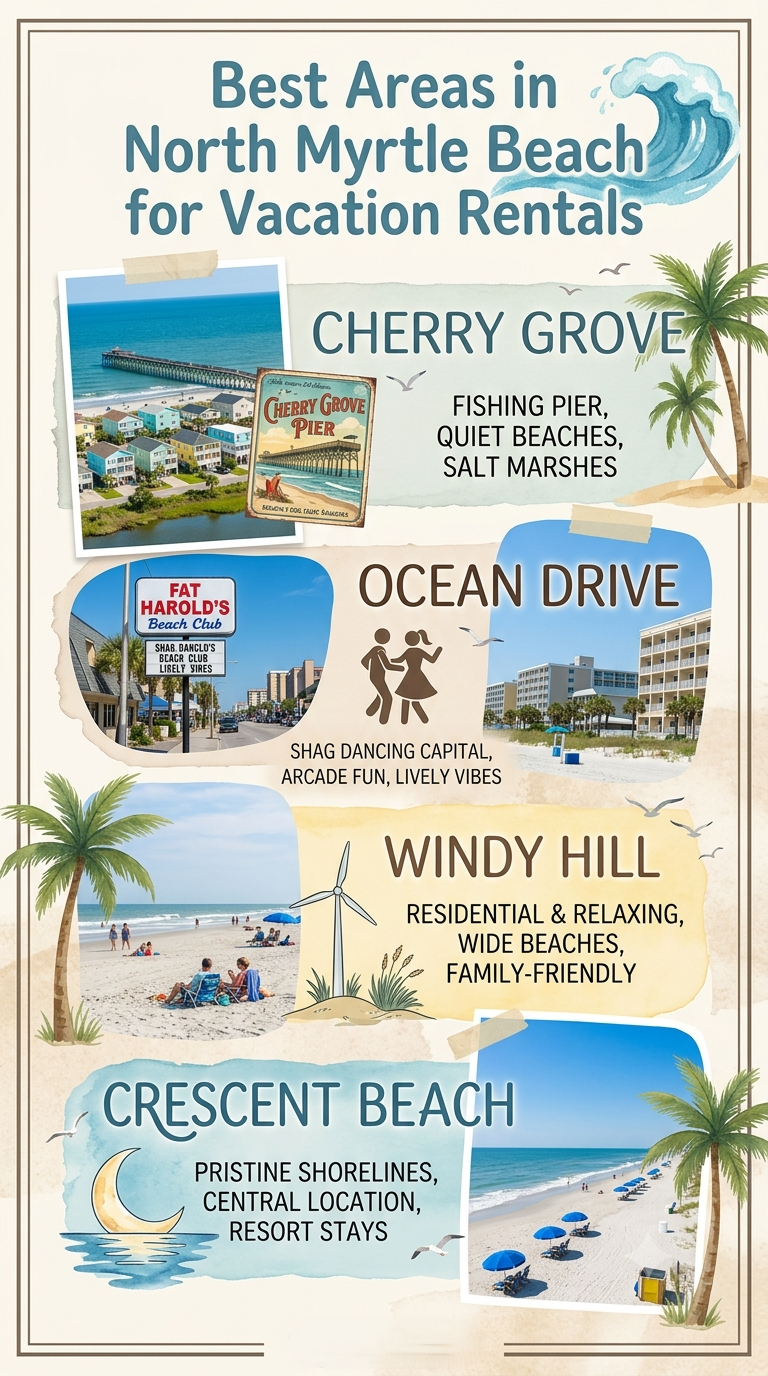
Cherry Grove has been the largest single vacation rental submarket in North Myrtle Beach for decades. What makes it work:
Larger homes on smaller lots. The tight street grid means multi-bedroom houses within walking distance of the beach — exactly what family groups want.
The canal home segment. Cherry Grove real estate canal properties offer families a unique proposition — private dock, boat access, and beach proximity. These properties often carry rental premiums over standard beach-block homes.
Established rental infrastructure. Property management companies, cleaning services, and rental platforms all have deep Cherry Grove experience. Setting up a new rental here is more predictable than starting from scratch in less-established markets.
Realistic gross rental numbers: A 4-bedroom Cherry Grove home 2-3 blocks from the beach commonly grosses $45,000-$75,000 per year. A direct oceanfront or canal-front property with 5-6 bedrooms can gross $90,000-$140,000 or more.
Net after management, cleaning, HOA (where applicable), maintenance, insurance, and property tax typically runs 40-55 percent of gross. The math works for investors who buy right and manage carefully.
Ocean Drive for Walkable Beach-Block Rentals
Ocean Drive's tight residential grid and walking distance to Main Street and the beach make it attractive to renters who value walkability over larger private spaces.
The rental profile is slightly different from Cherry Grove — smaller average homes, more focus on couples or small families rather than large groups, and stronger appeal to renters who want to walk to restaurants and beach access without driving.
Homes here command per-night rates comparable to Cherry Grove despite being physically smaller because of the walkability premium.
Crescent Beach for Quiet Family Rentals
Crescent Beach attracts family renters who want the quieter version of a beach vacation. Less tourist bustle, more residential feel, homes generally newer than Ocean Drive stock. Great for repeat family bookings where the family wants peace over Main Street energy.
Rental performance here is steady rather than peak-topping. Investors who prioritize occupancy consistency over maximum peak rates often do well here.
Windy Hill for Condo and Mid-Range Rental Product
Windy Hill's condo and townhome inventory offers investors lower entry prices with functional rental potential. The tourist infrastructure is real, though the neighborhood character is more commercial than the pure residential pockets.
Condos in the $180,000-$300,000 range with reasonable HOA dues can produce workable rental returns, though the HOA rental rules vary by building and require careful due diligence.
Barefoot Resort Area for Amenity-Driven Rentals
The inland Barefoot Resort corridor offers a different type of rental — condos and homes marketed around the golf, amenity, and community pool experience rather than direct beach proximity. Guests who choose this segment often want the resort experience with the beach 10 minutes away rather than at their doorstep.
Rental rates run lower per night than beach-block properties but occupancy can be more consistent due to golf group and repeat guest bookings. The amenity infrastructure supports the rental economy in ways that beach-block properties don't.
What Investors Should Verify at Any Target Property
The critical checks before writing an offer:
- - Actual rental history for the specific property, not neighborhood averages
- - HOA rental rules — some communities restrict minimum lease terms, cap total rentals, or require registration
- - City of North Myrtle Beach short-term rental permits and requirements
- - Insurance premium including wind and hail plus a landlord policy layer
- - Property management options and commission structures (typically 20-30%)
- - Realistic maintenance and repair budget — vacation rentals wear faster than owner-occupied
- - Special assessment history if it's a condo, plus reserve study review
The Rental Rule Change Risk
Local jurisdictions across the country have tightened short-term rental regulations over the last several years. North Myrtle Beach has been relatively STR-friendly historically, but no investor should assume current rules will remain unchanged over a 10-20 year holding period.
Buyers should underwrite conservatively assuming some regulatory pressure over time. Investors who make investments contingent on aggressive current rental income aren't accounting for realistic regulatory risk.
For broader market context, browsing North Myrtle Beach real estate inventory with investment property filters shows what's actually on market for investor buyers right now.
Two Things I Tell Every NMB Vacation Rental Investor
First, treat rental income projections skeptically. Listing agents and sellers often use best-case rental scenarios to justify prices. Get actual rental history for the specific property from the current owner, not aspirational marketing numbers. Investors who buy on optimistic projections consistently underperform reality. Investors who underwrite conservatively consistently exceed their expectations.
Second, plan for the property to serve you eventually. The best vacation rental investments I've watched are ones the investors could see themselves using or living in someday. Not just because it's a nice option to have, but because it forces you to buy quality — properties in real neighborhoods with real appeal that will hold value if the rental economy shifts.
Key Takeaways
North Myrtle Beach vacation rentals work as investments because of the specific family-and-group visitor pattern that dominates the market — longer stays, repeat guests, and golf group business that extends the rental season beyond pure summer. Cherry Grove leads on family-rental volume and canal-home niche, with gross rentals of $45k-$140k depending on size and location. Ocean Drive commands premium rates for walkability and neighborhood character. Crescent Beach offers quieter family bookings with steady occupancy. Windy Hill provides lower-entry condo investment options. Barefoot Resort delivers amenity-driven rentals with strong golf group and repeat guest appeal. Successful investors verify actual rental history, HOA rules, permits, and insurance during due diligence, underwrite conservatively for regulatory risk, and choose properties they'd genuinely enjoy owning even without the rental income. The market rewards investors who do the work and punishes those who buy on marketing projections.
About Greg Harrelson
Greg Harrelson is a seasoned Realtor® with more than 30 years of experience serving the Myrtle Beach and Grand Strand markets. As the founder of Century 21 The Harrelson Group, Greg has built his career helping buyers, sellers, and investors achieve success in every corner of the coastal Carolina real estate market. His expertise spans residential homes, investment properties, land development, and coastal condos. Known for his deep local knowledge, innovative marketing strategies, and commitment to personal service, Greg consistently helps clients reach their real estate goals while navigating the ever-changing market with confidence and precision.