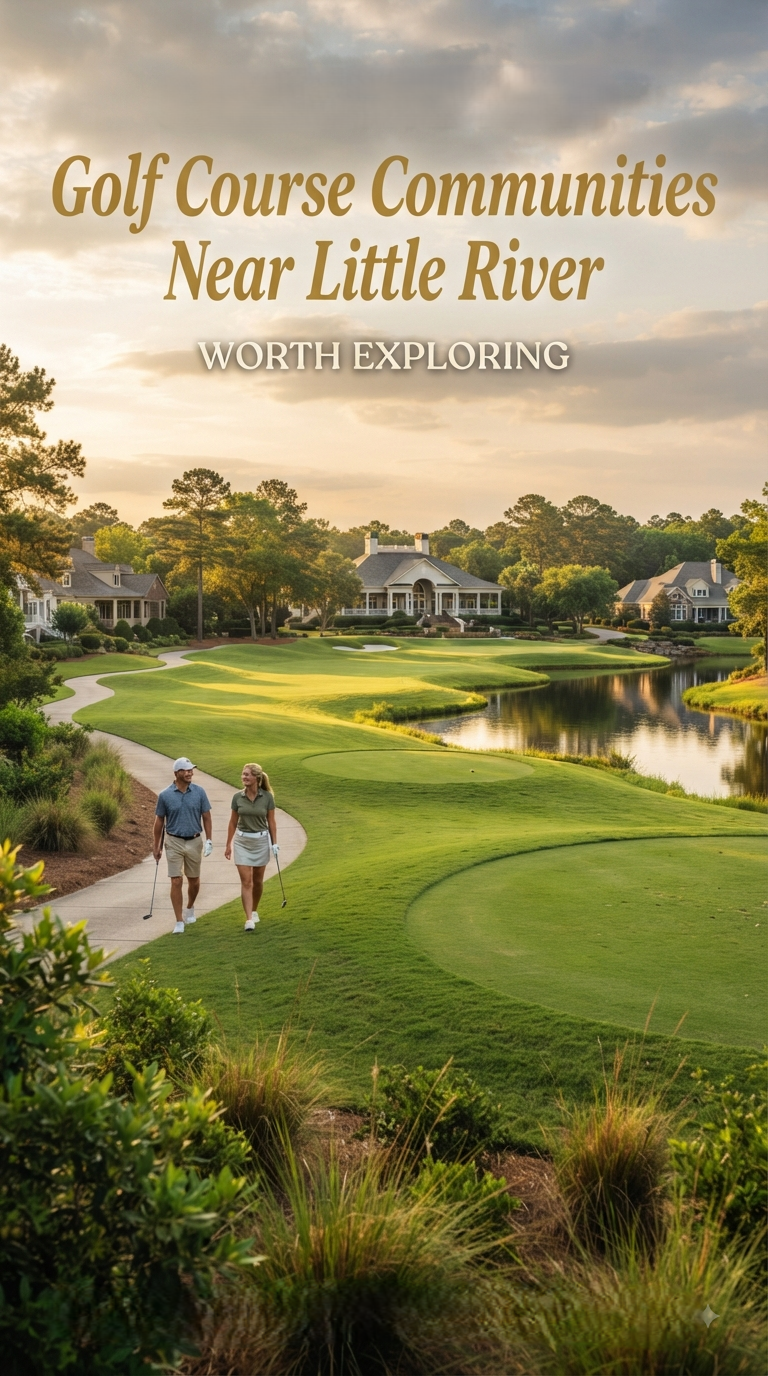
If you're shopping for a golf home on the north end of the Grand Strand, Little River should be on your short list. You get real courses, real community, and prices that don't match what you'll pay closer to the ocean. Here's what I mean. A single-family home on a fairway in Little River often runs meaningfully less than the same home on a Myrtle Beach course. And you're still 15 minutes from North Myrtle Beach when you want the sand. Let me walk you through the golf communities buyers should actually look at up here.
Why Little River Golf Works Differently
Little River is a working harbor town first, a golf town second. That's part of the appeal. The golf communities up here don't have the resort intensity you'll find at some of the bigger destinations further south. They feel residential. Full-time neighbors. Real communities.
You also get the boating culture on top of the golf. A lot of my Little River golf buyers keep a boat at one of the marinas. Round in the morning, out on the Intracoastal in the afternoon. That's a lifestyle you can't put together in most Grand Strand pockets.
Eastport Golf Community
Eastport is one of the more established golf communities in Little River and has held up well. The single-family homes at Eastport Golf Homes attract buyers who want the golf lifestyle in a real neighborhood setting. Mature landscaping. Established neighbor relationships. The course itself has stayed stable, which matters more than most buyers realize when they're shopping.
For buyers who want the golf community experience at a lower entry price, Eastport Golf Condos deliver the same amenity access without the single-family maintenance load. That works well for second-home buyers and retirees who want the lock-and-leave lifestyle.
Here's what nobody tells first-time golf-community buyers. Ask about the club's ownership structure before you commit. Eastport has held together, but some Grand Strand golf communities have seen course ownership changes that hurt home values. Ownership stability is one of the biggest factors in whether a golf community holds its value.
River Hills Golf Community
River Hills is another Little River golf option with a more residential feel. The community has its own course and attracts buyers who want a quieter setting than some of the bigger amenity communities. Full-time residents mix with second-home buyers. The neighborhood identity is real.
What I like about River Hills: the daily-life amenities are within a short drive without feeling like you're inside a resort. If you want a real neighborhood with a golf course rather than a resort with houses attached, River Hills tends to fit.
The Barefoot Resort Overflow
Technically Barefoot Resort sits inside North Myrtle Beach city limits, but the practical reality is that buyers shopping Little River golf often end up considering Barefoot. It's minutes away from Little River proper and offers a resort-scale amenity package that the other Little River options don't match. If you want that Grande Dunes-style resort experience but at the north end of the strand, Barefoot is worth touring.
The trade-off: HOA dues and amenity fees run higher than the pure Little River communities. Make sure the amenity package matches what you'll actually use.
Golf Condos as an Entry Point
Not every golf buyer needs a single-family home on a fairway. Some of the better value in this market sits in golf-community condo product. You get the course access, the amenity package, and often a small yard or patio at a fraction of the single-family price. For snowbirds who use the property 4-8 months a year, this often makes more financial sense than a full house.
Little River has a real inventory of these units. Not every one is directly on a course, but many have fairway views or short walks to the tee. For broader inventory, browse Little River real estate and filter for what you actually want to spend.
 What to Ask About Any Little River Golf Community
A few questions I make every golf-community buyer ask before writing an offer.
Who owns the golf course? HOA-owned courses have different dynamics than privately-owned ones. Neither is automatically better. What matters is stability and financial health.
Are club fees required for all residents, or optional? Some golf communities require every household to pay for a club membership whether you golf or not. That can be a real cost if you don't play. Others make membership optional. Big difference in ownership economics.
What's the reserve study look like? Golf communities have big-ticket capital items — greens, cart paths, irrigation, clubhouse maintenance. Under-funded reserves mean special assessments are coming.
How's the play volume? A course that's under-played is a course at risk of closing or being sold to a developer. Ask the pro shop what rounds look like on a typical weekend.
What are the specific covenants and restrictions? Golf-community CC&Rs can restrict landscaping, exterior colors, and short-term rentals. Make sure the rules match how you plan to live in the home.
Two Things I Tell Every Little River Golf Buyer
First, play the course before you buy. Sounds simple. Almost nobody does it. Renting a cart and playing 18 gives you a feel for the course quality, the resident engagement, and whether the amenity you're paying for actually delivers what you want. I've watched buyers commit to homes based on marketing brochures only to discover the course wasn't their style. Play first.
Second, talk to a current resident about their annual budget. Golf community carrying costs include HOA dues, club fees, cart fees or trail fees, and often various incidental charges. A conversation with a neighbor tells you more about the real annual cost than any HOA disclosure ever will.
Key Takeaways
Little River golf communities give you real courses and real community at prices below what you'll pay closer to the ocean. Eastport works for buyers who want an established course with residential neighborhood feel. River Hills fits buyers who want quieter surroundings with course access. Barefoot Resort is the north-end resort option if you want the full amenity package. Golf condos across the area offer real value at the entry level. Course ownership stability, HOA financial health, membership rules, and reserve status matter more than the surface marketing. Play the course before you commit and talk to a current resident about real annual carrying costs. Little River rewards buyers who ask the right questions upfront and delivers a golf lifestyle that has held up through multiple market cycles.
About Greg Harrelson
Greg Harrelson is a seasoned Realtor® with more than 30 years of experience serving the Myrtle Beach and Grand Strand markets. As the founder of Century 21 The Harrelson Group, Greg has built his career helping buyers, sellers, and investors achieve success in every corner of the coastal Carolina real estate market. His expertise spans residential homes, investment properties, land development, and coastal condos. Known for his deep local knowledge, innovative marketing strategies, and commitment to personal service, Greg consistently helps clients reach their real estate goals while navigating the ever-changing market with confidence and precision.