Few neighborhoods on the Grand Strand have the kind of personality you find in historic Conway. Tree-lined streets, mossy oaks, painted porches, and homes that have stood for a hundred years or more give this part of Conway, SC a feel that newer markets simply cannot replicate. Buyers fall in love with the charm quickly, but a historic home comes with realities that very different from buying new construction. Knowing what to look for, what to budget for, and how to evaluate the home's bones is the difference between a dream purchase and an expensive surprise.
Why Conway Is Unique
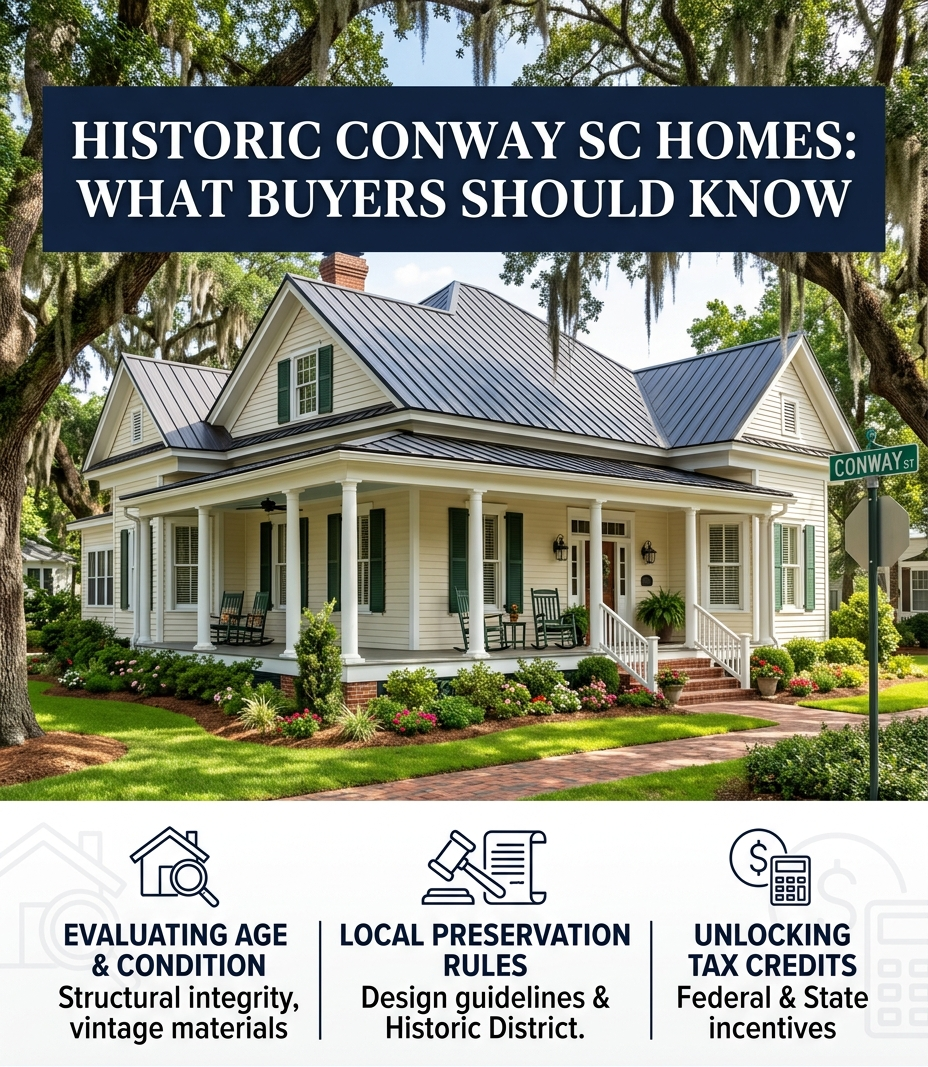
Conway is one of the oldest towns in South Carolina, and the historic core still wraps around the Waccamaw River and the original downtown grid. Walk a few blocks in any direction from Main Street and you will find homes from the late 1800s and early 1900s sitting alongside more recent infill construction. The mix gives buyers options at very different price points, but the homes that draw the most attention are the original Victorians, Craftsman bungalows, Folk Victorian cottages, and early 20th-century farmhouse-style homes that define the historic streets.
Buyers exploring Conway real estate often start in the historic district before expanding their search. Many fall for a specific home and adjust the rest of their criteria around it.
Understanding the Historic Home Buyer
The buyers who pursue historic Conway homes tend to be people who appreciate craftsmanship, character, and a lived-in feel. Some are local move-up buyers who have always wanted a downtown home. Others are out-of-state buyers relocating from places where character homes are far more expensive. A growing group are remote workers and creative professionals who love the walkable lifestyle and want a home with a story.
What unites them is patience. A historic home rarely appears at the exact moment a buyer is ready, and the right one is worth waiting for. Buyers who go in expecting move-in-perfection from a 1910 home are usually disappointed. Buyers who appreciate the work and rewards of stewardship tend to thrive.
Market Conditions for Historic Conway Homes
Demand for true historic homes in Conway, SC has remained steady. Inventory is naturally limited because so few of these homes come on the market in any given year. Well-restored homes near downtown often draw multiple offers, while homes that need significant work tend to sit longer because buyers and lenders both have to underwrite the project realistically.
Prices vary widely based on condition, original detail preserved, and proximity to the riverwalk and Main Street. A fully restored Craftsman with original heart-pine floors and updated systems will trade at a premium compared to a similar-sized 1960s ranch a few streets over. The market has historically rewarded buyers who restore thoughtfully, particularly when original details are kept intact.
Home Features That Matter
When evaluating a historic Conway home, certain features deserve extra attention:
- Foundation and structure: Pier-and-beam foundations are common. They are not bad, but they need to be inspected by someone who understands them.
- Original windows: Wavy single-pane glass is part of the charm. Storm windows or interior storms can preserve character while improving efficiency.
- Plumbing and electrical: Galvanized pipes and knob-and-tube wiring may still exist in some homes and can affect both insurance and financing.
- Roof and chimney: Older homes often have chimneys that are decorative more than functional. A roof inspection should also include flashing and rooflines that meet at unusual angles.
- Original woodwork: Heart-pine floors, transom windows, pocket doors, and built-ins add real value and should be preserved when possible.
Costs, Risks, and Practical Considerations
Historic homes come with cost categories that newer-home buyers may not be used to. Insurance can require extra documentation, especially for homes with older wiring, plumbing, or roofs. Some lenders treat homes with knob-and-tube wiring or galvanized plumbing as conditions that have to be addressed before closing, which means budget needs to include either repair credits or post-closing renovation funds.
Renovations often require permits, and properties inside any locally recognized historic boundary may have additional architectural review steps for exterior changes. Buyers who plan to make significant exterior modifications should confirm those rules early so timelines line up with their expectations.
Pest inspections matter more in older homes than in new construction. Termites, carpenter ants, and powder-post beetles can do quiet damage in older wood structures, and a thorough WDO inspection should be part of every offer. Buyers planning lighter cosmetic updates rather than full restorations sometimes look at lower-maintenance options like Conway condos for comparison before committing to a historic home.
Local Lifestyle and Community Appeal
Living in a historic Conway home means living downtown, and that lifestyle is one of the biggest reasons buyers fall in love. Coffee on the front porch, walks along the riverwalk, dinner at a local restaurant, and weekend events at Riverfront Park all become part of normal life. Coastal Carolina University adds energy without overwhelming the small-town feel. Neighbors tend to know each other, watch out for each other, and take pride in the way their streets look and feel.
The community also values preservation. You will often see homeowners restoring porches, repainting Victorian trim, or rebuilding original carriage houses. That kind of investment in the streetscape is part of what keeps historic Conway desirable.
Strategy for Buyers
Buying a historic home in Conway, SC works best when buyers approach it as a two-part decision: the home and the project. The home decision is about lifestyle, location, and the specific character a buyer falls in love with. The project decision is about budget, time, and how much restoration the buyer is realistically prepared to take on.
Working with an experienced local agent helps with both. A good agent can tell you which streets are inside the most desirable historic blocks, which homes are likely to come up before they hit the public market, and which inspectors and contractors are trusted by other historic home owners. Buyers benefit from a clear walk-through of the buying process before making an offer, especially when financing involves renovation lending or older-home insurance considerations.
Key Takeaways
- Historic Conway homes offer character and craftsmanship that newer construction cannot match.
- Buyers should plan for older systems, pest inspections, and possible insurance or financing conditions.
- Original details, including floors, woodwork, and windows, often add long-term value when preserved.
- Renovations may require permits and possibly architectural review depending on location.
- Patience pays off, since true historic inventory is limited and the best homes get attention quickly.
Frequently Asked Questions
Are historic Conway homes harder to insure?
They can be, especially if the home still has older wiring, galvanized plumbing, or an aging roof. Many insurers ask for documentation on the age and condition of major systems before issuing a full policy. Buyers should request quotes early in the due diligence period so they can budget accurately and address any required updates before closing.
Can I get a regular mortgage on a historic home in Conway?
Most historic Conway homes qualify for conventional financing, though lenders may require certain repairs or updates if the appraisal flags safety or habitability issues. For homes that need significant work, renovation loans such as a 203(k) or HomeStyle loan can roll the purchase and renovation costs into one mortgage.
Are there rules about renovating a historic home in Conway?
Properties inside Conway's historic district may be subject to architectural review for exterior changes such as siding, windows, porches, or additions. Interior work usually has fewer restrictions, but permits are still required for structural, electrical, and plumbing changes. Buyers planning renovations should confirm the specific district boundaries and review process before making an offer.
What inspections should I order on a historic home?
In addition to the standard home inspection, plan for a wood-destroying organism inspection, a sewer scope, and ideally a separate evaluation of any older wiring or plumbing. A roof and chimney inspection is also a good investment, especially for homes with original or older replacement roofs.
About Greg Harrelson
Greg Harrelson is a seasoned Realtor® with more than 30 years of experience serving the Myrtle Beach and Grand Strand markets. As the founder of Century 21 The Harrelson Group, Greg has built his career helping buyers, sellers, and investors achieve success in every corner of the coastal Carolina real estate market. His expertise spans residential homes, investment properties, land development, and coastal condos. Known for his deep local knowledge, innovative marketing strategies, and commitment to personal service, Greg consistently helps clients reach their real estate goals while navigating the ever-changing market with confidence and precision.