If you have spent any time looking at homes along the Grand Strand, you have probably seen HOA fees mentioned again and again. South Carolina has a strong HOA culture, and the structure of those fees varies enormously from one neighborhood to the next. For buyers coming from out of state, the system can feel confusing at first. Understanding what HOA fees cover, why they vary so much, and what to ask before making an offer will save you stress, money, and surprises long after closing.
What an HOA Is in South Carolina
A homeowners association, or HOA, is a private entity that manages shared property and common rules inside a community. In South Carolina, HOAs typically operate as nonprofit corporations governed by a board of directors elected by homeowners. Their job is to maintain shared assets, enforce community standards, and budget for the long-term needs of the neighborhood.
In condo and resort buildings, this same role is often handled by what locals call a regime. The legal terminology is slightly different, but functionally the body collects fees, maintains common property, and enforces rules. Buyers comparing homes in Conway, Myrtle Beach, and other Horry County communities will quickly see both terms in use.
What HOA Fees Typically Cover
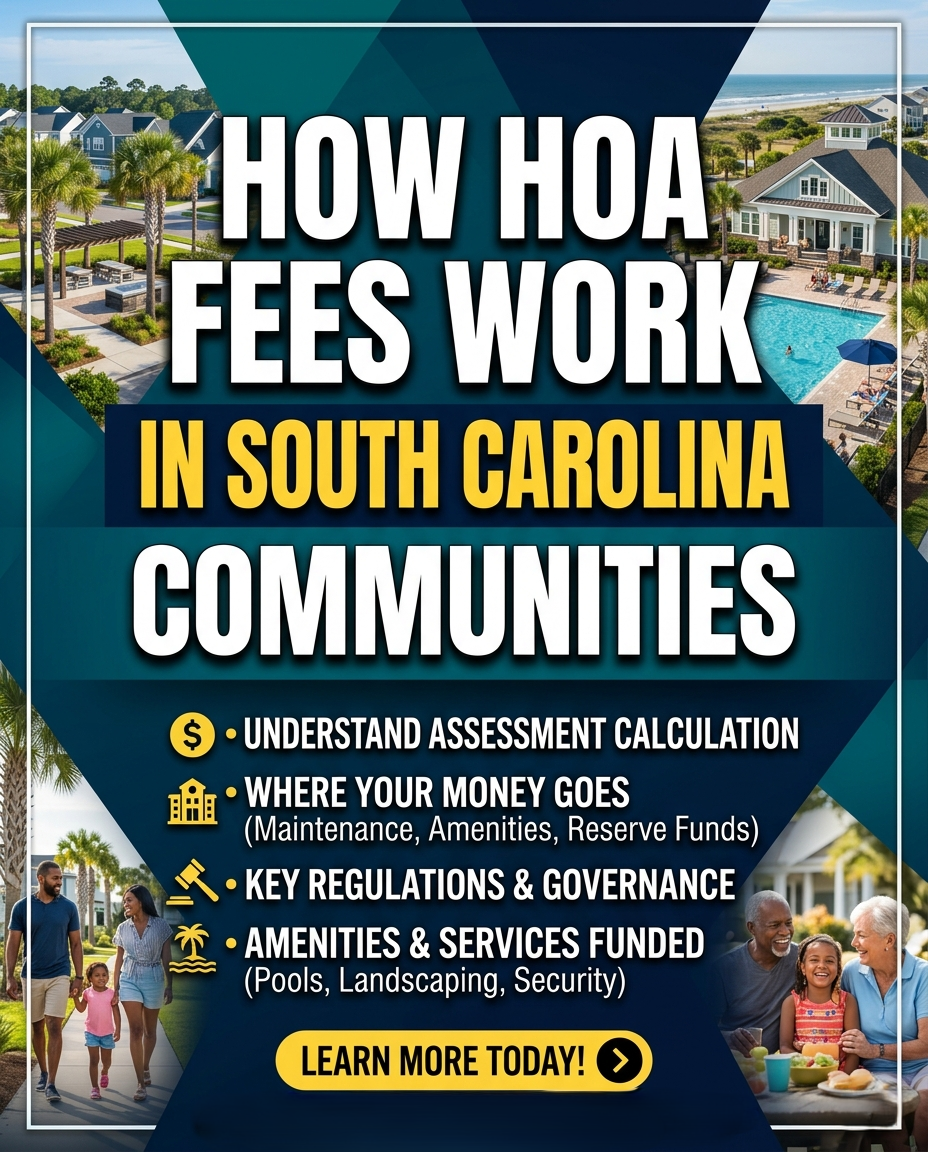
HOA fees cover the costs that the community shares as a group. The exact mix depends on the neighborhood, but most HOAs in South Carolina fund some combination of:
- Common area maintenance such as landscaping, entrance signs, and street lighting.
- Amenities including pools, clubhouses, fitness rooms, tennis courts, and pickleball courts.
- Insurance for shared structures and common liability coverage for the association.
- Reserves for big-ticket items like roof replacement, road resurfacing, or pool renovation.
- Management services if a professional management company is involved.
- Trash, recycling, and sometimes pest control, depending on the community.
Two communities with similar monthly fees can deliver very different value depending on what is included. A higher fee that covers a pool, clubhouse, lawn care, and exterior insurance can be a better deal than a lower fee that covers very little.
Why HOA Fees Vary So Widely
HOA fees along the Grand Strand range from modest to substantial. Several factors drive that range:
- Amenities: Communities with pools, clubhouses, and gated entries naturally cost more to operate.
- Building type: Condos and townhomes typically have higher fees than single-family neighborhoods because the HOA usually maintains exterior structures and shared roofs.
- Age of community: Older communities sometimes have higher fees because they are catching up on deferred maintenance or replenishing reserves.
- Master associations: Larger planned communities may have a primary HOA plus sub-HOAs, each charging their own fees.
- Resort and oceanfront elements: Buildings with elevators, beach access, and significant on-site staff carry the highest fees.
Buyers should never compare two HOA fees in isolation. The question is not which is lower, but which delivers the right value for the community’s assets and the buyer’s lifestyle.
How to Read HOA Documents Before You Buy
HOA documents are not the most exciting reading, but they reveal the true health of the community. Before removing your due diligence, review:
- The most recent budget and financial statements.
- The reserve study and the current reserve balance.
- Recent meeting minutes for ongoing issues or planned projects.
- Special assessment history over the past several years.
- Insurance coverage, including master policies and any flood or wind coverage.
- Pet, parking, and rental rules that affect how you plan to use the property.
A strong HOA generally has healthy reserves, predictable annual increases, transparent leadership, and no surprise assessments. A weak HOA shows up in deferred maintenance, frequent assessments, or unclear financials.
Special Assessments and What They Mean
Special assessments are extra one-time charges levied when the HOA does not have enough money in reserves to cover a major expense. They are not necessarily a red flag, but they deserve close attention. A single assessment after a major storm or once-in-a-generation roof replacement can be reasonable. Multiple assessments in a short period often signal underfunded reserves or deferred maintenance, and that pattern can repeat.
Buyers in older oceanfront condo buildings should be particularly thoughtful about assessment history. Communities that proactively fund reserves tend to feel less expensive over time, even if their monthly fees look higher today.
HOA Rules and Lifestyle Fit
HOA fees buy more than maintenance. They also support the lifestyle and rules of the community. Some neighborhoods have detailed architectural guidelines that affect paint colors, fencing, sheds, and exterior changes. Others restrict rentals, the number or size of pets, or the kind of vehicles that can be parked in driveways.
None of these rules are bad in themselves, but they need to align with how you plan to live. A buyer who wants to park an RV at home should not buy into a community that does not allow it. A retiree who wants quiet should pay attention to short-term rental rules. A family with multiple pets should confirm the breed and number policies. Walking through these details with a local agent during the buying process avoids regret later.
How HOA Fees Compare in Different Horry County Markets
In single-family neighborhoods around Conway and Longs, HOA fees are often modest because the association maintains common areas but not exterior structures. In larger master-planned communities in Carolina Forest or Grande Dunes, fees often run higher because amenity packages are more extensive. In oceanfront condos along the Myrtle Beach and North Myrtle Beach coast, fees can be substantial because they fund elevators, hallway insurance, beach access, and on-site management. Each setup has its place. The key is matching the fee structure to your lifestyle, your willingness to handle outdoor maintenance, and how often you plan to use shared amenities.
Key Takeaways
HOA fees in South Carolina vary widely because communities themselves vary widely. The fee itself matters less than what it covers, how well it funds reserves, and whether the rules of the community align with the way you plan to live. Buyers who treat HOA review as a real part of due diligence, rather than a checkbox at the end, almost always end up happier with their purchase. A thoughtful conversation with a local agent before you make an offer is one of the best investments you can make in the long-term experience of owning a home along the Grand Strand.
Frequently Asked Questions
Are HOA fees tax deductible in South Carolina?
For a primary residence, HOA fees are generally not tax deductible. For a rental property, a portion may be deductible as an operating expense. A tax advisor familiar with South Carolina rules can confirm what applies to your specific situation.
How often do HOA fees increase?
Most HOAs review their budget annually and adjust fees as needed. Increases of a few percent each year are common to keep up with insurance, landscaping, and reserve funding. Larger jumps often signal a recent assessment study or a major project on the horizon, so always ask about the trend over the past few years rather than just the current rate.
What happens if I do not pay my HOA fees?
HOAs in South Carolina have legal tools to collect unpaid fees, including late fees, interest, and in some cases liens or even foreclosure. The exact process depends on the governing documents and state law. Staying current and communicating with the board if you have a hardship is always the right approach.
Can an HOA really tell me what color to paint my house?
In many South Carolina HOAs, yes. Architectural guidelines often specify approved colors, materials, and exterior changes. These rules are common in newer planned communities and exist to maintain consistency that the association believes protects property values. Always review the architectural rules before assuming you can make a specific change.
About Greg Harrelson
Greg Harrelson is a seasoned Realtor® with more than 30 years of experience serving the Myrtle Beach and Grand Strand markets. As the founder of Century 21 The Harrelson Group, Greg has built his career helping buyers, sellers, and investors achieve success in every corner of the coastal Carolina real estate market. His expertise spans residential homes, investment properties, land development, and coastal condos. Known for his deep local knowledge, innovative marketing strategies, and commitment to personal service, Greg consistently helps clients reach their real estate goals while navigating the ever-changing market with confidence and precision.