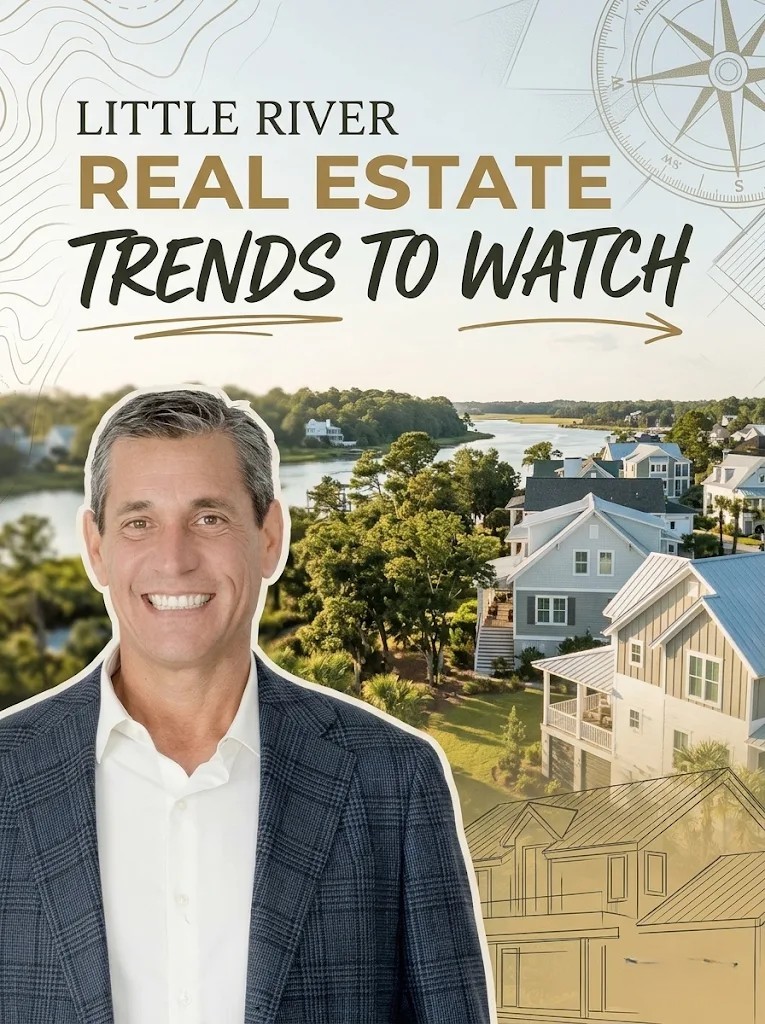
Little River is the last town in South Carolina before the North Carolina line, and most buyers find Little River real estate after they've already priced out North Myrtle Beach. They want water, they want a slower pace, and they don't want to pay Cherry Grove money for it. That one comparison drives almost everything happening in this market right now.
What is bringing buyers to Little River right now?
Here's what I see in the questions buyers ask. They start with the Intracoastal Waterway and the boat. They end with the commute to Barefoot Landing, the beach at Cherry Grove, and how fast they can get to a good seafood dinner on the Little River waterfront. A buyer who wants a dock, a marina slip, or just a view of the water finds more options here than in most of the Grand Strand, and often at a lower entry point than the same setup in North Myrtle Beach.
Retirees from the Northeast and Midwest still lead the pack. Boaters come next. A growing third group is second-home buyers who plan to rent the house out part of the year, and they're learning quickly that the rules and the insurance cost more than the listing photos suggest.
Where is the marina and waterfront demand concentrated?
Marina living is the heart of this market. If boat access is your reason for moving, start with the homes on the Little River marina listings page, then look closely at Grande Harbour, where the community is built around its marina and the Intracoastal. The question I tell buyers to ask is simple: is the slip included, leased, or sold separately? That answer changes your monthly cost more than the interest rate does.
Not every buyer needs a slip. Big Landing and the neighborhoods tucked off Highway 17 give you the Little River address and a short drive to the water without the marina fees. I've watched buyers walk into a marina community, run the numbers on dues and slip costs, and walk out happier in a standard neighborhood with a boat on a trailer.
What does golf have to do with Little River?
More than people expect. The Eastport golf homes show how much of the local demand comes from buyers who want a course in the backyard and a quieter street out front. Golf-community pricing in Little River tends to sit below the same product closer to Barefoot Resort, and that gap is one reason buyers cross the line from North Myrtle Beach.
What costs should you plan for on the water?
Insurance is the first one. Coastal homeowner's coverage, wind and hail through the SC Wind and Hail Underwriting Association when private carriers won't write it, and flood coverage if the home sits in a FEMA flood zone. Ask for quotes before you write an offer, not after. A home on the Intracoastal can carry a very different flood premium than one three streets back, even when the listing prices look alike.
Taxes matter too. If the home is your primary residence, you can apply for the Horry County legal residence exemption and get the lower owner-occupied assessment. If it's a second home, you won't. Buyers who skip that step on a vacation purchase get surprised at the first bill.
What should you watch before you buy?
Watch the inventory mix. Little River doesn't have the volume of Carolina Forest or Conway, so one new project or one big sale can change the feel of a price range quickly. Watch new construction pushing north on Highway 17 and out toward Highway 90, because new homes set the comparison point for resales. And watch the seasons. Boaters buy in spring. Retirees tour in winter, when the weather back home is at its worst and the Grand Strand looks good.
If you're torn between towns, compare Little River side by side with North Myrtle Beach real estate on the same budget. You'll see the trade-offs fast: more beach and more noise on one side, more water and more quiet on the other.
Key Takeaways
Little River sells itself on water, quiet streets, and a lower price than North Myrtle Beach. The marina communities and Intracoastal homes carry the most demand, and the real cost sits in slips, insurance, and flood coverage, so get those numbers before you make an offer. Golf communities like Eastport give you another path to the same address. Watch new construction along Highway 17 and Highway 90, because it sets the comparison for every resale.
About Greg Harrelson
Greg Harrelson is a seasoned Realtor® with more than 30 years of experience serving the Myrtle Beach and Grand Strand markets. As the founder of Century 21 The Harrelson Group, Greg has built his career helping buyers, sellers, and investors achieve success in every corner of the coastal Carolina real estate market. His expertise spans residential homes, investment properties, land development, and coastal condos. Known for his deep local knowledge, innovative marketing strategies, and commitment to personal service, Greg consistently helps clients reach their real estate goals while navigating the ever-changing market with confidence and precision.