Buying your first condo in Myrtle Beach is exciting, but it can feel a little overwhelming once you start comparing buildings, floor plans, and HOA documents. Condos along the Grand Strand range from beachside high-rises with rental programs built in to quiet inland communities designed for full-time living. The price tags look attractive compared to single-family homes, but the buying process is genuinely different. A little preparation goes a long way toward making sure your first condo is a property you actually love owning, not one you spend years trying to leave.
Why Myrtle Beach Condos Are Different From Single-Family Homes
The biggest mental shift for first-time condo buyers is understanding that you are not just buying a unit. You are also buying into a community, a building, and a financial structure called a regime or HOA. The unit itself usually represents only part of what determines your long-term experience. The roof, hallways, elevators, pool, parking lot, and exterior walls are owned in common with everyone else in the building, and how those shared parts are funded and maintained matters enormously.
That is why two condos with similar square footage and views can have very different ownership costs and long-term value. Buyers exploring Myrtle Beach real estate for the first time often start by sorting condos by price, when they should also be sorting by HOA health, building age, and intended use.
Decide How You Will Use the Condo
Before looking at listings, get clear on how the condo will fit your life. The right answer changes the kind of building you should be shopping in.
Full-time residents often prefer quieter buildings or low-rise communities a few blocks off the beach, where neighbors are mostly other owners rather than weekly renters. Second-home buyers tend to want a building close enough to the ocean that they can walk down for sunset, with strong on-site management. Investors looking for short-term rental cash flow usually focus on oceanfront resort buildings with rental desks, established booking history, and pet and amenity policies tourists like.
Each of these uses leads to different buildings, different price points, and different HOA structures, so getting clarity here saves a lot of time later.
Read the HOA Documents Like a Pro
The HOA package is where the real story of a condo lives. First-time buyers sometimes glance at the financial summary and skip the rest, but the most important details often hide deeper in the documents. A few things to look for:
- Reserve study and reserve balance: A healthy reserve fund signals that big-ticket repairs are funded.
- Recent and upcoming special assessments: Special assessments tell you what surprises owners have already absorbed and what may be coming.
- Recent meeting minutes: Minutes show whether ongoing issues like leaks, balcony repairs, or insurance disputes are active.
- Rental rules: Minimum stays, pet rules, and rental cap policies all impact resale and income potential.
- Insurance coverage: Master policies vary in what they cover, which affects what your individual HO-6 policy needs to insure.
An experienced local agent can walk through these with you and flag the items that deserve harder questions before you remove your due diligence.
Pay Attention to Building Age and Construction
Coastal salt air, humidity, and storms work harder on condo buildings than they do on inland homes. Older oceanfront buildings can be wonderful, but they often have higher reserves, more frequent maintenance projects, and more expensive insurance. Newer buildings tend to have lower assessments early on, but they may not have built up significant reserves yet.
Mid-rise and low-rise buildings inland from the ocean usually fall somewhere in between. Their HOAs typically deal with simpler systems and lower repair costs, which can keep monthly fees more predictable. Buyers comparing higher-end buildings can also look at Myrtle Beach homes in the $500,000 to $1,000,000 range to see how condo and single-family pricing line up at the same price points.
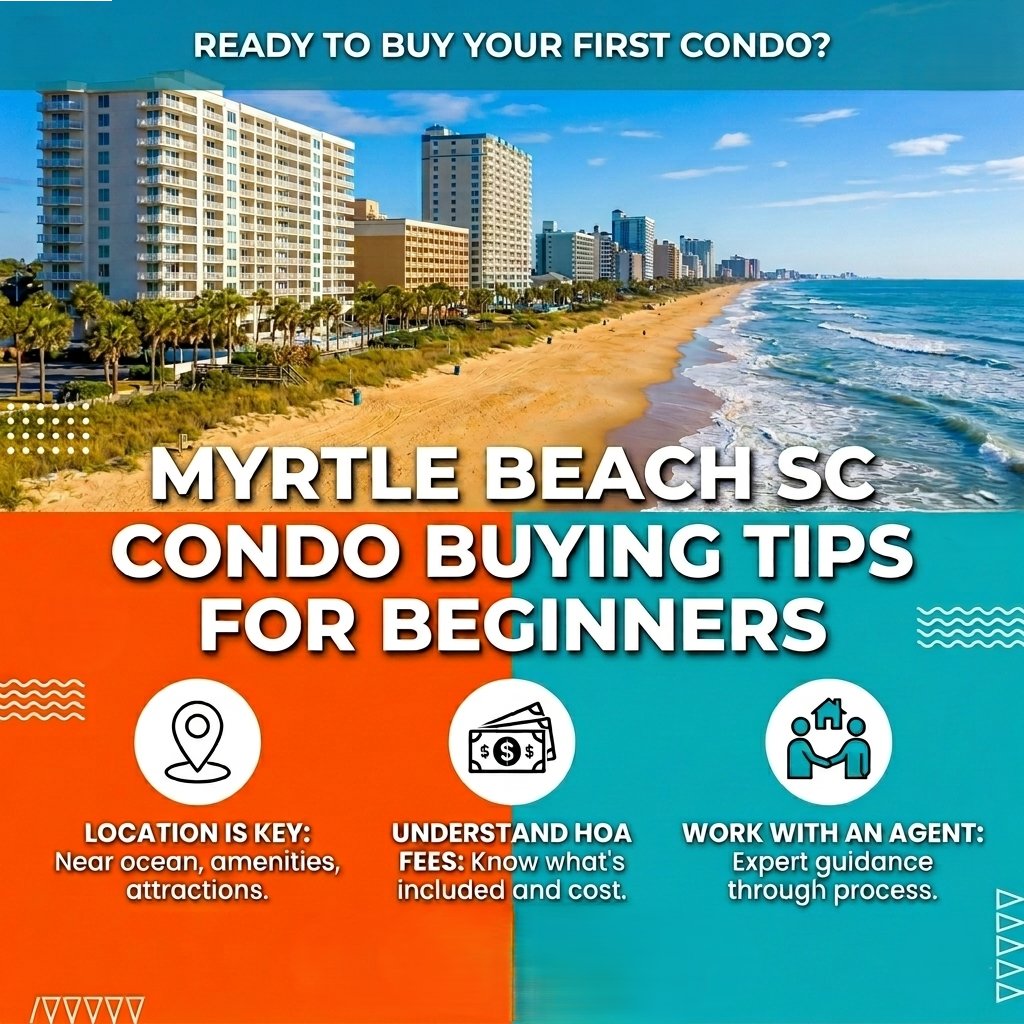
Plan for All the Costs, Not Just the Mortgage
The total monthly cost of owning a Myrtle Beach condo is rarely just principal and interest. A realistic budget includes:
- HOA or regime fees, which can range from modest to substantial depending on amenities.
- HO-6 insurance for everything inside your unit, including upgrades and personal property.
- Property taxes, including the higher non-owner-occupied rate if it will not be your primary residence.
- Utilities not included in HOA dues.
- An annual reserve in your own budget for special assessments or rate increases.
Buyers who plan ahead for these line items rarely feel surprised after closing.
Use Financing That Fits Condo Realities
Condo financing has its own rules, and not every lender is comfortable with every building. Conventional loans are common, but FHA and VA loans require the building to be approved, which is not always the case for older oceanfront buildings. Investment-property loans on condos in rental programs may have stricter down payment and reserve requirements.
The cleanest path is to work with a lender who has financed condos in the specific building you are targeting. They can confirm warrantability, lay out the right loan options, and avoid surprises at the appraisal or underwriting stage. Your agent can almost always recommend two or three trusted lenders. A short conversation with them before falling in love with a unit makes the rest of the buying process much smoother.
Strategy for First-Time Condo Buyers
The buyers who enjoy their first Myrtle Beach condo most tend to do four things well. They get clear on how they will use the unit. They tour at least a handful of buildings rather than falling in love with the first one. They take HOA documents seriously and ask questions until they understand the answers. And they choose a local agent who has actually closed deals in the buildings they are considering. Each of these steps lowers the chance of buyer’s remorse and increases the odds that the condo becomes the easy, enjoyable home or investment you imagined.
Key Takeaways
Buying your first condo in Myrtle Beach is less risky than it looks if you treat it as a two-part decision: the unit and the building. Defining how you will use the condo, reading HOA documents carefully, paying attention to building age and reserves, and choosing the right financing partner will protect you from most surprises. The right condo can be a rewarding home, second home, or investment, but it almost always belongs to a building that has been honestly maintained and a community that runs its finances with care, so weight those factors as heavily as the view.
Frequently Asked Questions
What is the difference between an HOA and a condo regime?
In Myrtle Beach, the term regime is often used for the legal entity that governs a condominium building, while HOA is more common for community associations. Functionally they do similar work: collecting fees, maintaining shared property, and enforcing rules. Buyers should review whichever set of governing documents applies to the building they are considering.
How much should I budget for HOA or regime fees?
Fees vary widely by building. Smaller inland communities with limited amenities may charge a few hundred dollars a month, while older oceanfront high-rises with pools, elevators, beach access, and on-site staff often charge significantly more. The fee itself matters less than what it covers and whether reserves are funded properly.
Can I rent out my Myrtle Beach condo on a short-term basis?
Some buildings welcome short-term rentals and even include rental desks, while others restrict rentals to monthly minimums or longer. Before making an offer, confirm the exact rental rules in the governing documents and any local ordinances that apply.
Are special assessments common in Myrtle Beach condos?
They can happen, especially in older buildings and after major weather events. A well-funded reserve and recent maintenance projects are good signs that future assessments are less likely. Reviewing assessment history and the reserve study during due diligence helps you understand the building's track record.
About Greg Harrelson
Greg Harrelson is a seasoned Realtor® with more than 30 years of experience serving the Myrtle Beach and Grand Strand markets. As the founder of Century 21 The Harrelson Group, Greg has built his career helping buyers, sellers, and investors achieve success in every corner of the coastal Carolina real estate market. His expertise spans residential homes, investment properties, land development, and coastal condos. Known for his deep local knowledge, innovative marketing strategies, and commitment to personal service, Greg consistently helps clients reach their real estate goals while navigating the ever-changing market with confidence and precision.