This is one of the most common conversations I have with out-of-state buyers, and the right answer changes a lot depending on what they actually want from a Myrtle Beach property. An oceanfront condo and a single-family home in Myrtle Beach are not just different in price. They're different in how they're used, how they're rented, how they're insured, and how they hold value through hurricane seasons and market cycles. After three decades of writing offers on both, I have a pretty clear sense of which buyer fits which path. Here's how I walk people through it.
What "Myrtle Beach" Means When You Compare the Two
First, some boundaries. When buyers say "Myrtle Beach," they usually mean the long strip along Ocean Boulevard, but the city limits stretch west to the Intracoastal Waterway and out toward Highway 501 and Carolina Forest. Oceanfront condos sit east of Highway 17 Business, almost always within a few blocks of the water. Single-family homes are scattered all over town, including beachfront streets in places like the Dunes Club, Pine Lakes, and the south end near Surfside, plus inland neighborhoods like Market Common, Carolina Forest, and Plantation Lakes.
Comparing the two isn't apples-to-apples because the locations themselves are doing a lot of work. A million dollars in an oceanfront condo and a million dollars in a Pine Lakes home are two very different lifestyles.
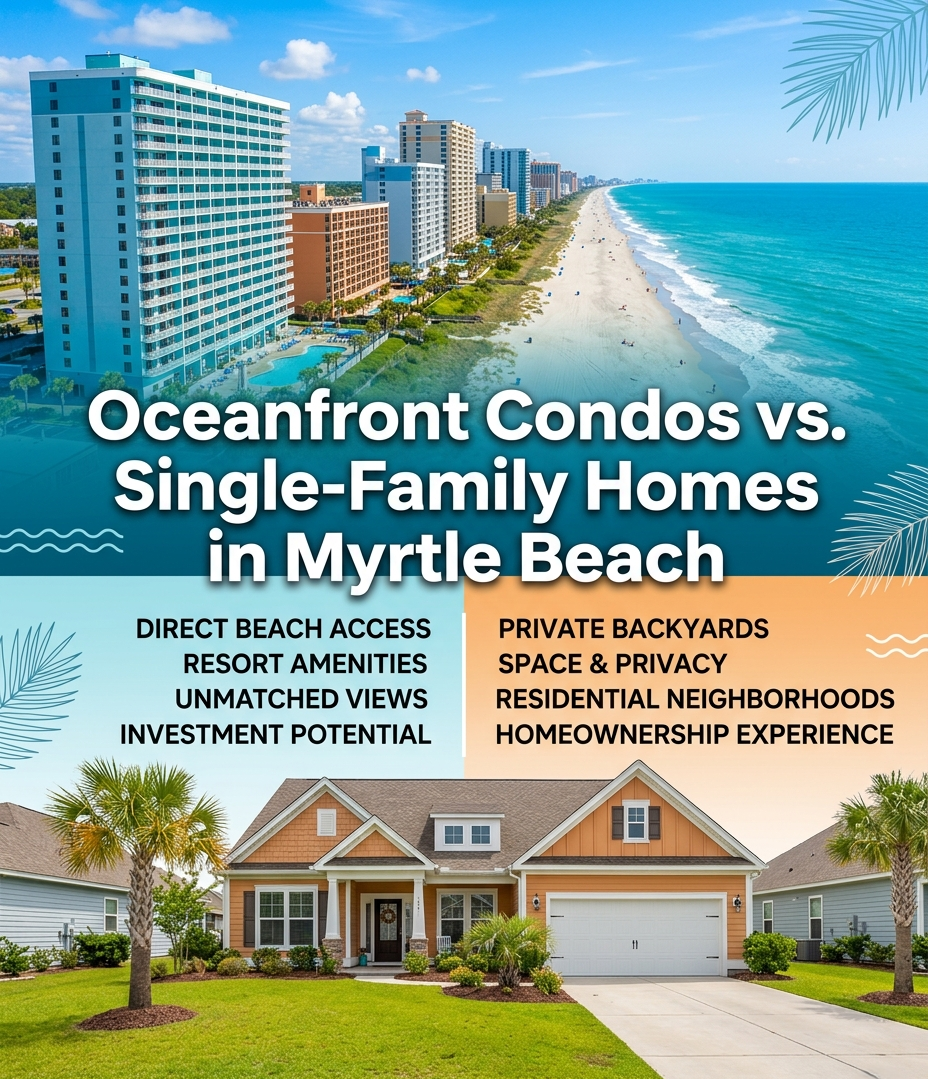
The Use Case for an Oceanfront Condo
Condos make the most sense when you want:
- - A lock-and-leave second home you can use a few weeks a year
- - A direct ocean view from the unit itself
- - Short-term rental income when you're not there
- - Minimal exterior maintenance, since the HOA handles roof, paint, pool, elevators, and landscaping
The investor side of this market is real. Plenty of oceanfront buildings allow daily and weekly rentals, and the rental peak runs roughly from mid-March through early September. The math depends heavily on building, view, floor, and bedroom count. A direct-oceanfront 2-bedroom in a strong rental building handles its monthly carry differently than a side-view efficiency in an aging building.
For buyers shopping the condo segment, the price bands roughly look like this in today's market:
- - Studio and 1-bedroom oceanfront units in older buildings: $150,000 to $260,000
- - 2-bedroom oceanfront in mid-tier buildings: $300,000 to $500,000
- - High-floor and luxury oceanfront: $500,000 to well past $1,000,000
If you're shopping the higher end, Myrtle Beach million-dollar homes include both single-family and the top oceanfront condo product, and seeing them side by side helps a lot of buyers decide which path fits.
The Use Case for a Single-Family Home
Single-family in Myrtle Beach makes sense when you want:
- - A primary residence, not a vacation property
- - Outdoor space, a garage, and a private yard
- - A neighborhood feel rather than a tower-and-elevator feel
- - Lower monthly HOA dues and more control over the property
The trade-off is location. Single-family inventory directly on the sand exists, but it's the most expensive product in the market by a wide margin. Most full-time Myrtle Beach single-family homes are inland a few blocks to a few miles, where buyers get newer construction, a real yard, and a community pool for a fraction of beachfront pricing.
For the most active price band, browse Myrtle Beach homes between $250,000 and $500,000. That range covers the bulk of new construction and resale single-family inventory inside the city right now.
How Insurance and HOA Dues Actually Compare
This is where buyer expectations get adjusted in my office. An oceanfront condo's monthly HOA fee can run $400 a month in older buildings and well over $1,200 a month in newer, amenity-heavy buildings. Those dues typically include the master insurance policy, water, sewer, trash, elevator maintenance, building staffing, pools, and exterior upkeep.
A single-family home doesn't carry that HOA load, but the owner has to budget directly for wind and hail insurance, flood insurance where applicable, roof reserves, HVAC, lawn care, and exterior paint cycles. The total cost of ownership often lands closer than buyers think — sometimes the condo is cheaper, sometimes the single-family is, depending on the property.
One specific trap: condo special assessments. When a building needs a roof, an elevator overhaul, or balcony repairs, the cost is split among unit owners. I've seen assessments range from a few hundred dollars to tens of thousands per unit. Always read the last two years of HOA meeting minutes and reserve study before going under contract.
Resale and Long-Term Hold
Both segments have appreciated meaningfully through the last cycle, but they don't move in sync. Oceanfront condo prices move with vacation demand, rental income, and insurance costs. Single-family prices move more with primary-resident demand, school zones, and interest rates. Holding both has actually been a smart play for some of my long-term clients, because they zig and zag at different times.
For higher-priced single-family product, Myrtle Beach homes between $500,000 and $1,000,000 tend to attract relocation buyers and move-up locals. That buyer pool is steadier than the vacation-rental crowd.
Two Things I Tell Buyers Choosing Between the Two
First, separate the lifestyle question from the investment question. If you'd actually use the property 6 to 8 weeks a year and want the income the other 30, you're a condo buyer. If you want a real home, a yard, a garage, and a community you'll see neighbors in, you're a single-family buyer. Trying to make one property do both jobs is where regret usually shows up.
Second, if rental income is part of the plan, never accept the first revenue estimate at face value. Cross-check it against actual rental history for that exact building or that exact block. I've watched too many buyers commit to a number from a listing agent that doesn't match what the unit has actually produced.
Key Takeaways
Oceanfront condos and Myrtle Beach single-family homes serve different jobs. Condos work for buyers who want low-maintenance second homes with rental upside on the water. Single-family homes work better for full-time residents who want space, yard, and a neighborhood. The total monthly cost of either is closer than buyers expect once you factor HOA dues, special assessment risk, wind and hail insurance, flood insurance, and reserve costs. The smartest move is to define how you'll actually use the property first, then let that decision steer the property type, not the other way around.
About Greg Harrelson
Greg Harrelson is a seasoned Realtor® with more than 30 years of experience serving the Myrtle Beach and Grand Strand markets. As the founder of Century 21 The Harrelson Group, Greg has built his career helping buyers, sellers, and investors achieve success in every corner of the coastal Carolina real estate market. His expertise spans residential homes, investment properties, land development, and coastal condos. Known for his deep local knowledge, innovative marketing strategies, and commitment to personal service, Greg consistently helps clients reach their real estate goals while navigating the ever-changing market with confidence and precision.