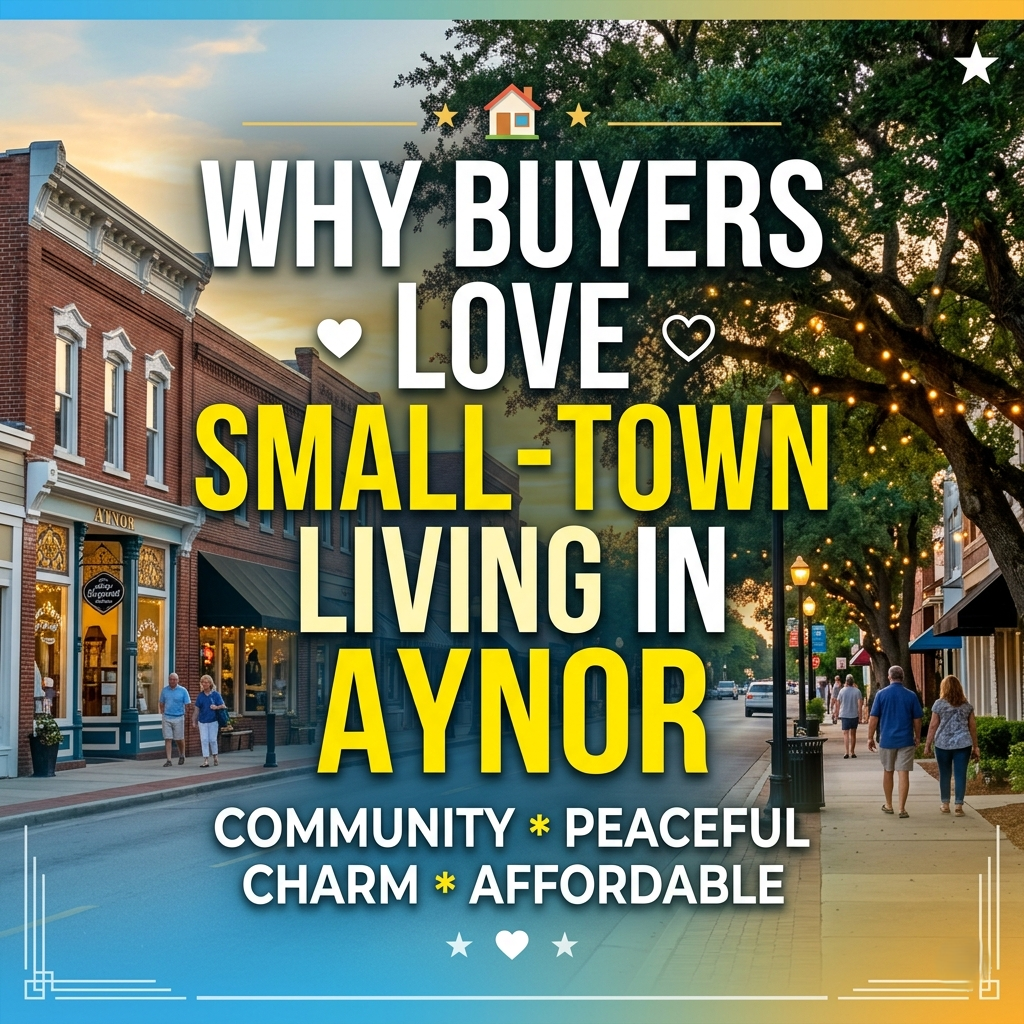
Aynor doesn't get the marketing attention Conway or Myrtle Beach gets, and the people who live in Aynor like it that way. It's a real small town in the original sense — the kind where the high school football game is the social event of the week, the same families have farmed the same land for four generations, and the speed limit through the middle of town is genuinely 35 because the kids do walk along Main Street. I've sold homes in Aynor for decades, and the buyers who fall for it are usually a specific kind of buyer. Here's what they're responding to and what the market actually looks like.
Where Aynor Sits and Why That Matters
Aynor is about 25 minutes west of Conway and 40 minutes from Myrtle Beach. Highway 501 runs through it, which gives residents a direct shot to the coast or further west toward Marion and Florence. That location is part of the appeal. You're close enough to the Grand Strand for a day at the beach, but far enough inland that the tourist economy doesn't shape your daily life. The Aynor area sits at higher elevation than Conway, which translates to fewer flood concerns and lower insurance bills than you'd find one county over.
The Aynor Harvest Hoe-Down every September is one of the better small-town festivals in this part of the state, and the volume of out-of-town traffic for one weekend is the most "city" the place ever gets. Otherwise, the rhythm of life is quiet, agricultural, and unmistakably rural.
The Aynor School Identity
This is the piece that brings families to Aynor specifically rather than just "rural Horry County." Aynor High School has a long-standing reputation that draws families who want the small-school experience. Class sizes are smaller. Teachers know their students. Athletic programs punch above their weight class for a school of that size. I've had multiple families tell me they bought in Aynor specifically because they didn't want their kids to be one of 2,000 students in a large suburban high school.
The catch for new buyers: school attendance zones in Horry County are address-specific, not subdivision-specific. A home a mile down the wrong county road may zone into a different school. Verify the assignment by exact street address with Horry County Schools before you write an offer.
What Aynor Homes Actually Look Like
Inventory in Aynor splits roughly into three categories:
Older homes on real acreage. Brick ranches built in the 1970s and 1980s on one to ten acres of land. These are the homes that long-time Aynor families own. Price points often look surprisingly reasonable until you remember most are on well and septic. Worth every penny if the systems are healthy, but build the inspection cost into your offer.
Newer subdivision homes. Communities like Baylee Estates, Keighley Estates, King Farm Estates, and Spring Grove have brought newer construction to the Aynor market over the last decade. These offer the modern layouts and HVAC efficiency that older Aynor homes don't, while still keeping the small-town zip code.
Land. Aynor has more pure land inventory than almost any pocket in our market. Buyers can find 2, 5, 10, or 25 acres at prices that wouldn't buy a quarter-acre in Carolina Forest. A real custom build on Aynor acreage is one of the more practical paths to the home buyers actually want.
Who Actually Buys in Aynor
The buyer mix has shifted over the last five years. It used to be almost entirely local move-up buyers and families with farming or extended-family ties to the area. Now I'm seeing:
- - Out-of-state families specifically seeking smaller schools and rural pace
- - Remote workers who want acreage and don't need a daily commute
- - Retirees who tried coastal living for a few years and decided the inland pace was a better fit
- - Investors buying land for future development as growth pushes west from Conway
- - Younger first-time buyers priced out of Conway and looking for affordability with character
The shift means competition is higher than it used to be, especially on the better-priced acreage parcels. A clean Aynor home on usable land doesn't sit long.
What Buyers Underestimate About Aynor
The drive into Conway or Myrtle Beach is the first thing most newcomers undercount. Conway is 25 minutes on a good day. The beach is 40 to 45. That's fine if you don't need to make that trip daily, but it adds up if you're commuting in twice a week for healthcare appointments or shopping.
The internet has improved but is still spotty in pockets. Before you commit to a remote-work move, confirm the specific address gets fiber or reliable wireless. The maps don't always match reality on rural Aynor roads.
Trash service and utilities work differently than buyers from city backgrounds expect. Most homes don't have city water — they're on well — and trash is either subscription service or a county convenience center. None of this is a problem once you adjust, but the first month is a learning curve.
Two Things I Tell Every Aynor Buyer
First, drive the property to the nearest gas station, grocery store, and the kids' school. Aynor's geography fools people. Two homes that look close on a map can have very different daily-life implications based on which county road they connect to. Time the drives at school-bell hour, not at 11 a.m. on a Saturday.
Second, talk to a neighbor before you commit. Aynor is small enough that you can knock on a nearby door and have a real conversation about the area. The local knowledge you'll pick up in 15 minutes can save you serious frustration later. A long-time resident will tell you which roads flood, which neighbors keep dogs that bark at night, and which builders cut corners in the local subdivisions.
For broader Aynor market context, browse current Aynor real estate inventory to get a feel for active price points and home styles in your target band.
Key Takeaways
- - Aynor sits about 25 minutes west of Conway and 40 minutes from Myrtle Beach, with higher elevation and friendlier insurance than coastal pockets
- - The Aynor school identity drives a meaningful share of family buyer interest, but attendance zones are address-specific, not subdivision-based
- - Inventory splits roughly into older brick ranches on acreage, newer subdivisions (Baylee Estates, Keighley Estates, King Farm Estates, Spring Grove), and pure land
- - Buyer mix has shifted from mostly local to a real share of out-of-state families, remote workers, retirees, and investors
- - Most Aynor homes are on well and septic — factor inspection costs and ongoing maintenance into your numbers
- - Internet, drive times, and utility services are the three things newcomers underestimate; confirm each by exact address before closing
About Greg Harrelson
Greg Harrelson is a seasoned Realtor® with more than 30 years of experience serving the Myrtle Beach and Grand Strand markets. As the founder of Century 21 The Harrelson Group, Greg has built his career helping buyers, sellers, and investors achieve success in every corner of the coastal Carolina real estate market. His expertise spans residential homes, investment properties, land development, and coastal condos. Known for his deep local knowledge, innovative marketing strategies, and commitment to personal service, Greg consistently helps clients reach their real estate goals while navigating the ever-changing market with confidence and precision.