The second-home buyer market in Little River has grown substantially over the last five to seven years, and the pattern makes sense once you understand what these buyers actually want. Second-home buyers aren't looking for a rental investment or a full-time retirement house. They want a place they can drive to on a Thursday afternoon, walk into on Thursday night, and enjoy without a long list of preparation tasks. Little River hits that need in ways many Grand Strand alternatives don't. After thirty-plus years of writing offers on second-home purchases in this area, I want to explain what specifically pulls the second-home buyer here and what these buyers should know before they close.
Why Little River Works for Second Homes
The second-home buyer is a specific type — someone with a primary residence somewhere else, usually 4-10 hours away by car or short-flight distance. They want a coastal Southern retreat but they aren't retiring. They visit 6-14 weeks a year on average, with the rest of the time either sitting empty, hosting family and friends, or occasionally rented.
What Little River offers this buyer:
Genuine water access without ocean-front prices. The marinas, the Intracoastal, and the character of a working harbor town appeal to boaters and water lovers at prices materially below oceanfront alternatives.
Small-town scale that doesn't overwhelm during weekend visits. A second-home buyer arriving Thursday afternoon can grab dinner, unwind, and be genuinely off duty by Friday morning. Larger tourist markets like Myrtle Beach proper make that transition harder.
Reasonable drive from major feeder markets. Charlotte is 3-4 hours away. Raleigh is 3.5. Richmond and DC are 6-7. New York City is 10-11 hours. All of these are drivable weekend trips, which matters for owners who might visit 15-20 weekends a year.
Manageable maintenance because the housing stock is often newer or has been actively maintained. Second-home buyers hate absentee maintenance emergencies, and Little River properties often deliver lower maintenance surprises than older beach towns.
The Marina Community Appeal
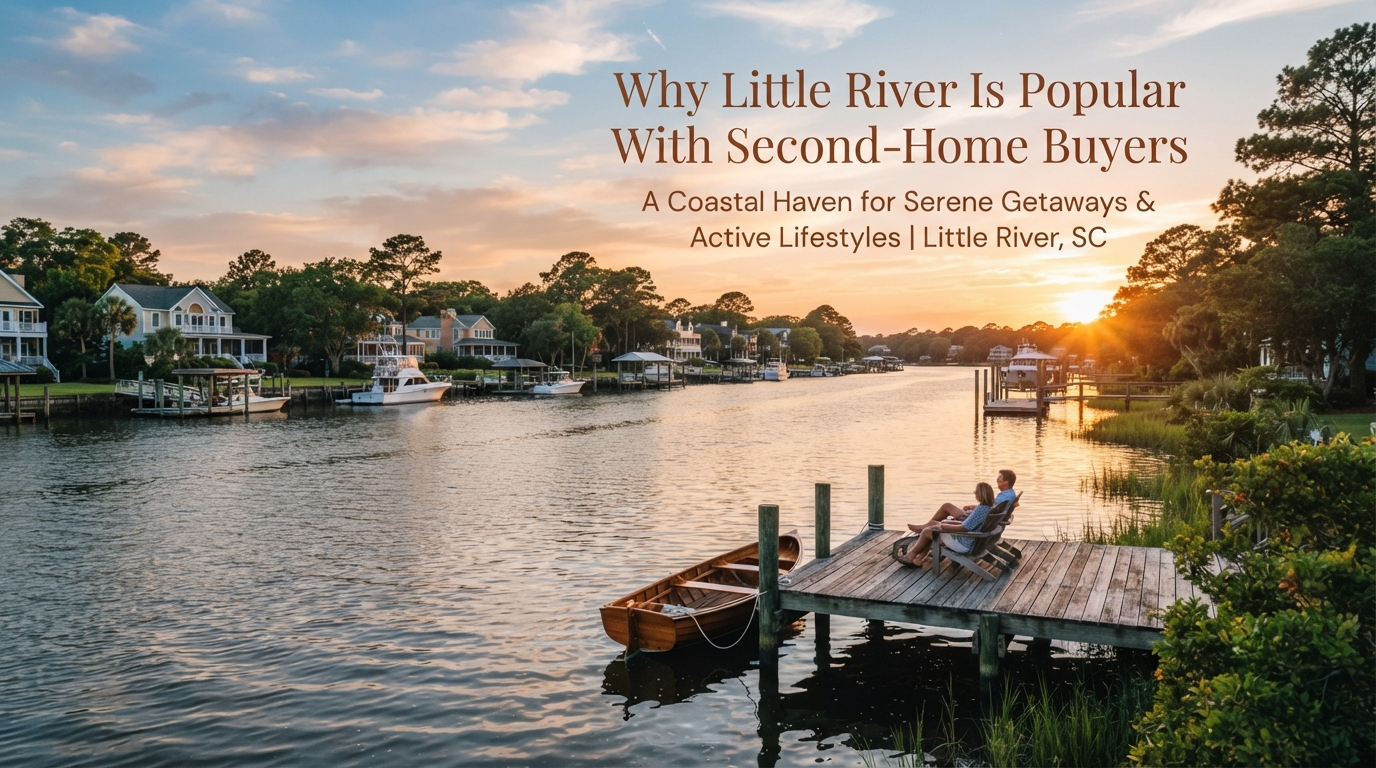
Marina communities dominate the second-home appeal in Little River for good reason. Coquina Harbour Condos put owners in the middle of the working harbor with genuine boat access and a community that reinforces itself. Carolina Yacht Landing delivers a more polished amenity package. Cypress Bay offers a more affordable entry into the marina lifestyle.
For second-home buyers who own boats, the ability to keep the boat at the marina, run out to the Intracoastal or the ocean on a whim, and have the boat maintained by professional marina staff during absences is genuinely valuable. Buyers who don't own boats often catch the bug within a year of ownership.
The Non-Marina Options
Not every second-home buyer wants marina living. Little River has a growing base of inland communities that appeal to buyers who prefer a house and yard over a condo and slip.
Eastport Golf Homes attracts golfers who want the golf course experience for their weekend trips. Homes here typically sit on manageable lots with the golf course as the primary amenity.
River Hills offers another golf-oriented option with a more residential feel.
Other inland communities — Bridgewater Cottages, Big Landing, various country-club-adjacent developments — offer traditional single-family second-home options at accessible price points.
Financial Math for Second-Home Buyers
The economics of second-home ownership in Little River:
Property tax is at the 6 percent non-primary residence rate. On a $400,000 second home, this typically runs $3,000-$4,500 per year.
Insurance costs including wind and hail policies commonly run $1,500-$3,500 per year on non-oceanfront properties.
HOA dues vary widely — $150 monthly for basic residential communities up to $600+ monthly for amenity-heavy marina condos.
Maintenance budgeting should account for the property sitting empty for periods. Regular exterior maintenance, HVAC service, pest control, and periodic interior checks all still apply.
Total annual carrying cost for a $400,000 Little River second home commonly runs $9,000-$18,000, before mortgage debt service.
For buyers offsetting these costs with occasional rentals, gross rental income of $8,000-$25,000 per year is realistic for properties in rental-friendly communities. Net after rental commission and additional costs typically runs 40-55 percent of gross.
What Second-Home Buyers Should Verify
Specific checks that matter for this buyer type:
Absentee ownership infrastructure. Property management options, HVAC maintenance services, cleaning services, and reliable local contacts for emergencies. Second-home buyers who don't establish these relationships early sometimes struggle.
HOA rules on rentals. If the property might be rented occasionally, verify the community allows the rental structure you're considering.
Insurance requirements and premiums. Some carriers price second homes differently than primary residences. Get quotes during due diligence.
Utility handling during vacant periods. HVAC settings, water shutoff options, and how the property handles being unoccupied for weeks at a time all matter.
Neighbor culture and community feel during off-peak times. A neighborhood that's lively when the second-home crowd is around but abandoned when they aren't may not feel the way buyers hope during off-season visits.
The Buyer Types Little River Second-Home Market Serves Well
Boat owners from inland Southeast and Mid-Atlantic markets. Retirees still working who want the coastal Carolina retreat before they fully retire. Family patriarchs and matriarchs wanting a home base for reunion gatherings and extended family visits. Empty-nesters preparing for eventual full-time relocation. Golf enthusiasts wanting weekend course access. Remote workers whose primary residence is elsewhere but who want extended coastal stays.
What doesn't work as well: pure vacation rental investors (better options exist in more rental-focused markets), retirees looking to relocate full-time immediately (some of the second-home-focused amenities aren't optimized for daily living), and buyers wanting the deepest urban amenities.
Two Things I Tell Every Little River Second-Home Buyer
First, plan for the property to be visited less than you think it will be. First-year owners commonly visit 12-15 times. Third-year owners average closer to 8-10 visits. Life fills up. The property that seems perfect for weekly visits often gets fewer visits than the initial optimism suggests. Budget for the ownership costs assuming realistic usage, not aspirational usage.
Second, build the local support network within the first year. A property manager who checks the home during your absences, an HVAC company that keeps records, a cleaning service, a landscaper. Second-home owners who wait until year three to build these relationships find that emergencies happen in year one, and they're not set up to handle them from a distance.
For broader market context, browsing Little River real estate alongside North Myrtle Beach real estate shows the value differences and lets second-home buyers compare across the pockets.
Key Takeaways
Little River's popularity with second-home buyers comes from a specific combination of value versus oceanfront alternatives, genuine water access through the marinas, drivable proximity to major Southeastern and Mid-Atlantic feeder markets, and manageable second-home ownership economics. Marina communities dominate the appeal for boat owners, while inland golf and residential communities serve buyers who prefer traditional houses. Annual carrying costs for a $400,000 second home commonly run $9,000-$18,000 before debt service, with rental offset opportunities available for buyers who want them. Buyers should establish absentee ownership infrastructure within the first year, verify HOA rental rules if considering income offset, and budget for realistic usage rather than aspirational usage. Little River works best for boat owners, family gathering hosts, weekend-focused travelers, and buyers preparing for eventual full-time relocation. It works less well for pure investment focus. The right second-home fit here is genuinely one of the better propositions on the Grand Strand.
About Greg Harrelson
Greg Harrelson is a seasoned Realtor® with more than 30 years of experience serving the Myrtle Beach and Grand Strand markets. As the founder of Century 21 The Harrelson Group, Greg has built his career helping buyers, sellers, and investors achieve success in every corner of the coastal Carolina real estate market. His expertise spans residential homes, investment properties, land development, and coastal condos. Known for his deep local knowledge, innovative marketing strategies, and commitment to personal service, Greg consistently helps clients reach their real estate goals while navigating the ever-changing market with confidence and precision.