Longs has never been the loudest option on the Grand Strand retirement map. Myrtle Beach and North Myrtle Beach get the marketing attention. Pawleys and Georgetown pull the higher-end retiree buyers. But over the last five years, I've watched a real, steady wave of retirees quietly land in Longs, and they aren't landing there by accident. They've done the math and looked at the alternatives and picked Longs specifically. Here's what's actually driving that pattern and what retirees should know about making Longs work as a retirement home.
Why Longs Ends Up on the Retirement Short List
The retirees I close in Longs almost always arrive after shopping more coastal options first. What pulls them inland:
- Lower insurance costs than immediate coastal pockets. Wind and hail policies run materially cheaper here, and flood insurance is often not required
- Reasonable proximity to the coast via Highway 31 — 15-20 minutes to North Myrtle Beach when you want the ocean
- Real amenity communities at price points that don't consume the retirement budget
- Newer construction that's easier to age in place in — first-floor primary suites, wider doorways, modern electrical
- Predictable HOA structures compared to the special-assessment risk in aging coastal condo buildings
- Golf communities with strong reputations at friendlier price points than Grande Dunes or Pawleys
The buyer walking in has usually looked at $600,000 in Myrtle Beach and realized $450,000 buys a better retirement home in Longs. That difference funds a lot of the rest of the retirement.
The Long Bay Corridor
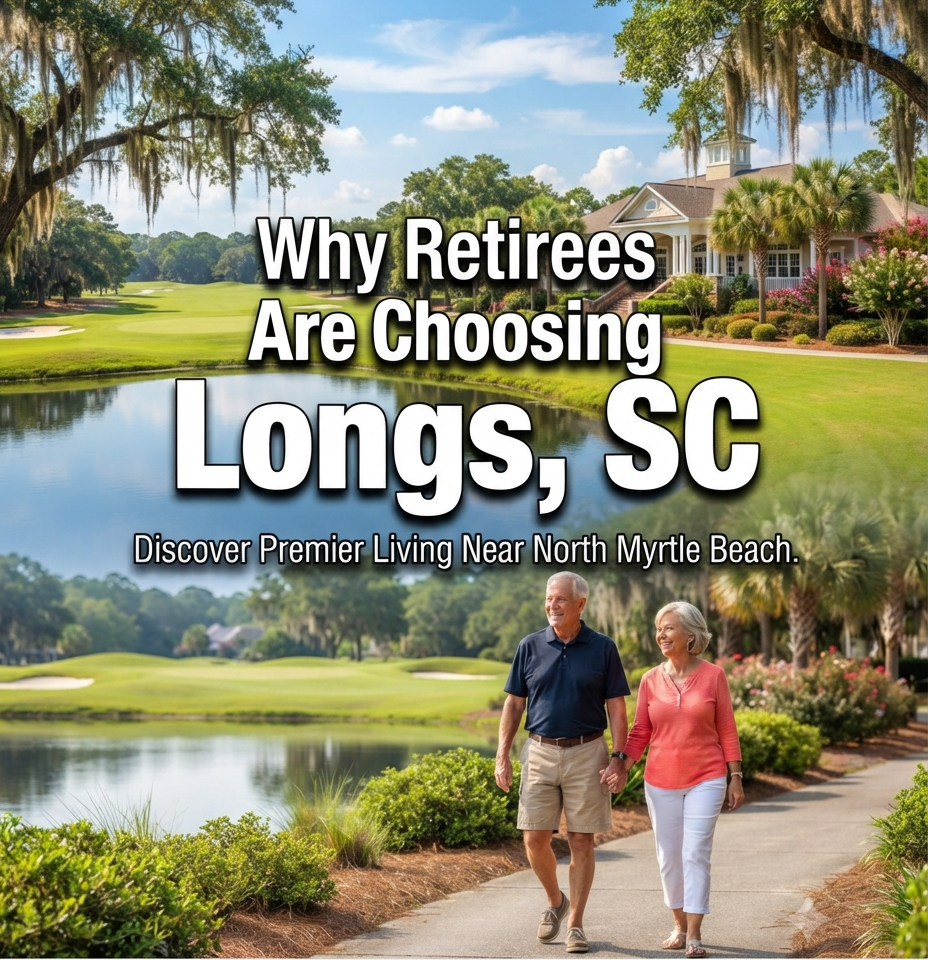
Long Bay Golf Club has anchored one of the more established retirement pockets in Longs for years. The Park at Long Bay and The Reserve at Long Bay pull a steady mix of full-time retirees and second-home buyers.
What makes the Long Bay corridor work for retirees:
The golf course is stable and well-maintained. Course closures have hit certain communities on the Grand Strand — Long Bay hasn't been one of them.
The HOA structure is active but not overwhelming. Dues generally cover community amenities without hitting reserve issues that create special assessments.
The community mix has a real retiree density. Retirees living here have neighbors who share their stage of life, which matters for daily social connection.
Price points work at $325,000 to $550,000 for most retirement-targeted single-family homes.
Polo Farms and the Larger-Lot Retirement Option
Polo Farms attracts a different retirement buyer — someone who wants space, larger lots, and less of the tight HOA feel. Retirees here often have some hobby that benefits from land — gardening, small workshop, RV storage, or just the space to spread out.
The trade-off is longer drives to grocery and shopping compared to the more central Longs communities. Prices run higher than Long Bay corridor because of the lot size.
Heritage Park and the Mid-Tier Retirement Sweet Spot
Heritage Park at Longs has been one of the steadier D.R. Horton-style retirement options for years. Predictable layouts, active pool and community amenities, and price points that hit the retirement math well.
Heritage Park works for retirees who don't need the golf or the larger lot — they want a manageable home, a real community, and enough amenity to have social structure without paying for premium levels of it.
Colonial Charters and the Established Communities
Colonial Charters has been in Longs longer than most of the newer communities and has settled into being one of the more mature retirement-heavy communities in the area. The homes are aging enough that some need updates, but the community identity and neighbor relationships are more established than in newer developments.
Retirees who value neighborhood stability over brand-new construction often land here. Prices reflect the older housing stock and typically run lower than the newer communities.
Newer Options Worth Watching
Longs has several newer communities that have started attracting retirement buyers:
- Cypress Ridge - newer construction with affordable entry points
- Chestnut Farms - mid-tier newer inventory
- Buck Creek - popular with retirees wanting predictable community feel
- Carrington Woods and Avery Woods - newer subdivisions filling in steadily
These are worth considering for retirees who want new construction with modern layouts, but they don't yet have the community-density feel of Long Bay or Colonial Charters. Give them a few more years.
What Longs Retirees Get Right
From the retirees I've helped close here over the last five years, the ones who thrive share some patterns:
They visit multiple times before buying. Not just a weekend. A full week or two, ideally in different seasons.
They prioritize a home they can age in place in. First-floor primary suite, minimal steps, wide doorways. Even at 62, they think ahead.
They plan for the drive. The 15-20 minute drive to North Myrtle Beach or the beach is easy at 65 and 70. It can feel longer at 80. Retirees who honestly think about their long-term driving comfort make better neighborhood picks.
They build in structural social time. The isolation risk of moving to a new town in retirement is real. The retirees who plug into golf leagues, church communities, volunteer roles, or recreational programs are the happy ones.
They pull HOA meeting minutes and reserve studies before going firm. The financially healthy retirees are the ones who understand the HOA numbers before signing.
What Longs Retirees Underestimate
Two things I always warn incoming retirees about:
Healthcare specialists. Grand Strand Medical Center in Myrtle Beach and McLeod Loris are both usable, but specialty care sometimes requires driving to Charleston or flying to Charlotte. Retirees with complex ongoing medical needs should factor this in.
Cultural and shopping preferences. Longs has enough for daily needs but doesn't have the retail depth, restaurant variety, or cultural offerings of larger cities. Retirees moving from urban areas sometimes struggle with this the first year.
For broader market context, browsing Longs real estate inventory alongside Myrtle Beach real estate gives retirees a real feel for how the price bands compare.
Two Things I Tell Every Retiree Considering Longs
First, rent for a few months before you buy. Every retirement move works better when the buyer has actually lived through the local rhythm before committing. A vacation rental in Long Bay or a monthly rental in Heritage Park gives you the real experience — the drive times, the community feel, the day-to-day pace. Buyers who skip this step sometimes regret their neighborhood choice within the first year.
Second, meet the neighbors before you commit. Knock on doors near your target property. Ask about the HOA, the community events, the noise, the parking, the drainage after storms. Fifteen minutes with an actual neighbor tells you more than any listing can. Longs communities are small enough that this is feasible, and the neighbors are typically friendly enough to appreciate the effort.
Key Takeaways
- Longs has become a real retirement destination because of lower insurance costs, coastal proximity via Highway 31, and price points that don't consume the retirement budget
- The Long Bay corridor (The Park, The Reserve) leads on established retirement community feel with stable golf
- Polo Farms attracts retirees wanting larger lots and less HOA density
- Heritage Park hits the mid-tier retirement sweet spot with active amenities and manageable homes
- Colonial Charters offers established neighborhood stability with older housing stock and lower prices
- Newer options (Cypress Ridge, Chestnut Farms, Buck Creek, Carrington Woods, Avery Woods) are worth watching but haven't fully matured yet
- Healthcare specialists and cultural depth are the two biggest trade-offs; factor these into the decision honestly
- Rent for a few months, meet the neighbors, and pull HOA financials before committing
About Greg Harrelson
Greg Harrelson is a seasoned Realtor® with more than 30 years of experience serving the Myrtle Beach and Grand Strand markets. As the founder of Century 21 The Harrelson Group, Greg has built his career helping buyers, sellers, and investors achieve success in every corner of the coastal Carolina real estate market. His expertise spans residential homes, investment properties, land development, and coastal condos. Known for his deep local knowledge, innovative marketing strategies, and commitment to personal service, Greg consistently helps clients reach their real estate goals while navigating the ever-changing market with confidence and precision.