Your HVAC just went out during the hottest week of the summer and now you're staring at contractor quotes that vary by thousands of dollars for what looks like the same work. Or you're a new coastal SC homeowner trying to establish relationships with the right service providers before an emergency hits. Either way, choosing the right HVAC contractor matters more on the coast than it does in most markets. Whether your home sits in a newer subdivision like Bridgewater Conway or an established coastal pocket, the salt-air realities of Grand Strand HVAC ownership demand contractors who understand this specific market.
Why Coastal SC HVAC Is Different
Grand Strand HVAC units work harder than their inland cousins. Salt air corrodes condenser coils faster than dry inland conditions. Humidity means the system runs more hours and dehumidifies constantly. Storm season sometimes damages units directly. Pest activity in coastal areas creates specific service issues.
The result: coastal HVAC systems typically need replacement at 10-12 years versus 15-18 years inland. Service demands run higher. And the specific brands, models, and coil coatings that hold up in coastal environments differ from what works in dry climates.
A contractor who doesn't understand this specific market may recommend equipment that fails prematurely or approach maintenance in ways that don't address coastal-specific issues.
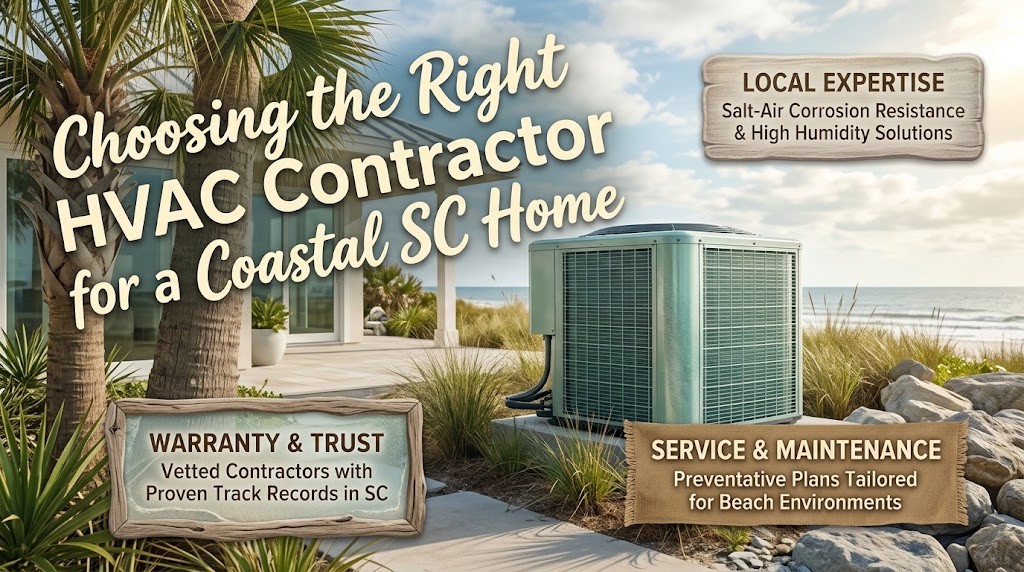
What Sets Good Coastal HVAC Contractors Apart
The characteristics of contractors worth building relationships with.
- Local Grand Strand experience. Contractors who've worked coastal SC for years understand salt air, humidity, storm response, and the specific manufacturers whose equipment holds up here.
- Licensed and insured in South Carolina. Verify with the SC Department of Labor, Licensing and Regulation before hiring. Uninsured contractors expose you to real liability.
- NATE-certified technicians. Industry certification signals ongoing training and technical competence.
- Manufacturer authorization for the brands they install. Warranty coverage often depends on installation by manufacturer-authorized dealers.
- Real BBB and Google review history. Not just star ratings — actual review content that reveals how the contractor handles routine work and how they handle problems.
- Written estimates with specific model numbers and installation details. Vague quotes protect the contractor, not you.
- Clear warranty coverage on both equipment and labor. Understand what's warranted for how long.
The Coastal-Specific Questions to Ask
Beyond standard contractor questions, ask these specifically.
What coil coating options do you recommend for coastal installation? Answer should acknowledge that coastal environments benefit from specific protective coatings on the outdoor coil.
How do you handle storm-damaged units? Answer should describe a specific process for assessing storm damage and coordinating with insurance.
What brands hold up best in this market? Answer should reflect real coastal experience rather than just brand loyalty.
How often should coastal condensers be rinsed? Answer should reference regular fresh-water rinsing to remove salt accumulation.
What's your emergency service response time? Answer should be specific — hours, not vague reassurances.
Do you offer maintenance agreements and what do they include? Coastal HVAC benefits from twice-yearly professional service.
The Estimate Comparison Framework
When you receive multiple estimates for the same work, compare on specific factors.
- Equipment model numbers. Same brand, same tier of equipment across estimates.
- Equipment tier and efficiency. SEER2 rating, single-stage vs. two-stage vs. variable-speed compressor.
- Coil coating for coastal installation.
- Installation details. New pad, refrigerant line replacement, condensate line replacement, electrical work included.
- Warranty terms. Equipment warranty length, labor warranty length, transferability if you sell.
- Removal and disposal of old equipment. Included or extra.
- Permit fees. Included or extra.
- Timeline for installation.
- Financing options if applicable.
The lowest estimate isn't automatically the best deal. Sometimes it's exactly what you need. Sometimes it's cutting corners that show up later. The comparison framework lets you evaluate on the right basis.
Red Flags to Watch For
Some patterns should push you toward another contractor.
Extreme pressure to sign immediately. Good contractors want you to make an informed decision.
Reluctance to provide written estimates with specifics.
Vague or evasive answers about licensing, insurance, or references.
Cash-only pricing or requests for large deposits before any work begins.
Estimates dramatically lower than competitors without clear explanation of what's different.
No physical business address or clear business registration.
Poor communication during the estimate process. If they're hard to reach now, imagine after they have your money.
When to Replace vs. Repair
Grand Strand HVAC systems face specific end-of-life decisions.
Units 10 years or older facing a major repair (compressor failure, evaporator coil failure) usually make more economic sense to replace than repair. The remaining life expectancy versus the repair cost typically favors replacement.
Units 5-8 years old with major repairs are borderline. Compare the repair cost to prorated remaining life value.
Units 3-5 years old should almost always be repaired unless the specific failure pattern suggests fundamental problems.
Newer units under warranty should be repaired using warranty coverage.
Coastal units may fail earlier than manufacturer expectations. Factor this into replacement timing decisions.
The Maintenance Agreement Question
Most coastal SC homeowners benefit from twice-yearly professional maintenance.
Spring service before cooling season addresses accumulated winter issues and preps the system for heavy summer duty.
Fall service before heating season addresses summer wear and preps for heating operation.
Maintenance agreements typically bundle these visits at a discount versus paying per visit. Some include priority emergency service, discounted parts, and other benefits.
For homeowners in specific neighborhoods like Astoria Park or newer communities where multiple homes were built around the same time, contractors sometimes offer neighborhood-specific service arrangements that work well.
Building the Relationship Before You Need It
The best time to find your HVAC contractor is before an emergency.
New homeowners in Carsens Ferry, Wild Wing Plantation, or any other Grand Strand community should identify a contractor within the first year of ownership. Schedule a maintenance visit even if the system seems fine. That first service call establishes the relationship and creates records that help future service.
Homeowners already established without a regular contractor should shop for one during shoulder seasons (April or October) when contractors have time to be responsive and thorough. Waiting until August after a failure to shop for the right contractor produces worse outcomes.
Two Things I Tell Every Coastal SC Homeowner About HVAC
First, invest in twice-yearly professional service. The cost is modest. The value in extended equipment life, avoided emergency service, and caught-early issues typically returns several times the annual investment. Coastal HVAC systems reward maintenance in ways inland systems don't.
Second, rinse the outdoor condenser with a garden hose quarterly. Take five minutes. Rinse the coil fins thoroughly with fresh water. This single homeowner-level maintenance step extends condenser life significantly by removing accumulated salt. Contractors don't do this between visits, but you can — and it matters more on the coast than most homeowners realize.
Key Takeaways
Coastal SC HVAC systems face salt air corrosion, humidity, and storm damage, so pick a contractor who actually works the Grand Strand — local experience, SC licensing and insurance, NATE certification, and real reviews. Ask coastal-specific questions about coil coatings, storm response, and condenser rinsing, and compare estimates on equipment, efficiency, warranty terms, and installation details, not just total price. Pressure tactics, cash-only pricing, and dramatically low bids are red flags. Twice-yearly maintenance keeps you ahead of coastal wear, and building the relationship before an emergency beats scrambling on a 95-degree Saturday.
About Greg Harrelson
Greg Harrelson is a seasoned Realtor® with more than 30 years of experience serving the Myrtle Beach and Grand Strand markets. As the founder of Century 21 The Harrelson Group, Greg has built his career helping buyers, sellers, and investors achieve success in every corner of the coastal Carolina real estate market. His expertise spans residential homes, investment properties, land development, and coastal condos. Known for his deep local knowledge, innovative marketing strategies, and commitment to personal service, Greg consistently helps clients reach their real estate goals while navigating the ever-changing market with confidence and precision.