Land doesn't sell on photos the way a house does. It sells on paperwork, access, and answers. If you're listing acreage in Horry County, the sellers who get strong offers are the ones who walk into the first showing with a survey, a clear road easement, and a soil evaluation already in hand. Buyers shopping 5-acre homes and parcels near Conway are comparing you against every other tract on the market, so the file you hand them matters as much as the dirt.
How Do You Price Acreage in Horry County?
Pricing land is harder than pricing a house because no two tracts match. Road frontage, soil, flood zone, timber, and distance from Highway 501, Highway 22, or Highway 905 all move the number. Recent sales of similar tracts nearby are your best guide, and you want sales of land, not houses on land.
Here's the mistake I see most. Owners price off what a neighbor asked, not what the neighbor got. Asking prices on rural land can sit for a year. Closed prices are what count. Ask your agent for sold tracts within a few miles, adjusted for size and access, and price against those.
What Should You Do Before You List?
Start with a current survey. An old plat or a hand-drawn sketch leaves buyers guessing about boundaries, and guessing buyers either walk or offer low. A fresh survey also catches encroachments and fence-line problems while you still have time to fix them.
Next, confirm legal access. If the road to your land is a private drive or a shared dirt road, find the recorded easement and make sure it's in writing. Missing or vague easements are one of the top reasons rural deals fall apart.
Then look at the title. Heirs' property is common in rural South Carolina, where land passes down without a clean probate trail. If several relatives share ownership, every owner has to sign. Sort that out with a closing attorney before you list, because it can take months.
Finally, pull the FEMA flood map. If part or all of your land sits in a flood zone, know where the line falls. Buyers will ask, and a clear answer builds trust.
Should You Order a Soil Test or Clear the Land?
If the land has public sewer nearby, you can skip this. If it doesn't, a soil evaluation that shows a septic system will work removes one of a buyer's biggest fears. A passing result can lift your price. A failing result tells you to market the tract for hunting, timber, or recreation instead of a homesite, and that's better to know up front.
Light clearing helps too. Mow the fields, mark the corners, and open a path so buyers can walk the property. A parcel that's easy to see feels bigger and more buildable. Don't strip the timber without talking to a forester or your agent first, because standing timber has its own value.
What About Taxes and Agricultural Use?
Many rural tracts are taxed as agricultural use, which carries a lower rate. If a buyer changes the use, back taxes can come due. Talk to the Horry County assessor's office and your closing attorney so you know how your parcel is classified and what the buyer can expect. Don't guess on this one. Get it in writing.
Who Buys Rural Land and How Should You Market It?
Buyers fall into a few groups: families building a custom home, retirees looking for privacy, hunters and outdoor buyers, small farmers, and investors holding for growth. Each wants different details. Homesite buyers want soil, power, and road. Recreation buyers want woods and water. Investors want frontage near a growing corridor.
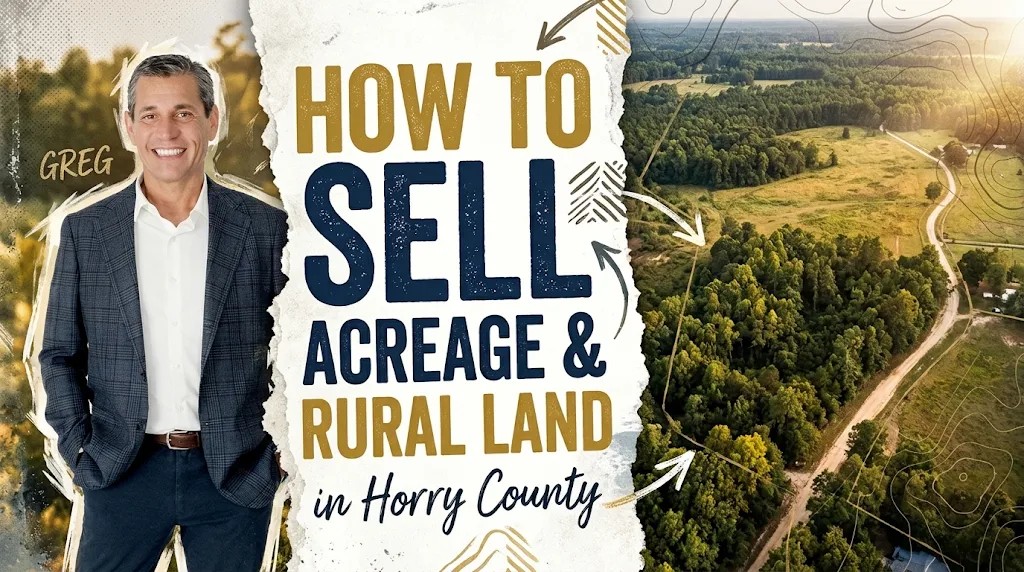
Good marketing for land means aerial photos, a drone video, a boundary overlay on the map, and a clear list of what's included. If your tract is close to town, mention nearby amenities and compare it to Conway homes priced from $500,000 to $1 million so buyers see the value of building on your lot. Over 30 years in this market, I've seen well-documented land sell faster and for more than better land with no paperwork.
Key Takeaways
Land sells on documentation. Price against closed sales of similar tracts, order a current survey, confirm recorded road access, and clear up any heirs' property or title issues before you list. A soil evaluation and flood map answer a buyer's biggest questions early. Ask your attorney about agricultural tax status, then market the tract with aerials and a clear boundary map.
About Greg Harrelson
Greg Harrelson is a seasoned Realtor® with more than 30 years of experience serving the Myrtle Beach and Grand Strand markets. As the founder of Century 21 The Harrelson Group, Greg has built his career helping buyers, sellers, and investors achieve success in every corner of the coastal Carolina real estate market. His expertise spans residential homes, investment properties, land development, and coastal condos. Known for his deep local knowledge, innovative marketing strategies, and commitment to personal service, Greg consistently helps clients reach their real estate goals while navigating the ever-changing market with confidence and precision.