Waterfront in Myrtle Beach means one of three things: the Atlantic, the Intracoastal Waterway, or a lake or pond inside a community. Each one has a different price, a different insurance bill, and a different kind of maintenance. If you're shopping the Myrtle Beach homes between $500,000 and $1,000,000, you'll see all three side by side, and the listing photos won't tell you which one you're really buying.
Here's the thing. Two homes can both say "waterfront" and cost the same, but one is a dock-ready Intracoastal lot and the other is a pond view with a retention rule. Know which you want before you tour.
What Types of Waterfront Homes Are in Myrtle Beach?
Oceanfront is the top of the market. Think Ocean Boulevard condos and the big homes in Grande Dunes, where the Atlantic sits on one side and the Intracoastal on the other. You pay for the view, the beach access, and the fact that no one can build in front of you.
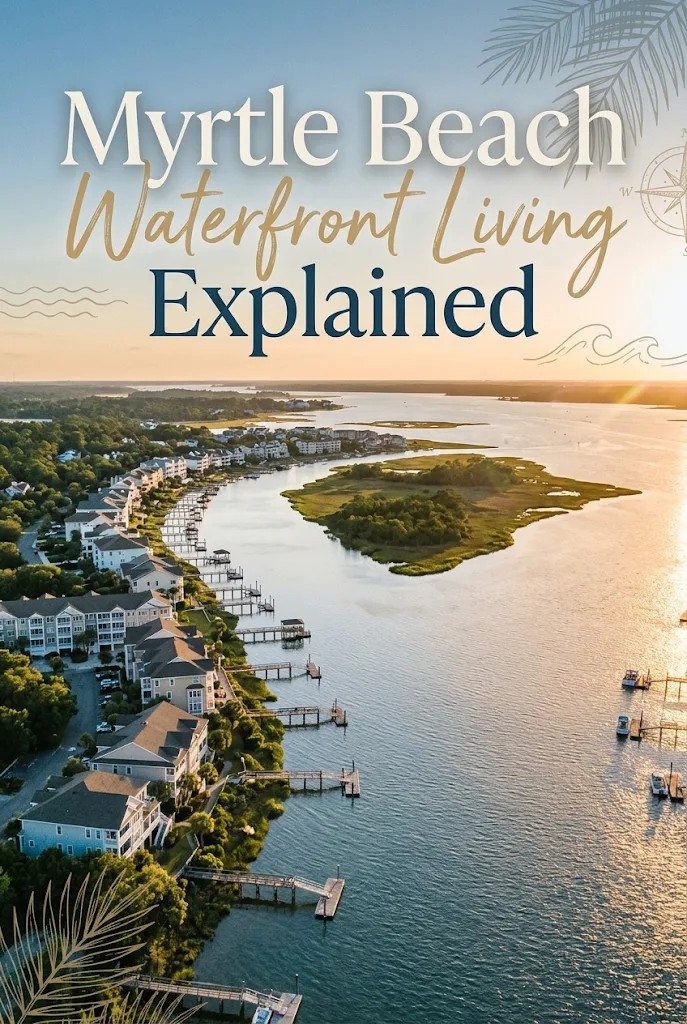
Intracoastal Waterway homes are the boater's choice. Lots along the ICW in Carolina Forest and near Grande Dunes Marina give you deep-water access and a short run to open water. Waterway Palms is a good example of how a community can put you on the water without oceanfront pricing.
Then there are the lake and pond homes. These show up all over Carolina Forest and many Myrtle Beach golf communities. They give you a water view and a quiet backyard, but you can't launch a boat from most of them.
What Does Waterfront Really Cost to Own?
 Insurance first. Coastal SC homes usually need three layers: a homeowner's policy, wind and hail coverage, and flood. Many oceanfront and ICW owners place wind and hail through the SC Wind and Hail Underwriting Association, and the premium can surprise buyers who only budgeted for the mortgage. Get quotes before you make an offer, not after inspection.
Flood zones come second. FEMA maps put many waterfront lots in AE or VE zones, and lenders require flood insurance in those. An elevation certificate can cut a premium sharply, so ask the seller whether one exists.
Maintenance is the third bill. Salt air eats HVAC condensers, gutters, and metal railings. I see inspectors flag corroded outdoor units on waterfront homes far more often than inland ones, and replacement isn't cheap.
Docks, Bulkheads, and Permits
If the home has a dock, ask for the permit. Docks and bulkheads on tidal water fall under the SC Department of Environmental Services and its Office of Coastal Resource Management. A dock built without a permit can become your problem at closing. Have a marine contractor check the bulkhead and pilings, because a failing bulkhead is a five-figure repair.
Who Buys Waterfront in Myrtle Beach?
Retirees from the Northeast and Midwest buy for the view and the slower days. Boaters buy for the Intracoastal. Investors look at oceanfront condos for rental income, though rental rules and HOA restrictions vary by building, so read the documents first. Luxury buyers move toward Myrtle Beach homes over $1,000,000, where oceanfront and ICW estates cluster.
I've closed deals where a buyer fell for a sunset view and never asked about the dock. Three weeks later they were scrambling to find a lift contractor. Ask every question on day one.
How Do You Choose the Right Waterfront Setup?
Match the water to your life. If you'll boat every weekend, buy on the Intracoastal with reliable depth at low tide. If you want a view and a morning coffee spot, a lake lot costs less and carries lighter insurance. If the beach is the point, oceanfront condos give you the sand without the upkeep of a house.
Start your search through Myrtle Beach real estate and ask your agent to filter by water type, not just the word waterfront.
Key Takeaways
Waterfront in Myrtle Beach can mean oceanfront, Intracoastal, or a community lake, and each carries a different price and upkeep load. Budget for homeowner's, wind and hail, and flood insurance before you make an offer. Confirm dock permits and bulkhead condition, and expect salt air to wear on your HVAC and metal fixtures. Pick the water type that matches how you'll really live.
About Greg Harrelson
Greg Harrelson is a seasoned Realtor® with more than 30 years of experience serving the Myrtle Beach and Grand Strand markets. As the founder of Century 21 The Harrelson Group, Greg has built his career helping buyers, sellers, and investors achieve success in every corner of the coastal Carolina real estate market. His expertise spans residential homes, investment properties, land development, and coastal condos. Known for his deep local knowledge, innovative marketing strategies, and commitment to personal service, Greg consistently helps clients reach their real estate goals while navigating the ever-changing market with confidence and precision.