Your regular homeowner's policy does not cover flood. That one sentence surprises more beach-area buyers than anything else I explain. Water rising from a storm surge, a swollen river, or heavy rain is a flood, and it needs its own policy. If you're shopping in North Myrtle Beach real estate or anywhere near the Waccamaw, the Intracoastal Waterway, or the ocean, get a flood quote before you fall in love with a house.
How Do Flood Zones Affect Insurance Costs?
FEMA maps the coast into flood zones, and the zone drives your premium and your lender's requirements. VE zones are coastal high-hazard areas exposed to wave action, and they cost the most. AE zones carry a high flood risk and require flood insurance if you have a mortgage. X zones are lower risk, but lower isn't zero. Plenty of flooded homes in Horry County sat outside the high-risk zones.
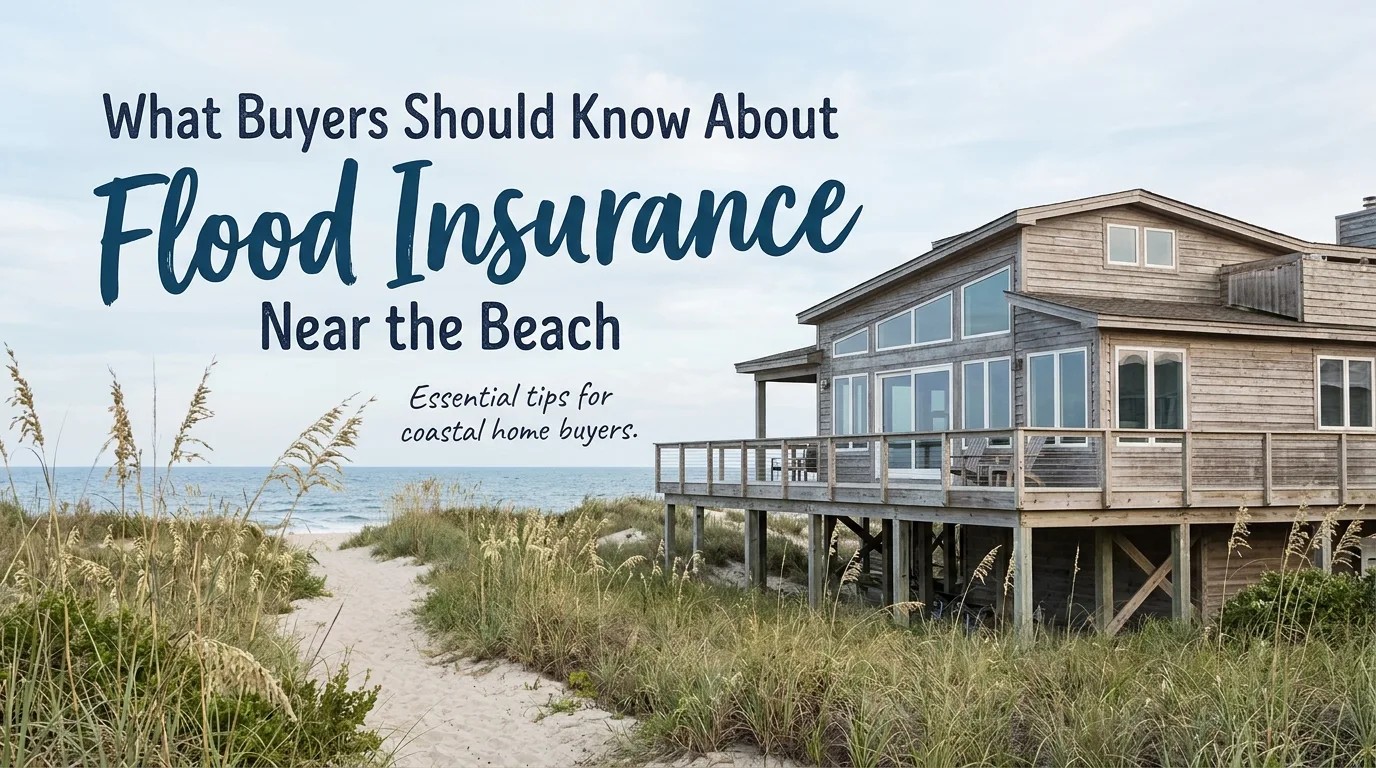
Elevation matters just as much as the zone. A home built up on pilings or raised above the base flood elevation can cost far less to insure than a slab-on-grade house in the same neighborhood. Ask the seller for an elevation certificate. If there isn't one, a surveyor can prepare one, and it can lower your premium.
What Are Your Flood Insurance Options?
You have two main routes. The first is the National Flood Insurance Program, which is backed by the federal government and sold through local insurance agents. Residential building coverage through the program tops out at $250,000, and contents coverage at $100,000. If your home is worth more, you may want a private flood policy that offers higher limits.
The second route is a private flood carrier. Private policies can offer higher limits, shorter waiting periods, and sometimes lower premiums for newer, well-elevated homes. Compare both. Talk to an agent who writes coastal policies every day, such as the agents listed on our Conway property insurance page, because quotes vary a lot depending on the carrier and the home's details.
How Does Flood Insurance Fit With Wind and Hail Coverage?
Coastal South Carolina buyers usually deal with three layers: the standard homeowner's policy, a wind and hail policy, and flood. Near the water, wind and hail is often carved out and written separately, sometimes through the South Carolina Wind and Hail Underwriting Association. Flood is a third policy on top of both. Budget for all three, because lenders and insurers treat each one separately.
What Should Buyers Do Before Closing?
Request the flood zone and elevation certificate early. Get insurance quotes during your due diligence period, not the week of closing. NFIP policies generally carry a 30-day waiting period, though there are exceptions when a policy is tied to a loan closing, so ask your agent about timing.
Look at the flood history too. Ask the seller whether the home has ever taken on water, and check for past claims. Storms like Matthew in 2016 and Florence in 2018 sent water into areas that surprised even long-time residents, especially along the Waccamaw and in low spots around Conway and Socastee. Ask neighbors, and look at the ground-floor materials, because flood-resistant flooring and raised mechanicals help.
If you're buying a condo, ask what the HOA's master policy covers. Many master policies handle the building but not your interior, and flood coverage on the master policy varies. Cherry Grove, Ocean Drive, and Little River all have different mixes of elevated homes and low-lying lots, so compare a few streets. Browse Cherry Grove real estate and Little River real estate to see how construction and elevation differ.
Key Takeaways
Standard homeowner's insurance doesn't cover flood, so you'll need a separate policy near the beach and the rivers. Your flood zone and the home's elevation set the cost, and an elevation certificate can save you money. Compare the National Flood Insurance Program with private carriers, and plan on wind and hail coverage as a third layer. Get quotes during due diligence, before you're locked into a closing date.
Frequently Asked Questions
Do I need flood insurance if my home is in an X zone?
Your lender may not require it, but it's still a smart buy. Many flood claims come from lower-risk zones, and premiums in an X zone are often much lower than in AE or VE.
How long does it take for flood insurance to start?
NFIP policies usually have a 30-day waiting period, with some exceptions when the policy is purchased in connection with a loan closing. Ask your agent early so you aren't caught without coverage.
Does flood insurance cover my belongings?
Only if you buy contents coverage. Building coverage protects the structure, and contents coverage is a separate add-on with its own limit.
Is wind and hail covered by flood insurance?
No. Wind and hail is its own coverage, and near the coast it's often written separately from your homeowner's policy.
What is an elevation certificate?
It's a document prepared by a licensed surveyor that shows your home's elevation compared to the base flood elevation. Insurers use it to set your flood premium, and it can lower your rate.
About Greg Harrelson
Greg Harrelson is a seasoned Realtor® with more than 30 years of experience serving the Myrtle Beach and Grand Strand markets. As the founder of Century 21 The Harrelson Group, Greg has built his career helping buyers, sellers, and investors achieve success in every corner of the coastal Carolina real estate market. His expertise spans residential homes, investment properties, land development, and coastal condos. Known for his deep local knowledge, innovative marketing strategies, and commitment to personal service, Greg consistently helps clients reach their real estate goals while navigating the ever-changing market with confidence and precision.