Downtown Conway ten years ago was a quieter place. There were still restaurants, still shops, and still the historic character that has always defined this section of town — but the buyer inquiries and out-of-town visitors were a fraction of what they are now. Something has shifted. Downtown Conway has become one of the more sought-after residential and small-business destinations in the region, and after thirty-plus years of watching this town evolve, I want to explain what actually happened and why it matters for anyone thinking about buying, living, or investing here.
The Historic District Has Always Been the Foundation
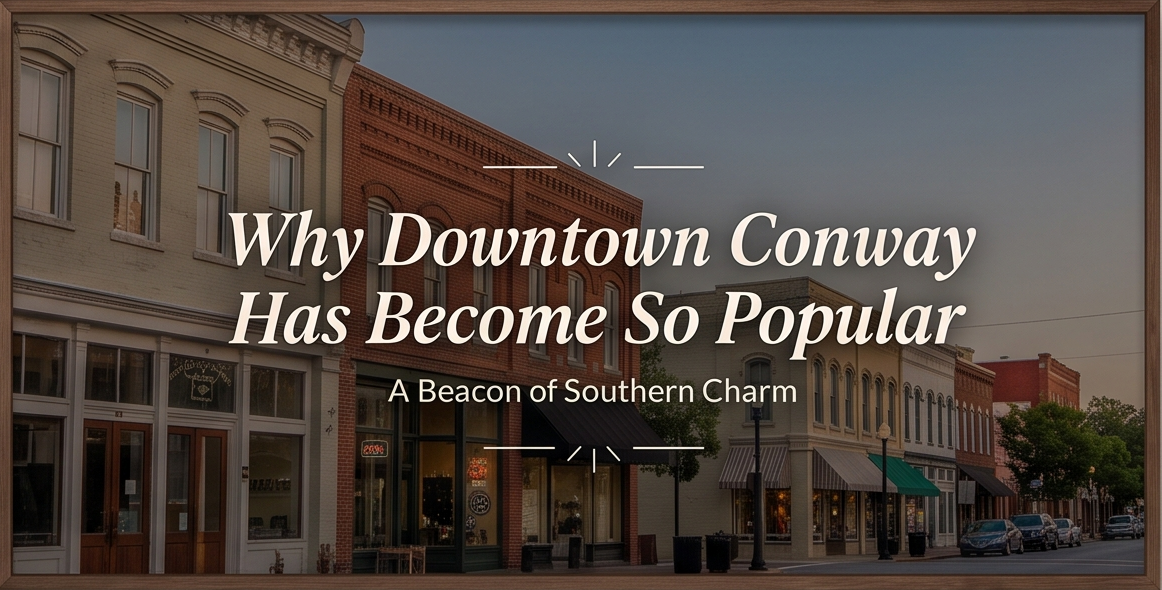
The core of downtown Conway is the historic district — the streets around Main Street, Kingston Street, Third Avenue, and the Waccamaw River waterfront. Homes here range from grand 1890s Victorians to modest craftsman-era cottages, with a smattering of newer infill construction. The oak canopy is real. The sidewalks are actual sidewalks. And the neighborhood identity has never been diluted by tourist infrastructure the way parts of Myrtle Beach have been.
What's changed is that buyers finally noticed. Walkable downtown neighborhoods with real character and reasonable prices are rare in the Southeast. Downtown Conway has quietly been one, and word has gotten out.
The Riverwalk Changed the Daily Rhythm
The Waccamaw River Riverwalk connects downtown Conway to the water in a way that changed how residents actually use their neighborhood. On any Saturday morning, you'll see people walking dogs, riding bikes, pushing strollers, and stopping at Trestle for coffee. Kayakers put in near the marina. Paddleboarders launch at Pitch Landing.
The Riverwalk isn't just an amenity — it's the connective tissue that makes downtown Conway feel like a real neighborhood. Residents can walk from their homes to the river, along the river to a coffee shop, and back home in a loop that most Southern towns can only dream about.
The Restaurant Scene Has Actually Grown
Ten years ago, Conway's downtown dining was solid but limited. Today it's genuinely deep. Restaurants like Rivertown Bistro, Crady's, Trestle Bakery, and a rotating cast of new arrivals give downtown Conway a food scene that competes with communities much larger. The Third Avenue block has become its own restaurant row on some nights.
The restaurants matter because they make downtown a place people go, not just a place people live near. Residents from Wild Wing Plantation, Carsens Ferry, and Carolina Forest come downtown for dinner and drift back to their subdivisions. Visitors from Myrtle Beach make the 20-minute drive for something different. That flow keeps the downtown alive.
Coastal Carolina University's Steady Influence
CCU sits just south of downtown Conway and has grown substantially over the last two decades. The university's presence brings faculty who want walkable downtown living, students who spend money at downtown businesses, and alumni who eventually return to buy homes in the area. It's a stable driver of population and economic activity that most small towns don't have.
The CCU football program has become another downtown draw — home game weekends fill restaurants and hotels. The Chanticleer identity has quietly become part of Conway's civic identity too.
The Historic Preservation Has Held
Conway has been unusually disciplined about protecting the historic district. Preservation guidelines, design review processes, and community pushback against inappropriate development have kept downtown feeling like downtown. Even the newer construction in and around the historic district generally respects the scale and character of the older buildings.
That discipline pays off decades later. Neighborhoods that surrender to modernization lose their distinctive appeal. Neighborhoods that hold the line become progressively more valuable because the character can't be manufactured elsewhere.
The Population Growth Has Been Steady but Manageable
Conway's population has grown steadily over the last decade without exploding. That measured growth means the infrastructure has generally kept pace. Traffic in downtown is real but not overwhelming. Parking is manageable if you know where to look. The pace of change hasn't outstripped the community's ability to absorb it.
Compare this to communities that grew too fast — you see the strain in overcrowded schools, congested roads, and neighborhood character that gets diluted by rushed development. Conway has avoided the worst of that.
Who's Actually Moving Downtown
The buyer mix in downtown Conway has evolved:
Retirees who traded suburban houses for walkable urban living. Coming from the Northeast primarily, wanting real downtown character without the cost of Charleston or Wilmington.
Remote workers who want a real neighborhood. A downtown Conway home office beats a suburban home office in ways that show up in daily quality of life.
Younger families who want walkable neighborhoods for their kids. Downtown Conway lets kids ride bikes to Conway Elementary and walk to the Riverwalk in ways most modern neighborhoods don't allow.
Alumni and faculty from CCU who want short commutes and real community. Conway is small enough to feel personal, big enough to have real amenities.
Investors buying historic homes for renovation and rental — carefully, given historic district rules, but the returns have been real.
For buyers exploring downtown-adjacent inventory, browsing Conway real estate alongside homes near Conway Elementary shows what's actually on the market in the historic district and immediate surrounding streets.
What Downtown Conway Costs
Realistic price bands right now:
Smaller historic cottages needing updates: $220,000 to $325,000.
Well-maintained mid-tier historic homes: $325,000 to $500,000.
Larger renovated historic homes on premium streets: $500,000 to $850,000+.
New infill construction in the historic district: variable, typically $400,000 to $800,000 depending on lot and design.
Condos and townhomes in and near downtown: $180,000 to $400,000 depending on building and unit.
What Downtown Conway Buyers Underestimate
Two patterns worth flagging:
Historic homes need real attention. Older HVAC, older electrical, older windows, occasional foundation quirks. Budget for updates over the first few years of ownership. The character is real, but so is the maintenance load.
Parking on some blocks can be tight, particularly during CCU home games or special events. Off-street parking on your specific property is a real value driver in downtown Conway.
Two Things I Tell Every Downtown Conway Buyer
First, walk the neighborhood at multiple times of day before you buy. A Tuesday morning feel is different from a Saturday afternoon feel, which is different from a game-day Saturday. Buyers who visit only once see one version of the neighborhood. Buyers who visit multiple times see the reality.
Second, talk to your future neighbors before you commit. Downtown Conway is small enough that neighbor conversations are easy and consistently informative. Ask about the block, the noise, the parking, the drainage after storms, and the community events. Fifteen minutes of neighbor conversation tells you more than any inspection report can.
Key Takeaways
Downtown Conway's popularity has grown structurally rather than as a trend — the historic district's character, the Riverwalk connection to the Waccamaw, an evolving restaurant scene, CCU's steady influence, disciplined historic preservation, and measured population growth have all reinforced each other over the last decade. The buyer mix has broadened from primarily local move-up buyers to include retirees, remote workers, younger families, CCU alumni and faculty, and investors. Realistic price points range from $180,000 condos to $850,000+ premium historic homes. Historic homes require budgeting for updates over time, and parking on some blocks is worth verifying. The neighborhood works particularly well for buyers who value walkable urban living, real character, and community connection over suburban conveniences. Downtown Conway has quietly become one of the more interesting residential neighborhoods on the Grand Strand, and buyers who understand the trajectory tend to make good long-term decisions when they land here.
About Greg Harrelson
Greg Harrelson is a seasoned Realtor® with more than 30 years of experience serving the Myrtle Beach and Grand Strand markets. As the founder of Century 21 The Harrelson Group, Greg has built his career helping buyers, sellers, and investors achieve success in every corner of the coastal Carolina real estate market. His expertise spans residential homes, investment properties, land development, and coastal condos. Known for his deep local knowledge, innovative marketing strategies, and commitment to personal service, Greg consistently helps clients reach their real estate goals while navigating the ever-changing market with confidence and precision.