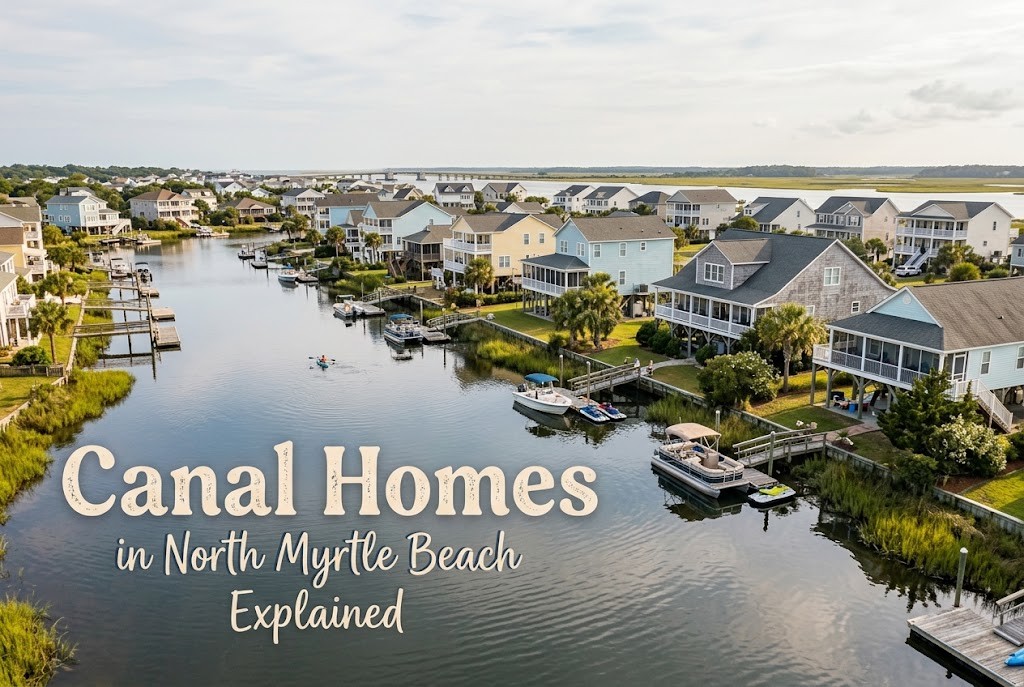
Canal homes in North Myrtle Beach — especially the channels in Cherry Grove — are one of the Grand Strand's quietest success stories. They give you backyard boat access, a protected waterway for fishing or paddling, and a lifestyle that direct oceanfront can't match. But they also come with specifics that trip up buyers coming from inland or from pure beach markets. Here's what to know before you tour one.
What a Cherry Grove Canal Actually Is
The channels through Cherry Grove run inland from the ocean through a grid of residential streets. Each canal connects back to the ocean through a system that eventually meets the Atlantic. Most homes along the canals have private docks, many have boat lifts, and the water in the canals rises and falls with the tide. Boats on lifts stay dry at high tide and sit on the lift above the mud flats at low tide. That tidal rhythm is the first thing inland buyers underestimate.
What I see consistently is that out-of-state buyers tour a canal home at high tide, fall in love with the view, and don't come back at low tide to see what the same view looks like with mud showing. Visit twice before you offer.
What the Tides Mean for Daily Use
You can't launch or dock a boat at any time you want. Low tide limits usable water depth for powered boats, especially larger ones. Owners learn the tide chart quickly — most Cherry Grove boaters plan trips around the two high tides per day. If you want unrestricted boat access at any hour, the Intracoastal Waterway homes in Little River or around Myrtle Beach give you more depth. If you accept the tide schedule, canal homes give you a quieter, more private boating experience than the busier ICW.
Kayaks and small jon boats handle lower water better than inboards or heavier center consoles. If you're buying for small-boat and fishing use, the tide picture is less restrictive.
Boat Lifts, Docks, and What to Inspect
Most Cherry Grove canal homes include a private dock, and many include a boat lift. These structures are serious investments and serious maintenance items. Pilings rot, dock boards warp, lift motors fail, and lift cables need periodic replacement. Before you offer, hire an inspector who specifically evaluates docks and lifts, not just the house. The inspection cost is minor compared to the replacement cost of a failed lift or rotted piling.
Also check the dock permits. Horry County and the SC Department of Health and Environmental Control have rules about dock dimensions, dolphin pilings, and lift installations. A dock that was built outside current rules may be grandfathered but may not be legally expandable or replaceable. Confirm what the dock is legally allowed to be before you factor it into value.
Flood Zones and Insurance Realities
Canal homes sit in flood zones. Period. Most are coded AE under FEMA, which means flood insurance is required for any mortgage and strongly recommended even for cash buyers. Premiums depend on elevation certificate, year built, and whether the structure meets current flood construction standards. Older raised homes may qualify for better rates than slab-on-grade homes built below current base flood elevation. Pull the elevation certificate during due diligence — it changes the premium conversation.
Wind and hail insurance is separate, and canal homes near the ocean face premiums comparable to oceanfront. The SC Wind and Hail Underwriting Association is still an option for homes the private market won't touch. Price insurance before you fall for a specific property, not after.
Which Canals Hold Value Best
Not all canals are equal. The channels closer to the ocean inlets with deeper water hold value better than canals that get shallow at the end of the system. Canals with newer homes, well-maintained docks, and consistent elevation above the flood threshold outperform canals with mixed-age housing and visible flood history. Streets like 48th, 49th, and 50th Avenue North near the ocean end have been consistent long-term performers. Interior canals further from the ocean inlet can be excellent values but require more careful tide analysis.
Buyers who do best here walk the specific canal, talk to two or three neighbors, and ask about the last significant flooding event. Local history matters.
What You Get That Oceanfront Can't Give You
Privacy. Backyard water. No sand tracking into your living room. Lower HOA (most canal homes aren't in HOAs at all). Boat access from your own property. A different pace than beachfront condo life. Fishing from your dock. Dolphins and manatees in the canals seasonally. A real neighborhood where kids ride bikes and residents know each other.
Here's what nobody tells you until you move in: the sound of a canal at night — small waves against pilings, pelicans, the occasional boat engine — is one of the quiet reasons residents don't want to leave once they settle.
Who Should Actually Buy a Canal Home
Boaters, fishers, retirees, and families who want the water lifestyle without the exposure or crowds of direct oceanfront. Investors who understand the specific flood and tide picture. Second-home owners who use the home at least seasonally. The buyer who should probably not buy is the one who wanted oceanfront and settled for a canal without understanding the differences. Those sellers typically relist within three years.
Key Takeaways
Cherry Grove and other North Myrtle Beach canal homes trade oceanfront exposure for backyard boat access, privacy, and a quieter waterfront lifestyle, but they come with tide schedules, flood zones, dock inspections, and specific insurance realities buyers need to understand up front. Visit at both high and low tide, pull the elevation certificate, hire a dock-and-lift inspector, and price insurance before you offer. The canals closer to deep water with newer homes and good elevation hold value best, and the buyers who thrive here want the water lifestyle without the oceanfront premium.
About Greg Harrelson
Greg Harrelson is a seasoned Realtor® with more than 30 years of experience serving the Myrtle Beach and Grand Strand markets. As the founder of Century 21 The Harrelson Group, Greg has built his career helping buyers, sellers, and investors achieve success in every corner of the coastal Carolina real estate market. His expertise spans residential homes, investment properties, land development, and coastal condos. Known for his deep local knowledge, innovative marketing strategies, and commitment to personal service, Greg consistently helps clients reach their real estate goals while navigating the ever-changing market with confidence and precision.