People moving to South Carolina often lump the whole state together. On a map, Myrtle Beach and Columbia look like neighbors. In real life, they're two different places with two different climates, two different insurance realities, and two different lifestyles. If you're deciding between coastal Carolina and inland SC, the differences will shape your mortgage, your maintenance budget, and how you spend your Saturdays. Here's what nobody tells you until after you've closed.
The Climate Is a Different Animal on the Coast
Inland SC gets hot, humid summers and milder winters. The Grand Strand gets the same humidity, plus salt air, plus hurricane exposure, plus a different kind of winter wind coming off the Atlantic. The temperatures aren't dramatically different between Myrtle Beach and Columbia on an average July afternoon, but what the air does to your house is. Metal corrodes faster. Wood swells. HVAC coils foul. If you've only lived inland, you underestimate how much the ocean works on a home, year in and year out.
Inland buyers moving to Conway, which is twelve miles inland and sits on the Waccamaw River, get a milder version of the same thing. Still humid, still subject to tropical weather, but less direct salt exposure than homes east of Highway 17.
The Insurance Stack Is Where Most Inland Buyers Get Surprised
Inland SC homeowners usually carry one policy: homeowner's insurance. Coastal Carolina homeowners typically carry three layers — homeowner's, wind and hail, and often flood. Each one has its own carrier, its own deductibles, and its own rules. The wind and hail layer is where most inland buyers go pale at closing when they see the number. Direct oceanfront runs several multiples of what a comparable Columbia home would pay for all its coverage combined.
The SC Wind and Hail Underwriting Association is the state-supported backstop when the private market won't write a property. It's a real option, not a last resort, and plenty of coastal homeowners use it. Just know it exists before you fall for a specific home.
Home Construction Reflects the Environment
Coastal homes are built differently. Raised beach homes sit on piers because they're in flood zones. Hardie plank and other cementitious sidings are standard because wood siding deteriorates faster near salt air. Metal roofs show up more often on new construction near the coast. HVAC systems are sized larger for humidity load. Inland SC homes trade a lot of these features for traditional on-grade foundations, lower insurance costs, and simpler maintenance.
When you tour a coastal home, pay attention to things like coil coatings on the condenser, hurricane shutters, impact-rated windows, and whether the roof has documented wind mitigation. Inland buyers often skip these details and then discover their renewal insurance premium hinges on them.
Lifestyle Isn't Just Beach vs. No Beach
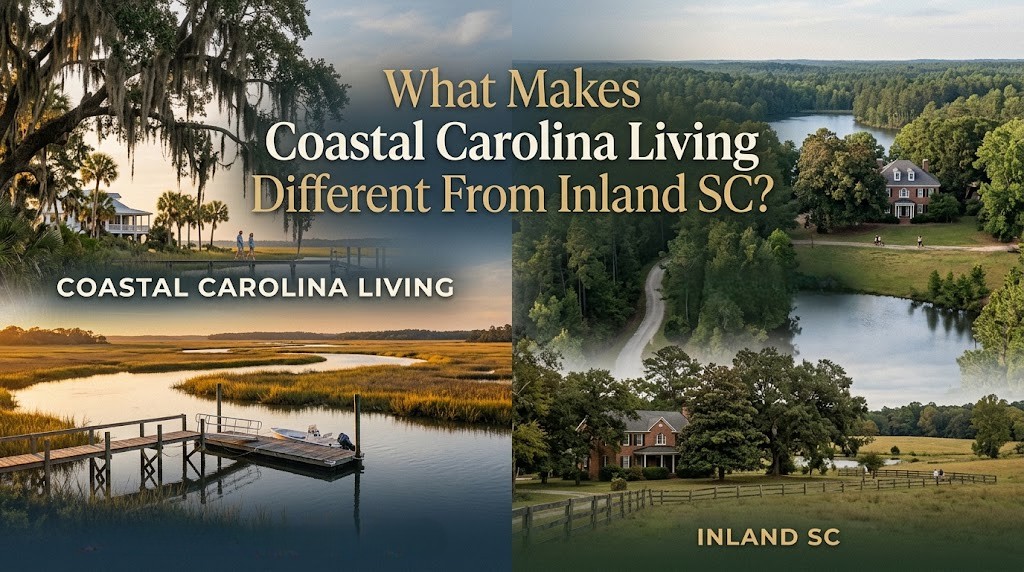
The lifestyle gap is more layered than most buyers assume. Coastal Carolina gives you ocean, intracoastal, river systems like the Waccamaw, downtown Conway's walkable district, boating, fishing, oceanfront dining, and about a hundred golf courses within thirty minutes. Inland SC gives you lake culture (Lake Marion, Lake Murray), BBQ country, state parks, college-town rhythms around Columbia and Clemson, and a slower suburban pace.
Here's the thing about the Grand Strand lifestyle: in-season (April through October) it's busy. Traffic on Highway 17 changes, restaurants have waits, the beaches fill up. Residents learn to work around the tourist calendar. Inland SC doesn't have that same seasonal rhythm. If you want pure quiet year-round, that gap matters.
Cost of Living Trades Different Line Items
Coastal Carolina generally has higher insurance costs, higher HOA fees in beach communities, and often higher property taxes for second homes or non-primary residences. Inland SC has lower insurance, cheaper gas, usually cheaper housing per square foot, and smaller utility bills in the winter. Food costs are similar. Healthcare access is similar in metro Columbia and Myrtle Beach, though specific specialty care may route to Charleston or Charlotte depending on where you land.
If you're planning around a fixed retirement budget, run the actual numbers for the specific town you're considering, not state averages.
Who Thrives on the Coast and Who Doesn't
People who love water, outdoor time, and a seasonal rhythm thrive on the coast. People who dislike tourists, hate humidity, or need deep quiet year-round often do better inland. Boaters, golfers, retirees who want ocean access, and families drawn to small coastal towns like Little River or Aynor settle in and stay. Buyers who move for the beach but never actually walk on it tend to regret the premium they paid.
What to Look at Before You Pick a Side
Spend time in both regions in different seasons. Price out insurance on specific homes before you commit. Drive the commute you'd actually drive on a weekday morning. Walk through a few neighborhoods at night. The difference between coastal and inland isn't a feeling — it's a stack of real monthly numbers plus how you want to spend your time.
Key Takeaways
Coastal Carolina and inland SC share a state but behave like two different places. Climate, salt exposure, and hurricane risk make coastal homes more expensive to insure and build, with layered policies most inland buyers don't expect. The lifestyle trade is beach, boats, and golf-plus-tourists on the coast versus lakes, quiet, and lower monthly carrying costs inland. Figure out which costs matter to you, visit in different seasons, and price insurance on specific homes before you commit to a side.
About Greg Harrelson
Greg Harrelson is a seasoned Realtor® with more than 30 years of experience serving the Myrtle Beach and Grand Strand markets. As the founder of Century 21 The Harrelson Group, Greg has built his career helping buyers, sellers, and investors achieve success in every corner of the coastal Carolina real estate market. His expertise spans residential homes, investment properties, land development, and coastal condos. Known for his deep local knowledge, innovative marketing strategies, and commitment to personal service, Greg consistently helps clients reach their real estate goals while navigating the ever-changing market with confidence and precision.