Myrtle Beach keeps filling up because people who visit once tend to come back, and a lot of them end up buying. That repeat traffic is what holds the Myrtle Beach real estate market together year after year, and it's why a condo or a house near the water here behaves differently than one in a typical inland town.
Why Do People Keep Coming Back to Myrtle Beach?
Start with the basics. Sixty miles of beach, more than 80 golf courses across the Grand Strand, and a drive-to market that reaches a huge part of the East Coast. Families from Ohio, Pennsylvania, North Carolina, and Virginia load up the car and arrive in a day. Myrtle Beach International Airport adds direct flights from a long list of northern cities, which brings in the buyer who doesn't want a ten-hour drive.
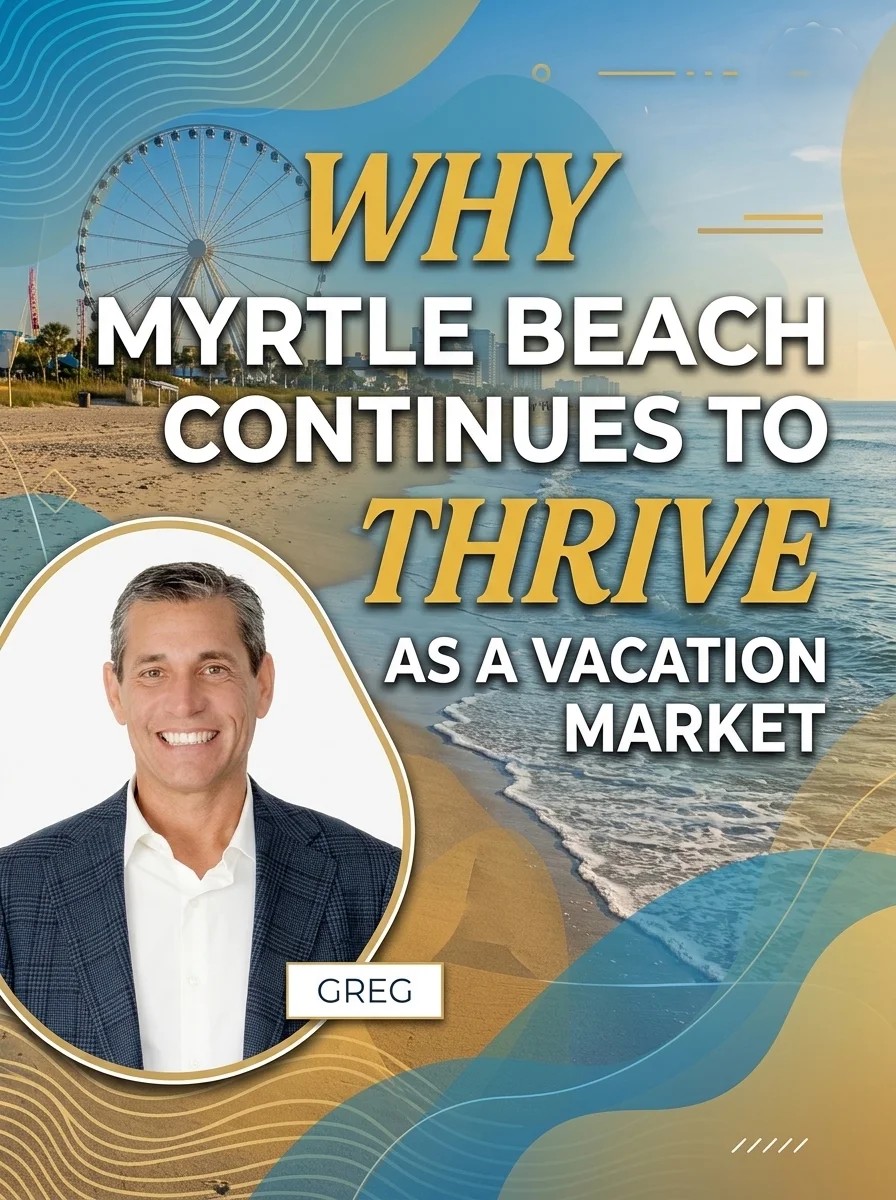
Then there's the stuff that makes a week feel full. The Boardwalk and the SkyWheel on Ocean Boulevard, Broadway at the Beach, the MarshWalk in Murrells Inlet, the shops and restaurants at Market Common. A visitor can do something different every day and still not hit it all. Here's what I see after three decades of closings: the buyers who fall in love on vacation are rarely shopping on price alone. They're buying a feeling they had on their best week of the year.
How Does a Vacation Economy Help Home Values?
A strong visitor base means steady demand for second homes, investment condos, and rental-ready property. Some of those buyers use the place a few weeks a year. Others rent it out when they're not there. Either way, they put a floor under demand that a purely local market doesn't have.
It also means jobs. Hotels, restaurants, golf courses, attractions, and healthcare all need people, and those people need somewhere to live. That's part of why you see so much new construction rolling out along Highway 501, in Carolina Forest, and out toward Socastee. The tourism engine and the year-round population feed each other.
Which Property Types Fit the Vacation Buyer?
Condos carry most of the traffic. A well-located condo near the ocean or the Intracoastal gives you the easiest path into the market, with lower upkeep and no yard to worry about. Townhomes and smaller single-family homes in Market Common, Carolina Forest, and the Socastee corridor fit the buyer who wants space for family visits. Golf community homes appeal to the buyer who plans to play a lot and relocate later.
If your budget sits in the middle, the Myrtle Beach homes between $250,000 and $500,000 range is where most vacation-minded buyers shop. It's wide enough to include a nice condo, a townhome, or a smaller detached home, depending on how close to the water you want to be.
What Should Vacation-Home Buyers Check Before Writing an Offer?
Rental rules come first. Short-term rental rules vary by city, by county zoning, and by HOA or condo association, and South Carolina requires owners who rent short term to follow state licensing and tax rules. Ask for the association's rental policy in writing before you fall for a unit. Some buildings welcome nightly rentals. Others limit them or ban them.
Next, insurance. Anything near the coast needs a hard look at wind and hail coverage, which is often separate from the standard homeowner's policy, plus flood coverage where the property sits in a FEMA flood zone. Get quotes before you go under contract, not after. I've watched deals wobble because the insurance number showed up in week three of a 30-day close.
Third, HOA and condo fees. They cover things you'll use, like pools, exterior maintenance, and insurance on the building, but they swing a lot from one property to the next. Add the monthly fee to your payment math from day one.
Does the Off-Season Hurt the Market?
Winter is slower for rentals and for foot traffic, and anyone who tells you otherwise is selling something. But here's the thing: the Grand Strand has built a second customer around that quiet stretch. Snowbirds arrive from the Northeast and Midwest, and retirees tour homes when the beach is calm and the traffic on Kings Highway is easy. Smart buyers use that window. You get more attention from sellers, more room to negotiate, and a clear look at what the neighborhood feels like on an ordinary day.
How Should You Start?
Decide first whether you want a vacation home you'll use, an investment you'll rent, or a place you'll eventually live in full time. Each one points to a different neighborhood and a different budget. A walk-the-beach condo suits the first. A rental-friendly building near the attractions suits the second. A home in Carolina Forest or Market Common suits the third.
Key Takeaways
Myrtle Beach thrives as a vacation market because visitors keep returning, and many become owners. That steady demand supports condos, townhomes, and golf community homes across the Grand Strand. Before you buy, check the rental rules, get wind and hail and flood quotes, and add HOA fees to your monthly math. Use the quieter winter months to tour, because you'll have more room to negotiate.
About Greg Harrelson
Greg Harrelson is a seasoned Realtor® with more than 30 years of experience serving the Myrtle Beach and Grand Strand markets. As the founder of Century 21 The Harrelson Group, Greg has built his career helping buyers, sellers, and investors achieve success in every corner of the coastal Carolina real estate market. His expertise spans residential homes, investment properties, land development, and coastal condos. Known for his deep local knowledge, innovative marketing strategies, and commitment to personal service, Greg consistently helps clients reach their real estate goals while navigating the ever-changing market with confidence and precision.