You've been shopping the Grand Strand and can't decide between North Myrtle Beach and Myrtle Beach itself. Here's the honest answer. They're different cities that share a beach and a zip code range. The lifestyle, the buyer pool, the school zones, and even the daily rhythm all diverge in real ways. If you pick the wrong one for how you actually live, you'll feel it every day. Let me walk you through the differences that matter.
How the Two Cities Actually Feel
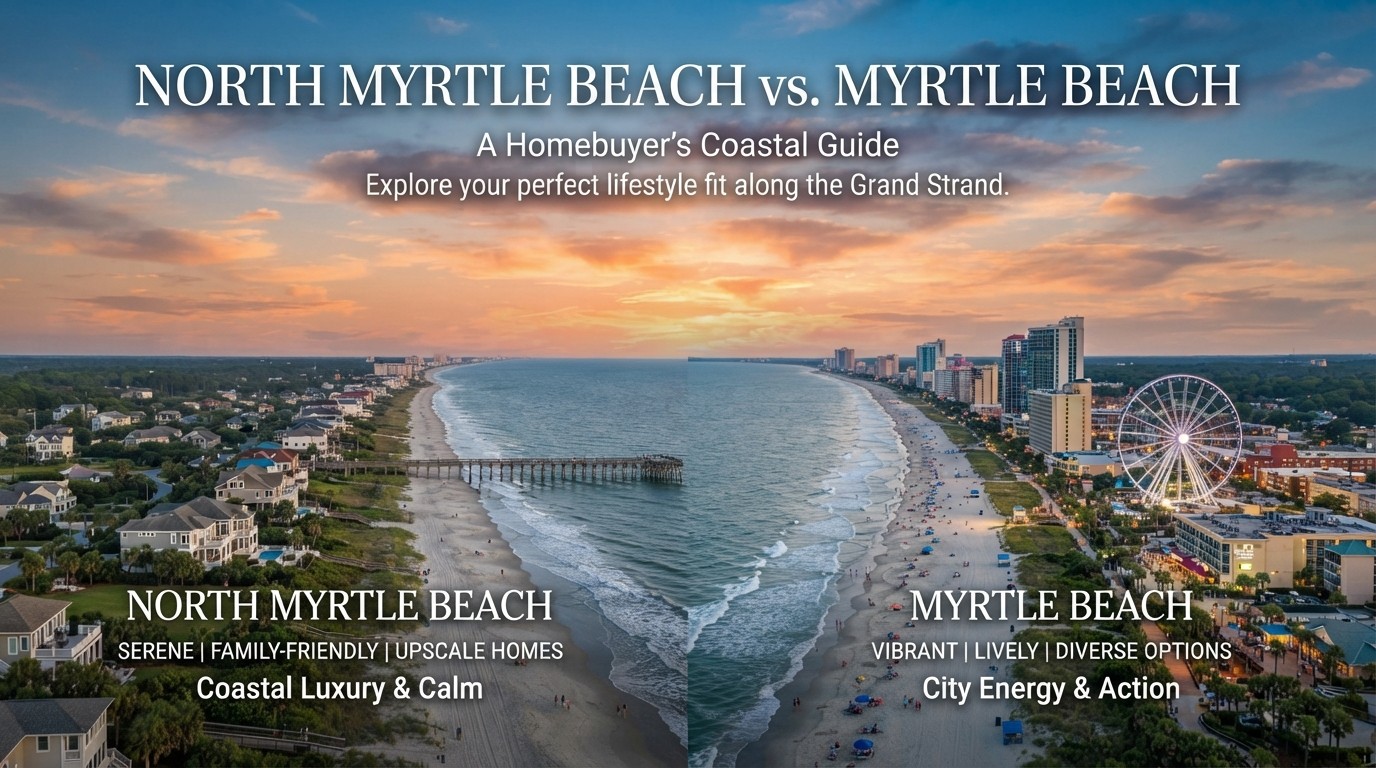
Myrtle Beach is a full-tilt resort city. About 35,000 full-time residents but with a tourist population that swells into the millions each year. The boardwalk, SkyWheel, Broadway at the Beach, and the entire Ocean Boulevard corridor exist for visitors first, residents second. If you love the energy, it's hard to beat. If you want quiet, you'll spend a lot of time driving away from your own city.
North Myrtle Beach is smaller and calmer. About 17,000 full-time residents. The city is actually four smaller beach communities stitched together — Cherry Grove, Ocean Drive, Crescent Beach, and Windy Hill — plus an inland corridor west of Highway 17. Tourism is real but doesn't dominate residential life the way it does in Myrtle Beach proper.
The Golf Cart Difference Is Bigger Than It Sounds
Here's what nobody outside the market fully appreciates. North Myrtle Beach allows licensed golf carts on almost every local street. Residents actually use them as a primary local vehicle. Kids ride them to the beach. Neighbors visit each other by cart. You can grab dinner without ever getting in a car.
Myrtle Beach has some cart-friendly pockets but nothing like the culture up in NMB. If the golf cart lifestyle appeals to you, that's a real point for North Myrtle Beach.
School Zones and Family Fit
Both cities sit inside Horry County Schools. Attendance zones are set by exact street address, so verify by property before writing an offer.
For families, Carolina Forest (technically part of the Myrtle Beach area west of the city proper) has some of the strongest school zone reputations in the whole county. That's where a lot of the family-focused new construction landed over the last decade.
North Myrtle Beach schools have solid reputations too, with the smaller-city advantage of tighter community feel. Class sizes tend to be smaller than the Carolina Forest schools.
If your family shopping is centered on schools first, tour both areas with the specific attendance zone in mind rather than the city name.
Where Full-Time Residents Actually Land
The residential pockets buyers should actually look at differ meaningfully.
Myrtle Beach for full-time living. Carolina Forest is the biggest family draw. Market Common offers walkable neighborhood feel with real community. Grande Dunes appeals to buyers with bigger budgets. Pine Lakes and the Dunes Club corridor offer established residential character. For broader inventory, browse Myrtle Beach real estate.
North Myrtle Beach for full-time living. Cherry Grove for canal homes and quieter beach living. Ocean Drive for walkability and neighborhood identity. Crescent Beach for the calmest of the beach pockets. The inland Barefoot Resort corridor for suburban feel with amenity access. See the full picture at North Myrtle Beach real estate.
What Homes Actually Cost
Here's what I see consistently in the market. Beach-block Myrtle Beach single-family runs materially higher than the inland Myrtle Beach neighborhoods. Beach-block North Myrtle Beach commands premium pricing especially in Cherry Grove and Ocean Drive. Inland North Myrtle Beach in Barefoot and Heron Lake runs meaningfully less than beach-adjacent inventory.
For the same total budget, you can generally buy more house or more land in North Myrtle Beach than in the equivalent Myrtle Beach pocket. That's part of what pulls buyers north.
Insurance, Flood Zones, and Practical Costs
Both cities carry coastal insurance realities — layered homeowner's, wind and hail, and flood policies where applicable. The specific address matters more than the city name.
Cherry Grove canal homes and beach-block North Myrtle Beach properties typically sit in AE flood zones with elevation requirements. Some inland North Myrtle Beach pockets sit in Zone X with friendlier insurance.
Myrtle Beach city runs the same pattern. Beach-block properties carry the coastal insurance load. Carolina Forest and inland Myrtle Beach neighborhoods often qualify for standard coverage without the wind pool or flood requirements.
Which Buyer Types Fit Each City
Two things I tell every buyer choosing between these cities.
Pick Myrtle Beach if you want resort energy, deeper retail and restaurant options, easier access to Grand Strand Medical Center specialists, and the broadest housing variety at every price point. Also if Carolina Forest schools are the specific draw for your family.
Pick North Myrtle Beach if you want a smaller-city residential feel, real golf cart culture, tighter neighborhood community, quieter beach access, and often more house for the dollar on beach-adjacent inventory.
Buyers who value convenience and variety often pick Myrtle Beach. Buyers who value community and quieter daily life often pick North Myrtle Beach. Neither is objectively better — they're different cities that serve different buyers.
What Buyers Underestimate About Each
Myrtle Beach summer traffic. If you live along the Highway 17 Business or Ocean Boulevard corridor, June through August you'll feel it every day. Plan drives with buffer time built in.
North Myrtle Beach off-season quiet. From November through February, the city gets noticeably quieter. Some buyers love that. Others find it more isolating than they expected. Visit in the off-season before you commit if you're used to a busier residential environment.
Two Things I Tell Every Buyer Choosing Between the Two
First, spend a weekday and a weekend in each city before writing an offer. The rhythm on a Tuesday morning tells you more about full-time living than a Saturday tour ever will. Buyers who visit only on weekends see one version. Buyers who see both make better decisions.
Second, drive your realistic daily route. Grocery, healthcare, kids' activities, work if you have a commute. The 15-minute drive that seems fine on a scouting visit gets old fast when you make it three times a week. Test the daily patterns before committing.
Key Takeaways
- Myrtle Beach and North Myrtle Beach are different cities with different rhythms, buyer pools, and residential character despite sharing a coast
- Golf cart culture in North Myrtle Beach is a real lifestyle feature Myrtle Beach doesn't fully match
- Both share Horry County Schools, but attendance zones vary by exact address — verify before writing an offer
- Myrtle Beach residential landing zones include Carolina Forest, Market Common, Grande Dunes, and Pine Lakes
- North Myrtle Beach residential pockets include Cherry Grove, Ocean Drive, Crescent Beach, and the inland Barefoot corridor
- For the same budget you can generally buy more in North Myrtle Beach than in the equivalent Myrtle Beach pocket
- Coastal insurance and flood zone realities apply to both cities based on specific address, not city name
- Visit each city on both a weekday and a weekend and drive your realistic daily route before choosing
About Greg Harrelson
Greg Harrelson is a seasoned Realtor® with more than 30 years of experience serving the Myrtle Beach and Grand Strand markets. As the founder of Century 21 The Harrelson Group, Greg has built his career helping buyers, sellers, and investors achieve success in every corner of the coastal Carolina real estate market. His expertise spans residential homes, investment properties, land development, and coastal condos. Known for his deep local knowledge, innovative marketing strategies, and commitment to personal service, Greg consistently helps clients reach their real estate goals while navigating the ever-changing market with confidence and precision.