You've spent enough vacations on the Grand Strand to seriously consider moving down full-time. Before you do, understand this. Living near the beach year round is genuinely different from vacationing near the beach. The pros are real. The cons are also real. Buyers who think through both sides before committing tend to build lives here they love. Buyers who imagine every day is a vacation day often end up frustrated within the first year. Let me walk you through what full-time coastal living actually looks like, whether you're considering Myrtle Beach real estate directly on the sand or something inland.
The Pros That Actually Hold Up
Here's what full-time residents tell me they love, consistently, five and ten years in.
The weather. Grand Strand winters are mild. Snow is rare. You can walk outside in January in a light jacket most days. If you're moving from the Northeast or Midwest, this alone is worth a lot.
The pace. Even in tourist-heavy pockets, the daily rhythm is slower than most cities. Traffic is real in summer but nothing like a major metro. You get more of your day back.
The community. Coastal towns like Cherry Grove, Ocean Drive, and downtown Conway have real neighborhood identities. People know each other. Community events actually happen. That's rarer than it should be in modern America.
The cost of living relative to what you're used to. South Carolina property tax at the 4 percent primary residence rate, combined with generally friendlier grocery and service costs, gives most relocating buyers real financial breathing room compared to origin markets.
The outdoor season. Nine months of usable outdoor weather changes how you live. Screened porches, patios, decks — you'll spend real time outside in ways you can't in colder climates.
The proximity to water. Even inland Grand Strand pockets are 15-30 minutes from the beach. That's a real quality of life feature that never gets old for people who genuinely love the water.
The Cons That Nobody Talks About Enough
Here's what nobody tells you before you move down.
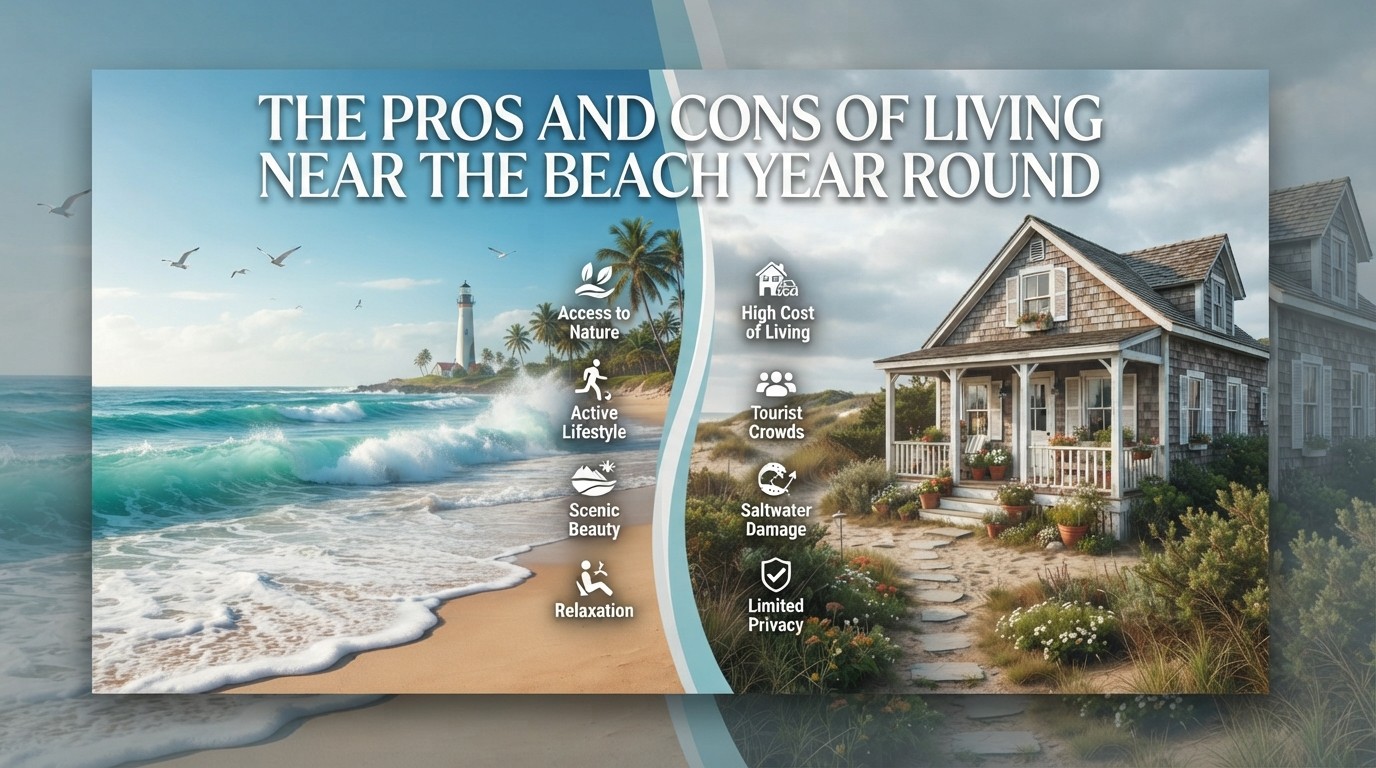
The summer intensity. From June through August the tourist population swells into the millions. Grocery stores are crowded. Restaurants have wait lists. Traffic on Highway 17 Business and Ocean Boulevard becomes brutal. If you live directly in the tourist corridor, you'll feel this every day.
The insurance stack. Coastal SC homes need layered insurance — homeowner's, wind and hail (often through the SC Wind and Hail Underwriting Association), and flood insurance if you're in a designated zone. The combined annual bill runs meaningfully higher than most inland states.
The salt-air maintenance. HVAC units, roofs, exterior hardware, and outdoor equipment all wear faster on the coast. Your maintenance calendar and budget need to reflect that.
Hurricane season anxiety. Every June through November you'll pay attention to weather forecasts differently. Most seasons pass without incident. Some don't. Buyers from inland states usually take a year or two to adjust to living with this.
Healthcare specialists. Primary care and general hospital services are solid at Grand Strand Medical Center, Conway Medical Center, and McLeod. For specific complex care, you sometimes still drive to Charleston or fly to Charlotte.
The off-season quiet. From November through February, tourist areas get noticeably quieter. Some residents love the peace. Others find the shift more isolating than they expected.
Where You Live Changes the Balance
The pros and cons hit differently depending on where you actually land.
Direct beach-block life in Cherry Grove, Ocean Drive, or oceanfront Myrtle Beach delivers the most vacation-like feel and the most tourist intensity in summer. You get the immediate ocean access. You also live in the traffic and noise.
Residential coastal like Market Common or the Pine Lakes/Dunes Club area gives you 5-10 minute beach access with a real residential neighborhood feel most of the year. Good balance for many buyers.
Inland coastal like Conway real estate puts you 15-20 minutes from the ocean with materially lower insurance, more house for the dollar, and a genuine downtown that doesn't shut down after tourist season. Many full-time residents end up here after they realize daily beach access isn't as important as they thought.
Rural-adjacent options in Longs, Aynor, or Loris give you occasional coast access with even friendlier insurance and cost of living. The trade is a real drive to the water.
What Full-Time Residents Actually Do Differently
Watching hundreds of my clients transition from vacationers to full-timers, here are the patterns of the ones who thrive.
They shop grocery and errands in off-peak hours. Weekdays before 10 a.m. and after 7 p.m. Saturdays after peak tourist departure day. Avoids most of the summer crush.
They use the beach in the shoulder seasons. October, March, April, May — that's when the beach is genuinely at its best. Fewer crowds, better temperatures, more parking.
They build indoor lives too. Book clubs, church communities, hobbies, workshops. Full-time residents who rely only on the beach for entertainment get bored faster than they expect.
They travel out in July and August. Ironically, some of the smartest full-time coastal residents leave during peak tourist season. Visit family up north. Take extended trips. Return in September when the tourists thin out.
They build professional relationships early. HVAC contractor, roofer, insurance agent, doctor. When you need one urgently, having a relationship already established changes everything.
What Vacationers Get Wrong About Full-Time Life
A few honest observations from watching this transition play out.
Vacation weeks are curated experiences. You go to restaurants, hit the beach, do the activities. Full-time life includes the boring parts too. Grocery runs. Doctor appointments. Home maintenance. The beach doesn't fix that.
The vacation excitement fades. Living somewhere feels different than visiting. The first six months are still exciting. By year two, it's just where you live. That's not a bad thing — it's normal. But buyers who expect permanent vacation vibes are usually disappointed.
Community takes work. Vacationing means you don't build community. Full-time life requires it. The residents who thrive after five years are the ones who invested in building a social life intentionally.
Two Things I Tell Every Buyer Weighing Full-Time Coastal Life
First, rent for six months before you buy. A real off-season stretch — say January through June — shows you exactly what daily life will feel like. Buyers who do this consistently make better decisions about neighborhood, budget, and whether the whole idea actually works for them. Buyers who skip this step sometimes regret their specific home choice within the first year.
Second, be honest about the version of coastal life you actually want. If you want daily walks on the sand and beach lunches with friends, live within walking distance. If you want the beach as an occasional weekend feature while your daily life happens elsewhere, buy inland and use the savings for better home features. Match the property to the actual life, not the imagined life.
Key Takeaways
Full-time Grand Strand living delivers real quality-of-life benefits — mild winters, slower pace, community, longer outdoor seasons, meaningful proximity to water — that keep most residents happy for decades. It also comes with real trade-offs that nobody talks about enough. Summer tourist intensity, layered coastal insurance costs, salt-air maintenance, hurricane season awareness, specialist healthcare drives, and off-season quiet all shape daily life in ways vacationers don't experience. Where you specifically live changes the balance dramatically — direct beach-block, residential coastal, inland coastal, and rural-adjacent all serve different priorities. The residents who thrive develop off-peak habits, build indoor lives alongside outdoor ones, sometimes travel out during peak tourist season, and build professional relationships early. The residents who struggle usually assumed vacation life continues year-round. Renting for six months before buying and being honest about the specific version of coastal life you actually want are the two decisions that most reliably lead to a successful long-term full-time move.
About Greg Harrelson
Greg Harrelson is a seasoned Realtor® with more than 30 years of experience serving the Myrtle Beach and Grand Strand markets. As the founder of Century 21 The Harrelson Group, Greg has built his career helping buyers, sellers, and investors achieve success in every corner of the coastal Carolina real estate market. His expertise spans residential homes, investment properties, land development, and coastal condos. Known for his deep local knowledge, innovative marketing strategies, and commitment to personal service, Greg consistently helps clients reach their real estate goals while navigating the ever-changing market with confidence and precision.