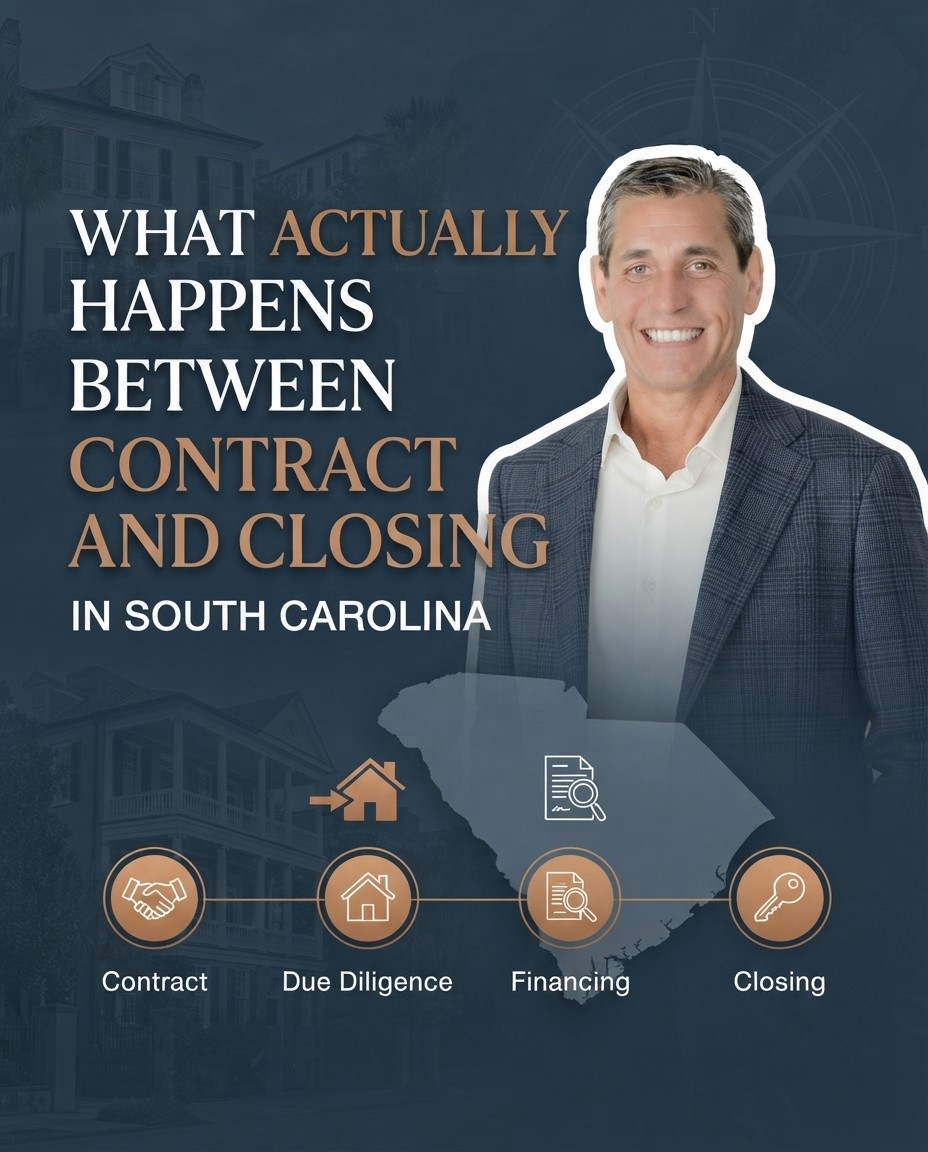
The 30 to 45 days between an accepted offer and the closing table can feel like a black box to first-time buyers and sellers. Papers get signed. Inspectors show up. Money moves. Somewhere in the middle, deals sometimes fall apart for reasons nobody explained clearly at the offer stage. After walking hundreds of Grand Strand buyers and sellers through this exact window, I want to demystify what actually happens between contract and closing in South Carolina — and what usually goes wrong when a deal doesn't reach the closing table.
Day One to Day Three: The Contract Kickoff
Within 48 hours of a signed contract, several things need to happen quickly:
- The buyer wires or delivers the earnest money deposit to the closing attorney's escrow account
- The contract is delivered to the buyer's lender to start the loan process
- The closing attorney's office opens the file and orders the title search
- Both parties schedule their inspections
- The buyer contacts insurance agents to get preliminary quotes
Sellers who don't hear from their agent within 48 hours of a signed contract should reach out. Delays at this stage cascade later.
Day Three to Day Ten: The Inspection Period
The inspection period is typically 10 to 14 days after the contract is signed. Buyers use this window to:
Complete the standard home inspection ($400-$600).
Order a separate CL-100 wood-destroying organism inspection ($75-$150).
Get a wind mitigation inspection if the home is coastal ($150-$250).
Order specialty inspections (roof, HVAC, structural) if the general inspection flags concerns.
Get real insurance quotes based on the specific property's flood zone, wind zone, and coastal exposure.
Confirm the school attendance zone if children are involved.
Review the HOA documents if applicable — bylaws, meeting minutes, reserve study, current dues, pending assessments.
This is the most critical window in the entire transaction. Buyers who don't do thorough due diligence here often discover expensive issues after closing when they have no recourse.
Day Ten to Day Fourteen: Repair Negotiation
Based on inspection findings, buyers typically request either repairs or credits at closing. This negotiation can determine whether the deal survives.
What works: focusing on major issues (structural, safety, systems), asking for completed repairs by licensed contractors with receipts, and letting cosmetic concerns go.
What kills deals: piling up cosmetic complaints alongside real issues, demanding excessive credits, or negotiating too aggressively in a market where the seller has alternatives.
Sellers should approach the request calmly. Most repair negotiations settle at a reasonable middle ground.
Day Fourteen to Day Twenty-Five: The Financing Push
Once the inspection period ends and the deal is firm, the lender takes over. Buyers should expect:
Formal loan application and underwriting.
The lender orders the appraisal ($400-$700, buyer typically pays).
The appraisal is completed and returned in 5-10 business days.
The lender requests any additional documentation (updated bank statements, employment verification, etc.).
Underwriting reviews everything and either approves, conditionally approves, or requests more information.
Common issues that emerge during this window: appraisal comes in below contract price, buyer credit changes unexpectedly, employment changes, or debt-to-income ratios shift because of a new purchase (like a car). Buyers should avoid any major financial changes between contract and closing.
Day Twenty-Five to Day Thirty: Insurance and Title Work
The closing attorney's office is completing the title search, resolving any title issues, and preparing closing documents. The buyer is finalizing insurance:
Standard homeowner's policy.
Wind and hail policy if in a coastal area.
Flood policy if in an AE, A, or VE zone.
The lender needs proof of insurance before closing. For coastal SC homes, this can take longer than buyers expect because policies have to be underwritten by carriers that write in the specific area.
Day Thirty to Day Forty-Five: Final Steps
The final push to closing:
Buyer does the final walkthrough, typically 24 hours before closing. Confirms property is in the agreed condition and any requested repairs are complete.
Closing disclosure is delivered to the buyer at least 3 business days before closing (federally required).
Buyer arranges wire transfer for closing funds. Never trust email instructions for wire transfers — wire fraud is a real risk. Call the closing attorney's office directly to confirm wiring instructions.
Closing appointment. In South Carolina, both parties typically attend, though not always at the same time. Attorney reviews and executes documents. Funds are disbursed. Keys transfer. The buyer becomes the owner.
What Actually Goes Wrong Most Often
From watching hundreds of transactions, the deals that die between contract and closing usually die from:
Financing issues. Appraisal comes in low, buyer credit changes, or underwriting reveals problems not caught in pre-approval.
Insurance surprises. Coastal wind and hail policies come in materially higher than the buyer expected, changing the affordability math.
Inspection findings. Major issues that weren't disclosed by the seller or that both sides can't agree on how to address.
HOA issues. Special assessments, rental restrictions, or reserve problems that the buyer didn't accept.
Title issues. Liens, boundary disputes, or ownership questions that take longer to resolve than the contract timeline allows.
External life events. Job changes, family emergencies, or buyer's cold feet that show up at inopportune times.
For broader inventory context if you're currently in this window, browsing Conway real estate or Myrtle Beach real estate shows what's actively available at various price points in case your current deal doesn't survive.
Two Things I Tell Every Buyer and Seller During This Window
First, communicate proactively. Silence is the enemy of a smooth transaction. Buyers, sellers, agents, lenders, attorneys, and inspectors all need timely information. When someone doesn't respond for days, problems fester. When everyone stays connected, small issues get resolved before they become deal-killers.
Second, buyers should avoid major financial changes between contract and closing. No new cars. No new credit cards. No large purchases that affect debt-to-income. No job changes if avoidable. Underwriting can pull credit again just before closing, and changes at that stage kill deals that would otherwise close cleanly.
Key Takeaways
- Contract to closing typically takes 30-45 days for financed South Carolina purchases; cash purchases can close in 14-21 days
- The first 48 hours require quick action on earnest money, lender delivery, title order, and inspection scheduling
- The 10-14 day inspection period is the most critical window in the entire transaction for buyer due diligence
- Repair negotiation follows the inspection period; sellers who approach it calmly usually keep deals alive
- The financing push (days 14-25) is where lender surprises can emerge; buyers should avoid financial changes during this time
- Coastal SC insurance underwriting can take longer than buyers expect; get real quotes during the inspection period
- Never trust emailed wire transfer instructions — call to confirm; wire fraud is a real risk in real estate transactions
- Communication is the single most important behavior during the contract-to-closing window
Frequently Asked Questions
Can I back out of a contract during the inspection period?
Yes, in most South Carolina contracts. The standard inspection contingency allows buyers to terminate the contract based on inspection findings and typically receive their earnest money back. After the inspection period ends and the deal is firm, backing out becomes much harder and can put the earnest money at risk.
What is a "closing attorney" in South Carolina?
South Carolina requires real estate closings to be conducted by a licensed attorney. The closing attorney handles title search, prepares closing documents, coordinates funds, and executes the transfer. They represent the transaction rather than the buyer or seller specifically, though buyers can hire their own attorney to review documents if they prefer.
How long does the appraisal process take?
The lender orders the appraisal after the inspection period. The appraisal itself typically happens 3-7 business days after ordering, and the written report is delivered 3-5 days after that. In busy markets or for complex properties, appraisals can take longer. Total time from ordering to report is usually 7-14 days.
What happens if the appraisal comes in below the contract price?
The lender will only finance based on the appraised value. Buyers have three options: renegotiate the price with the seller down to the appraised value, bring additional cash to closing to cover the gap, or terminate the contract if they have a financing contingency. This is one of the more common deal-threatening events in the current market.
Can I do the walkthrough more than 24 hours before closing?
Yes, but the closer to closing, the better. The walkthrough's purpose is to confirm the property is in the agreed condition and any negotiated repairs are complete. A walkthrough done a week before closing can miss issues that emerge in the final days.
About Greg Harrelson
Greg Harrelson is a seasoned Realtor® with more than 30 years of experience serving the Myrtle Beach and Grand Strand markets. As the founder of Century 21 The Harrelson Group, Greg has built his career helping buyers, sellers, and investors achieve success in every corner of the coastal Carolina real estate market. His expertise spans residential homes, investment properties, land development, and coastal condos. Known for his deep local knowledge, innovative marketing strategies, and commitment to personal service, Greg consistently helps clients reach their real estate goals while navigating the ever-changing market with confidence and precision.