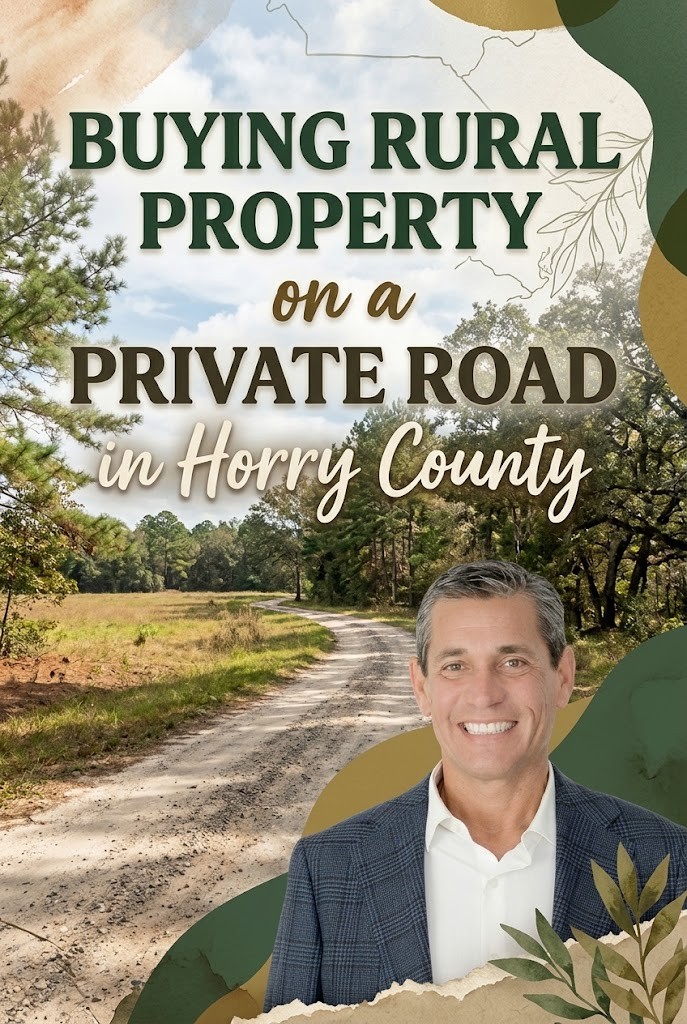
A lot of buyers come to me wanting the same thing: a few acres, some quiet, and no neighbor close enough to hear the dog bark. That's a great goal, and there's plenty of it in western and northern Horry County. But some of the best rural properties around here sit at the end of a private road or a dirt lane that the county doesn't touch. If you're shopping homes with acreage, the road leading to the house deserves as much attention as the house itself.
I've seen buyers fall in love with a property and never once ask who fixes the potholes. Then the first hard rain comes, and they find out the answer is them.
Public Road, County-Maintained, or Private?
Not every dirt road is private, and not every paved road is public. There are really three questions to answer. Is the road publicly owned? Does the county maintain it? And do you have a legal right to use it to reach your property?
Horry County keeps a list of roads it maintains. Some of those are still dirt. Others look like a normal road but were never accepted by the county, so the folks who live on them handle upkeep themselves. Your agent can help you start that research, and your closing attorney will confirm the legal access when they run the title.
Why Legal Access Matters So Much
Here's the part that catches people off guard. Being able to drive to a house doesn't mean you have the legal right to. Sometimes a lane crosses a neighbor's land and everybody has just used it for forty years. That works fine right up until the land sells and the new owner puts up a gate.
What you want is a recorded easement or a road that's clearly dedicated for access. In a state like South Carolina, where an attorney handles the closing, the title work should show how you get from a public road to your front door. If it doesn't, stop and ask questions before you go further. A good title attorney is worth every penny on a rural deal.
Who Pays to Keep the Road Up
On a private road, maintenance usually falls on the people who use it. In the best cases, there's a written road maintenance agreement that spells out who pays what, how decisions get made, and what happens when the road washes out. In other cases, it's a handshake deal between neighbors, or nothing at all.
When I'm walking a buyer through a rural listing near Loris or out past Green Sea, these are the questions I want answered:
- - Is there a written road maintenance agreement, and is it recorded?
- - How many households share the road?
- - When was it last graded or repaired, and who paid?
- - Does the road flood or rut out after heavy rain?
- - Do school buses, mail carriers, and delivery trucks come all the way in?
That last one matters more than people think. If the school bus stops at the paved road, that's a long walk at 6:45 in the morning. And if a fire truck has trouble getting in after a storm, your insurance carrier might have something to say about it.
How Private Roads Affect Your Loan
Lenders care about access because they need to know the property can be reached and resold. Many lenders, especially on FHA, VA, and USDA loans, want to see permanent legal access and some kind of provision for maintenance on a private road. If there's no written agreement, your loan officer might ask for one before closing.
My advice is to tell your lender early that the property is on a private road. Don't let them find out from the appraisal two weeks before closing. Some sellers and neighbors are happy to sign a simple maintenance agreement. Getting it done early keeps everybody calm.
Water Is the Real Test
In this part of the state, the soil and the rain decide how good a dirt road is. After a big storm, I've seen lanes near the Little Pee Dee turn into creeks. A road that looks fine on a sunny October afternoon might be a different story in a wet August.
If you can, drive the road after a rain. Look for standing water, washouts at culverts, and spots where cars have been getting stuck. Ask the neighbors. People who live on country roads are almost always happy to tell you exactly what it's like. They'll also tell you if a property is a bargain for a reason.
It Can Still Be a Great Buy
None of this means you should skip a property on a private road. Some of my favorite rural homes in the county are on lanes like this. The privacy is real, the traffic is basically zero, and the price per acre can be better than land on a busy highway. Buyers looking around Longs or out toward Aynor often find exactly the setting they want because the road keeps people away.
You just want to go in with your eyes open. Know who owns the road, who maintains it, and how you legally get home.
Frequently Asked Questions
How do I know if a road is maintained by Horry County?
The county keeps records of the roads it maintains. Your agent can help you check, and your closing attorney will confirm access during the title search. Don't rely on how the road looks.
Can I get a mortgage on a home on a private road?
Usually, yes. Most lenders just want proof of permanent legal access and a plan for maintenance. A recorded road maintenance agreement solves the issue in most cases.
What if there's no maintenance agreement?
You can ask the seller and neighbors to sign one before closing. If that's not possible, talk with your attorney and lender about what that means for your loan and for resale later.
Will a private road hurt my resale value?
It can narrow your buyer pool a little, especially if the road is rough. A well-kept road with a clear written agreement goes a long way toward making the next buyer comfortable.
Key Takeaways
Rural property on a private road in Horry County can be a great buy, but the road needs as much homework as the house. Confirm legal access through your closing attorney, find out who maintains the road, and get any agreement in writing. Tell your lender early, and drive the road after a heavy rain before you commit.
About Greg Harrelson
Greg Harrelson is a seasoned Realtor® with more than 30 years of experience serving the Myrtle Beach and Grand Strand markets. As the founder of Century 21 The Harrelson Group, Greg has built his career helping buyers, sellers, and investors achieve success in every corner of the coastal Carolina real estate market. His expertise spans residential homes, investment properties, land development, and coastal condos. Known for his deep local knowledge, innovative marketing strategies, and commitment to personal service, Greg consistently helps clients reach their real estate goals while navigating the ever-changing market with confidence and precision.