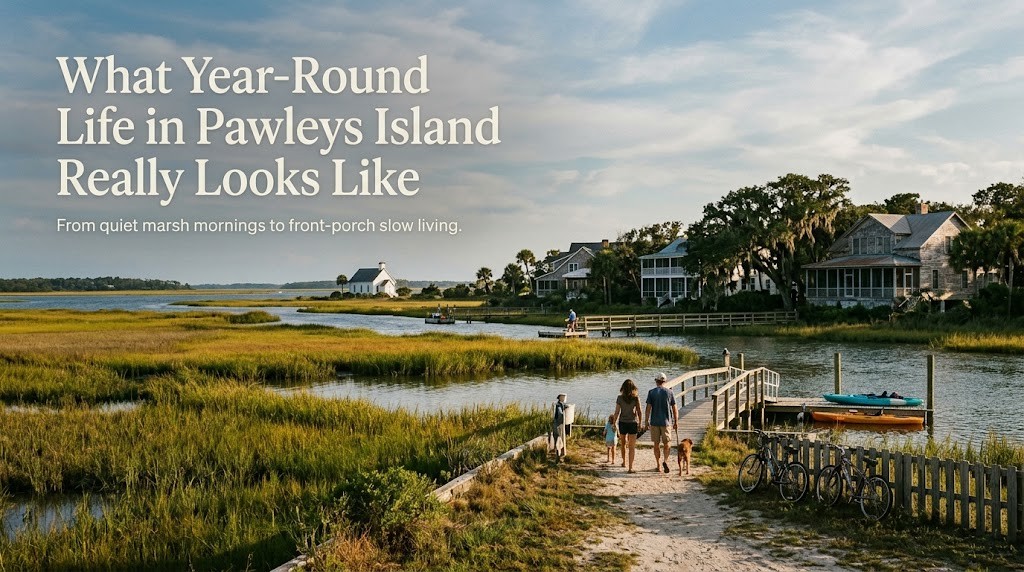
Most people meet Pawleys Island on vacation. They rent a house for a week, sit in a hammock, eat some seafood, and drive home thinking, "We could live here." I hear that a lot. And some of them do end up buying in Pawleys Island. But a week in July and a full year are two different things, so let's talk about what everyday life down here really feels like.
The Pace Is the Point
Pawleys runs slower than Myrtle Beach, and that's on purpose. There are no high-rise hotels lining the beach. The island itself is mostly older beach houses, many of them handed down in families for generations. The mainland side along Highway 17 has the grocery stores, restaurants, doctors' offices, and shops you need, but it still doesn't feel like a city.
Folks who move here usually tell me the first thing they notice is the quiet. The second thing is that people wave. If you're coming from a busy metro area, that takes a few months to get used to.
The Island and the Mainland Are Different Worlds
When people say "Pawleys," they might mean the island or the broader area on the mainland side of the marsh. That difference matters a lot when you're buying.
The island is small and mostly residential. Homes there are closer to the ocean and the creek, which is wonderful, but it also means higher exposure to storms, more involved insurance, and fewer homes coming up for sale. Many island houses are older and built up on pilings, and some get rented part of the year.
The mainland side is where most full-time residents live. You'll find golf communities, wooded neighborhoods, and newer subdivisions, plus easier access to shopping and the highway. For buyers who want the Pawleys lifestyle without island-level insurance, the mainland is usually where we start looking.
What the Seasons Feel Like
Summer is busy. Vacation traffic picks up on 17, restaurants get crowded, and the beach accesses fill early. If you live here year-round, you learn your shortcuts and you do your grocery shopping on a Tuesday morning instead of a Saturday afternoon.
Fall and spring are, in my opinion, the best time to live on the South Strand. The weather is mild, the crowds thin out, and you can have long stretches of beach nearly to yourself. Winter is quiet. Some restaurants cut back hours, and the place can feel sleepy. Some people love that. A few find it too quiet. It's worth spending a January weekend here before you buy, just to see how it feels.
Getting Around
Most of daily life happens along Highway 17. Murrells Inlet is a short drive north, and you're about half an hour or so from Myrtle Beach depending on traffic and where you're headed. Georgetown is just to the south, and plenty of Pawleys residents use it for errands, medical appointments, and a little historic downtown time on the waterfront. If you're curious about that side of the county, take a look at our Georgetown real estate page.
The closest major airport for most folks is Myrtle Beach International. Charleston is a longer drive south but very doable for a day trip.
Who Tends to Love It Here
In my experience, Pawleys fits a few types of buyers especially well. Retirees who want the beach without the bustle. People who work remotely and want a quieter home base. Golfers, because there are some great courses on the South Strand. And families who have vacationed here for years and finally decide to make it home.
It may be a tougher fit if you want a lot of nightlife, big-box everything in five minutes, or a short commute to a job in Myrtle Beach's busiest areas. That doesn't mean it won't work. It just means you should be honest with yourself about how you'll spend a normal Wednesday.
Prices and What Your Money Gets
Pawleys generally runs higher than many parts of Horry County, especially near the water and on the island. That's the trade for the setting and the slower pace. Still, there's a real range on the mainland side, from older ranch homes on wooded lots to newer homes in golf communities.
If you're working with a firm budget, it's smart to compare. Some buyers look at Pawleys and then check what similar money buys farther north. Our list of Myrtle Beach homes between $250,000 and $500,000 is a useful side-by-side. Sometimes that comparison confirms Pawleys is worth the stretch. Sometimes it changes the plan. Either way, you'll make a better decision.
A Few Things I'd Check Before Buying
Since we're talking about a coastal area, flood zone and insurance come first. Get insurance quotes early, not after you're under contract. Ask about the age of the roof and whether the home has had storm repairs. If you're buying in a neighborhood with an HOA, read the rules on rentals, boats, and fences.
And spend time here when you're not on vacation. Drive 17 at 5 p.m. on a weekday. Get coffee on a rainy morning. Walk the beach in the off-season. The people who are happiest here are the ones who knew exactly what they were getting into.
Key Takeaways
Pawleys Island trades the bustle of Myrtle Beach for a slower, quieter coastal routine. The island and the mainland side offer very different buying experiences, especially for insurance and storm exposure. Summer is busy, while fall and spring are the best seasons to live here. Visit in the off-season and compare prices before you decide.
About Greg Harrelson
Greg Harrelson is a seasoned Realtor® with more than 30 years of experience serving the Myrtle Beach and Grand Strand markets. As the founder of Century 21 The Harrelson Group, Greg has built his career helping buyers, sellers, and investors achieve success in every corner of the coastal Carolina real estate market. His expertise spans residential homes, investment properties, land development, and coastal condos. Known for his deep local knowledge, innovative marketing strategies, and commitment to personal service, Greg consistently helps clients reach their real estate goals while navigating the ever-changing market with confidence and precision.