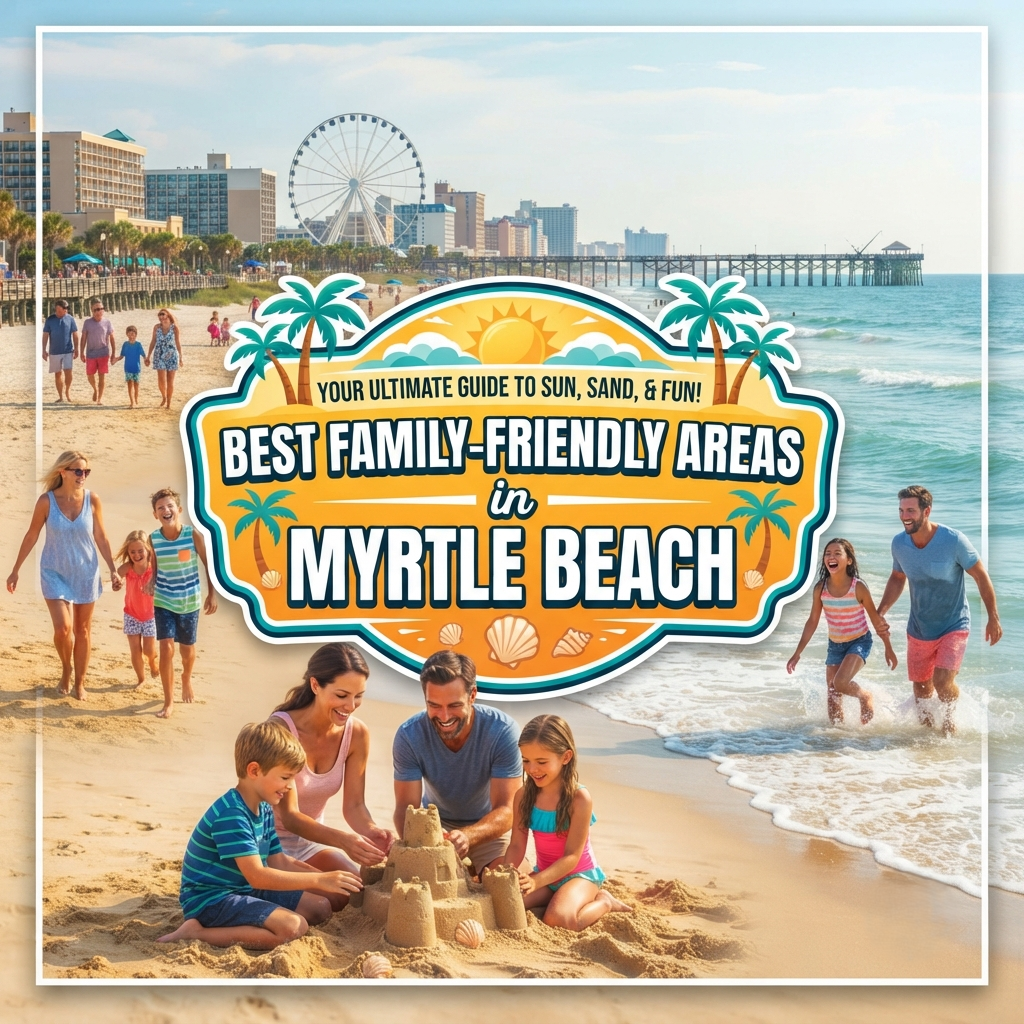
Myrtle Beach has a reputation as a tourist town, and that's part of why a lot of relocating families assume it can't work as a place to actually raise kids. After three decades of selling here, I can tell you the reality is more nuanced. The right pockets of Myrtle Beach are genuinely family-friendly — real neighborhoods, real schools, real community feel — and they're often the parts of town that visiting tourists never see. Here's where families I've worked with have landed and what makes each area worth a serious look.
What "Family-Friendly" Actually Means Here
For most relocating families I work with, family-friendly means four specific things: a good school zone, a real residential neighborhood (not a vacation rental block), reasonable drive to daily-life amenities, and a community of other families. The Grand Strand has those pockets if you know where to look. They're rarely the streets where the boardwalk traffic flows.
I always tell families: don't shop the listings based on the "Myrtle Beach" zip code alone. The 29577, 29572, 29575, and 29579 zip codes all carry the city's name and they all feel completely different on the ground.
Carolina Forest
Carolina Forest has been the dominant family landing zone for the last decade, and that hasn't changed. The school zones here are widely considered the strongest in Horry County. Communities like Carolina Forest real estate options including Avalon, Waterford Plantation, Waterway Palms, and The Farm have built genuine neighborhood feel with mature trees, real sidewalks, community pools, and recreational programs.
Price points here run higher than other family-targeted pockets — typically $400,000 to $650,000 for a 3-4 bedroom home in a good Carolina Forest community. The trade-off is the school zone identity and the predictable suburban feel that relocating families from the Northeast and Midwest find familiar.
The downside families discover: Highway 501 traffic at school drop-off and pickup is genuinely heavy. Plan to leave 10-15 minutes earlier than the GPS estimate during the school year.
The Market Common Corridor
The Market Common area, built on the old Myrtle Beach Air Force Base land, has matured into a real walkable neighborhood with parks, restaurants, a movie theater, and a strong sense of community. Single-family inventory is mixed with townhomes and small apartment complexes, but the family-friendly pockets within Market Common — particularly the streets just outside the central retail core — have settled into being some of the better family neighborhoods in Myrtle Beach proper.
The walkability is real here. Kids can ride bikes to the park, parents can walk to coffee, and the dog park is genuinely used. That kind of community feel is harder to find elsewhere along the Strand.
Price points run roughly $400,000 to $700,000 for single-family homes, with townhomes available from the $300s.
The Pine Lakes and Dunes Club Corridor
The Pine Lakes neighborhood and the Dunes Club area on the north side of Myrtle Beach offer something different — established residential neighborhoods with mature trees and large lots, where families with the budget for it can find genuine character. These were Myrtle Beach's original residential neighborhoods before the tourism explosion, and they've held their identity.
The schools here zone differently than Carolina Forest but are solid. The neighborhoods are quieter, the lots are larger, and the homes have more architectural variety. Prices range broadly — from $500,000 for older homes that need updating to $1.5 million-plus for waterfront and oceanfront-block properties.
The Forestbrook Corridor
Forestbrook is the more affordable alternative to Carolina Forest, located just west of Highway 501 and inside Myrtle Beach city limits. The school zones overlap with parts of Carolina Forest, but the price point is friendlier and the neighborhoods feel more mixed-income, which some families prefer.
Single-family inventory here runs $325,000 to $475,000 for most family-sized homes. The trade-off versus Carolina Forest is slightly older inventory and fewer planned-community amenities, but for many families the value calculation makes the trade worth it.
Why Some Areas Don't Fit Families
To be honest about the rest of Myrtle Beach: the immediate oceanfront strip, the Restaurant Row corridor, and most of Highway 17 Business between 21st Avenue and 76th Avenue aren't really family-friendly. They function as tourist and vacation-rental zones. The traffic, the seasonal noise, the lack of nearby grocery stores, and the limited residential community make them poor full-time family fits.
That doesn't mean nobody lives there full-time — they do, and some make it work. But for most families with school-age kids, I steer them away from these zones unless they have a specific reason to want oceanfront living.
What to Compare Between Areas
When families tour multiple Myrtle Beach options, I encourage them to compare on:
- - The exact school attendance zone by street address (not by community name)
- - The drive time to grocery stores, healthcare, and kids' activities
- - The summer feel — visit in July when the tourist population is highest
- - The walkability score for kids' independence (parks, sidewalks, safe streets)
- - The HOA rules, particularly around rentals (you don't want a neighborhood with heavy short-term rental traffic)
- - The price-per-square-foot at your specific budget
- - Neighbor demographics — families like other families nearby
For broader market context, browsing Myrtle Beach real estate inventory alongside Conway real estate as a comparison point often helps families decide whether the Myrtle Beach price premium is worth it for their specific situation.
The Inland Conway Alternative
It's worth noting that a real share of relocating families who initially shop "Myrtle Beach" end up landing in Conway instead. The Wild Wing Plantation, Carsens Ferry, and Astoria Park corridors offer family-targeted communities at lower price points than Carolina Forest, with school zone options that match a lot of families' priorities. Conway is 15-20 minutes inland, but for families who only need the beach occasionally, the inland math often wins.
Two Things I Tell Every Relocating Family Looking at Myrtle Beach
First, visit in July before you commit. The Myrtle Beach summer experience is the most extreme version of what living here looks like. If the family loves it in July traffic and July heat, they'll love it the rest of the year. If July is unbearable, better to know before closing.
Second, drive the school drop-off route at the actual drop-off time. Not the GPS estimate at 11 a.m. on a Saturday. The real morning traffic at 7:30 a.m. on a Tuesday in October tells you what daily life will feel like. I've watched families pick a beautiful house in a great school zone and then realize the daily 25-minute crawl down a two-lane road wears them out within a year.
Key Takeaways
- - "Myrtle Beach" covers very different lifestyles depending on which pocket you choose — the zip code alone doesn't tell you whether it's family-friendly
- - Carolina Forest leads on school zones, suburban feel, and predictable community amenities; the trade-off is Highway 501 traffic and higher prices ($400k-$650k)
- - Market Common offers walkable neighborhood feel with parks, restaurants, and real community, with prices from the $300s townhomes to $700k single-family
- - Pine Lakes and Dunes Club offer character, mature trees, and larger lots for families with bigger budgets ($500k-$1.5M+)
- - Forestbrook is the more affordable alternative to Carolina Forest with overlapping school zones
- - The immediate oceanfront strip, Restaurant Row, and tourist-heavy Highway 17 Business are typically not family-friendly for full-time living
- - Always verify school zone by exact street address, drive the real morning traffic route, and visit in July before committing
- - Inland Conway often wins for families who only need beach access occasionally
About Greg Harrelson
Greg Harrelson is a seasoned Realtor® with more than 30 years of experience serving the Myrtle Beach and Grand Strand markets. As the founder of Century 21 The Harrelson Group, Greg has built his career helping buyers, sellers, and investors achieve success in every corner of the coastal Carolina real estate market. His expertise spans residential homes, investment properties, land development, and coastal condos. Known for his deep local knowledge, innovative marketing strategies, and commitment to personal service, Greg consistently helps clients reach their real estate goals while navigating the ever-changing market with confidence and precision.