Few areas along the Grand Strand do waterfront living the way Little River does. From Intracoastal Waterway homes with private docks to marsh-lined cottages tucked into quiet residential streets, the variety here is one of the biggest reasons buyers continue to choose this small coastal town. If you are exploring the idea of waterfront ownership, understanding the different kinds of water access, the practical realities of dock life, and the costs that come with it will save you time, money, and a lot of confusion before you ever make an offer.
Why Little River Is a Waterfront Hub
Little River sits where the Intracoastal Waterway, Calabash River, and Atlantic Ocean all come within easy reach of one another. That geography has shaped the town for generations. Commercial fishing fleets, charter boats, marinas, and family-run waterfront restaurants are part of daily life. The result is a community where waterfront ownership is normal rather than exotic, and where buyers find more options at more price points than they typically expect.
Buyers exploring Little River real estate usually start with a general idea of waterfront living and refine it once they see how many different forms it takes here. Some sections feel like working waterway villages. Others feel like quiet residential streets where the water is just a short walk through the backyard.
The Different Types of Waterfront in Little River
Not all waterfront homes offer the same kind of water, and that distinction matters more than almost anything else when shopping in Little River, SC.
Intracoastal Waterway Homes
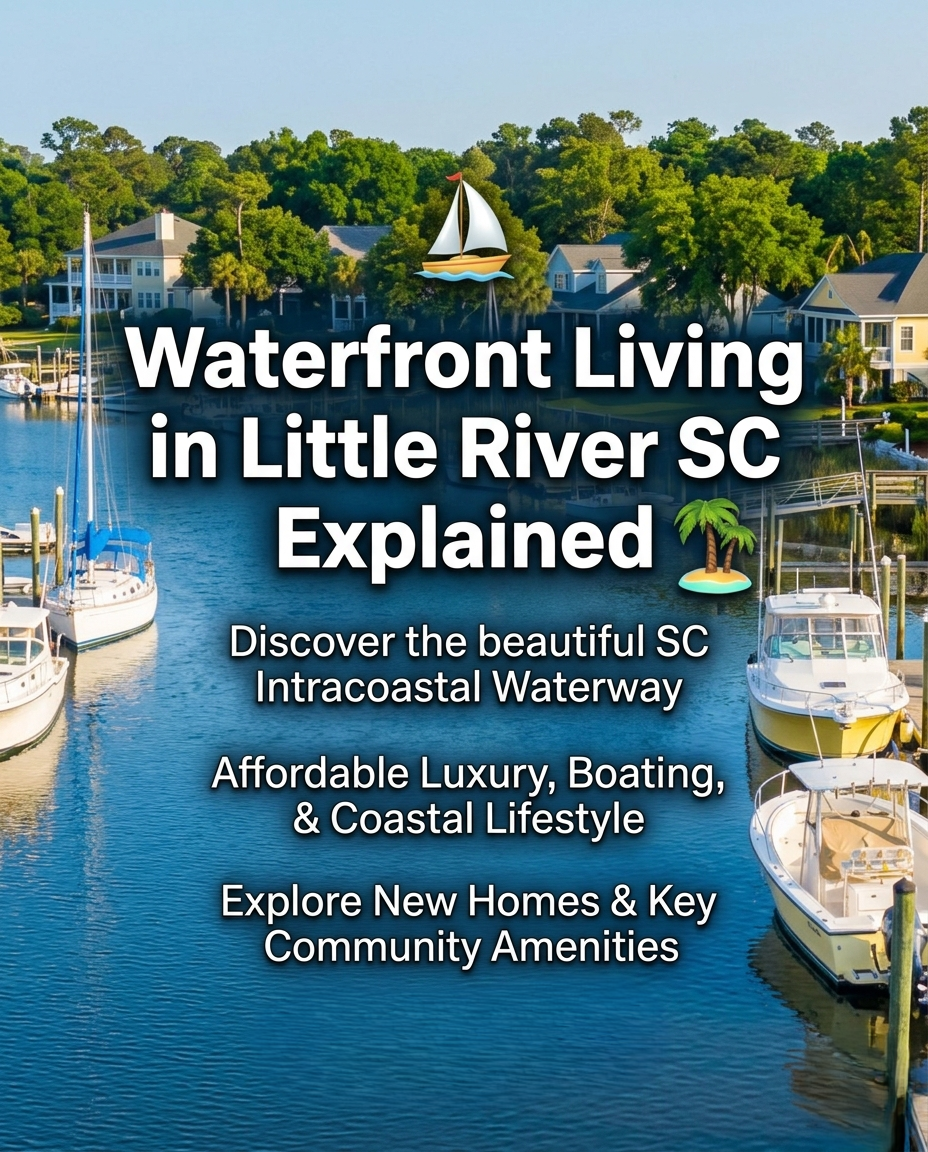
Direct Intracoastal Waterway homes are the most coveted in town. These properties usually sit on deeper water that allows larger boats, easy access to the open Atlantic, and unobstructed views. They tend to carry premium pricing, and inventory is limited because so few of these lots come on the market in any given year. Buyers focused on bigger boats, longer cruises, and direct ocean access usually start their search here.
Tidal Creek and Canal Homes
Tidal creek and canal homes give buyers private dock access at more accessible price points. The trade-off is that water depth changes with the tide, which can affect the size and draft of the boat that fits comfortably. These homes often appeal to buyers with smaller power boats, pontoon boats, or kayaks who like the privacy of a residential canal lifestyle.
Marsh-Front and Wetland-View Homes
Marsh-front homes do not always offer dock access, but they do offer some of the most peaceful views in the area. These properties tend to be priced more moderately, and many buyers love the wildlife, sunsets, and slower pace that come with marsh living. The water access is typically nearby through a community ramp or marina rather than from the property itself.
Marina-Access and Slip-Owner Communities
Some buyers want the boating lifestyle without owning a private dock. Marina-access communities and slip-ownership setups let owners step out of a low-maintenance home or condo and into a boat just minutes away. These are often the most cost-effective way into waterfront life, especially for second-home buyers and retirees who do not want to manage a private dock themselves.
Understanding Docks, Permits, and Water Depth
Buyers shopping for waterfront homes in Little River should pay close attention to dock specifics. Length, depth, structural condition, and existing permits all influence both daily usability and resale value. A dock that looks great may not have the depth at low tide that a buyer’s boat actually needs. A non-permitted addition or repair could become an issue when an offer is being negotiated or when the property eventually sells.
An experienced local agent can help you ask the right questions early. So can a marine contractor who can quickly evaluate decking, pilings, lifts, and electrical service. The goal is not to scare buyers away from older docks, but to make sure ownership starts with eyes wide open.
Costs, Risks, and Practical Considerations
Waterfront ownership comes with categories of cost that inland buyers often underestimate. Wind, hail, and flood policies are typically separate from a standard homeowners policy, and rates vary based on elevation and the home’s exact location. Buyers should also plan for ongoing dock maintenance, including pilings, decking, and any boat lift hardware, plus a separate marine insurance policy for the boat itself.
HOA structures vary widely. Some neighborhoods have minimal fees, while marina communities may include several layers covering shared dock space, gated access, or amenities. Reviewing all of this during due diligence makes long-term carrying costs predictable.
Local Lifestyle and Community Appeal
Daily life in waterfront Little River tends to revolve around the water in ways big and small. Residents check the tide before planning lunch. Sunsets often come with neighbors gathering on docks or deck steps. Festivals along the waterway, fishing tournaments, and live music at marina restaurants give the year a steady rhythm of community events.
Convenience matters too. Grocery stores, healthcare, and shopping are close by, and a short drive south takes residents into North Myrtle Beach for bigger restaurants, beaches, and entertainment. That mix of quiet waterway lifestyle plus quick access to a busier beach town is one of the reasons Little River has become a long-term favorite for both retirees and second-home buyers.
Strategy for Buyers
The smartest waterfront buyers in Little River decide what kind of water they actually want before falling in love with a specific home. A buyer with a 30-foot center console will be much happier on the Intracoastal Waterway than tucked into a shallow canal. A retiree who plans to use a small pontoon a few times a month may be perfectly happy in a quiet creek setting. A second-home buyer who values low maintenance might thrive in a marina community without ever owning a private dock.
Working through these priorities with a local agent who has closed waterfront deals in Little River, and reviewing the buying process in detail before making an offer, helps long-distance buyers move quickly when the right home appears.
Key Takeaways
Waterfront living in Little River, SC is rarely one-size-fits-all. The town offers Intracoastal Waterway homes for serious boaters, tidal creek and canal homes for everyday water access, marsh-front homes for peaceful views, and marina-access communities for buyers who want the boating lifestyle without owning a private dock. The most rewarding purchases happen when buyers match their preferred kind of water access to their actual boating habits, then work with a local agent who understands the dock, permit, and HOA realities of each section. With that approach, Little River can deliver one of the best coastal lifestyles on the entire Grand Strand.
About Greg Harrelson
Greg Harrelson is a seasoned Realtor® with more than 30 years of experience serving the Myrtle Beach and Grand Strand markets. As the founder of Century 21 The Harrelson Group, Greg has built his career helping buyers, sellers, and investors achieve success in every corner of the coastal Carolina real estate market. His expertise spans residential homes, investment properties, land development, and coastal condos. Known for his deep local knowledge, innovative marketing strategies, and commitment to personal service, Greg consistently helps clients reach their real estate goals while navigating the ever-changing market with confidence and precision.