The Intracoastal Waterway threads through the heart of our market — from Little River in the north down through North Myrtle Beach, past Myrtle Beach itself, and on toward Murrells Inlet and Georgetown. The waterway isn't just scenery. It's a working navigable channel, a wildlife corridor, and one of the most consistent premium features in Grand Strand real estate. Buyers who fall in love with the Intracoastal usually stay in love. After thirty-plus years of writing offers on waterway properties, I want to explain what actually pulls buyers to this specific water frontage and what they should know before writing an offer.
What Makes the Intracoastal Different
The Intracoastal Waterway (ICW) is a protected inland channel that runs the entire East Coast from Boston to Miami. In our market, it's a genuinely usable navigable waterway. Boats travel it every day of the year. You'll see commercial tugs and barges, sportfishing boats heading to the ocean through the Little River Inlet, sailboats making the annual snowbird migration, and everything in between.
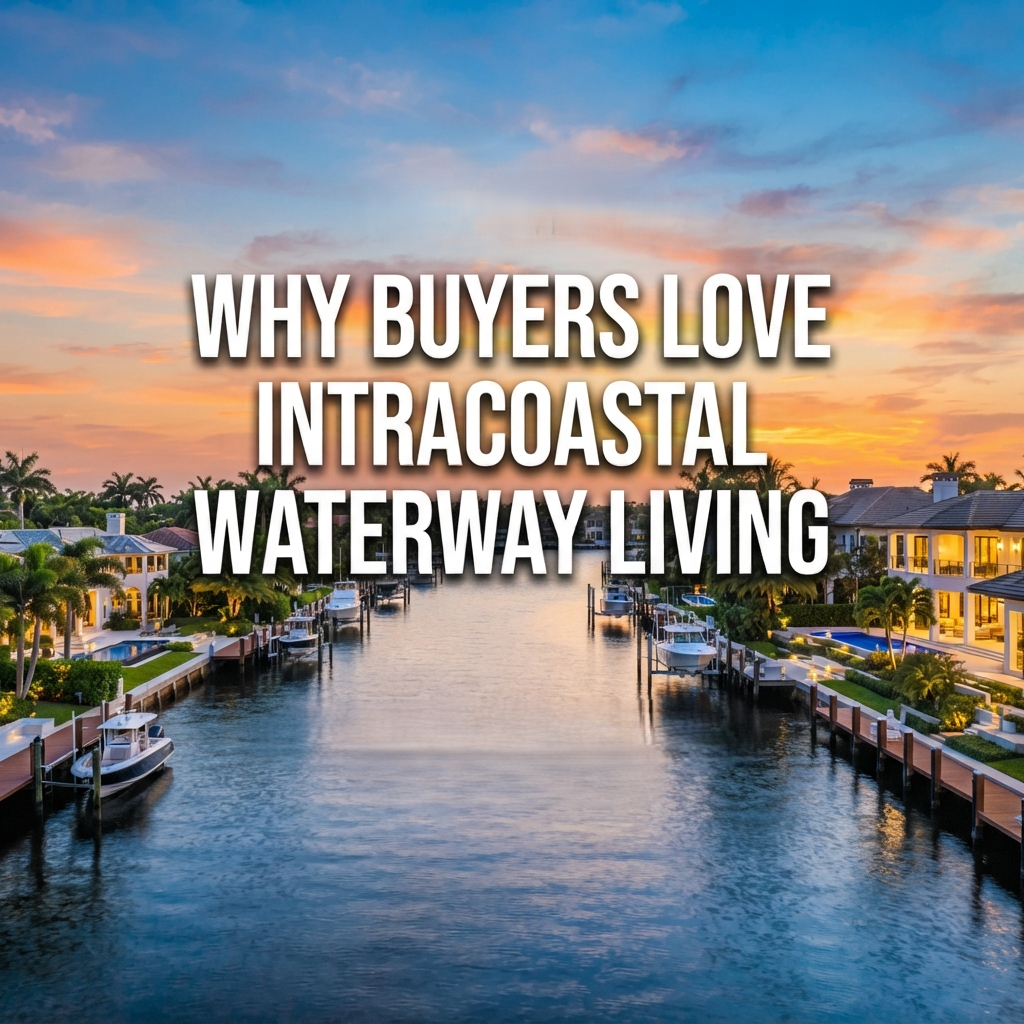
What that means for real estate: an Intracoastal-fronting home offers three things no other frontage type offers together — a private dock capability, protected boating access, and a view that's constantly changing. Oceanfront gives you the ocean but no dock. Riverfront on the Waccamaw gives you a beautiful view but limited navigation range. Lake and pond frontage in planned communities gives you calm water but no real boating.
The Intracoastal is the working middle ground, and buyers who want to actually use their water frontage keep coming back to it.
Where the Waterway Frontage Actually Sits
The main pockets of Intracoastal-fronting real estate in our market:
Little River. The Little River real estate corridor includes some of the most active marina communities on the ICW — Coquina Harbour, Carolina Yacht Landing, Cypress Bay, and the Cricket Cove Marina area. These are working boater communities where the waterway is genuinely used.
North Myrtle Beach. The North Myrtle Beach real estate market includes single-family homes fronting the ICW as well as condos in developments like Barefoot Resort that front the water. These properties often combine ICW access with reasonable proximity to the ocean.
Waterway Palms and Carolina Forest area. Waterway Palms is one of the notable ICW-fronting communities in the Carolina Forest area, with homes that back to the water and community boat storage.
Grande Dunes and the Myrtle Beach corridor. The ICW runs through the middle of Myrtle Beach city limits, and the Grande Dunes properties along the water are some of the higher-end ICW offerings.
Murrells Inlet and south. As the ICW moves south past Murrells Inlet toward Georgetown, the water widens and the character shifts more toward marsh-side homes.
The Boat Question
Most buyers who go for Intracoastal frontage want to keep a boat there. The specifics matter more than buyers expect:
Dock permitting. New docks require permits from SCDHEC and the Army Corps of Engineers. The process can take six months to a year and isn't guaranteed. A home that already has a permitted dock conveys real value.
Water depth at low tide. This is the piece that surprises first-time waterfront buyers most. Some ICW frontage is deep enough for a serious powerboat at all tides. Some frontage requires waiting for the tide or moving to a deeper mooring. Boat size and draft matter.
Fixed vs. floating docks. Fixed docks are simpler but the boat sits at different heights relative to the deck depending on the tide. Floating docks move with the water and are usually preferred for regular boat use.
Boat lifts. For owners keeping boats permanently at the property, a boat lift extends the boat's life and reduces maintenance. Adds $20,000-$50,000 depending on capacity, but often pays back in resale value.
Boat access from the property. Some ICW properties have direct water access from the yard. Some require walking to a community dock. This is a real quality-of-life factor for daily boaters.
What ICW Frontage Actually Costs
Realistic price bands right now:
Condos in ICW-fronting buildings with marina access: $250,000 to $600,000 depending on view, floor, bedroom count, and building quality.
Single-family homes on ICW with private docks in mid-tier locations (Little River, some North Myrtle Beach): $650,000 to $1.2 million.
Higher-end ICW frontage in Grande Dunes, Barefoot, or premium North Myrtle Beach pockets: $1.2 million to $3 million+, with the ceiling depending on lot, home quality, and dock/boathouse infrastructure.
The premium over comparable non-waterway inventory is real — typically 50 to 100 percent per square foot for the water frontage itself.
Insurance and Flood Zone Realities
ICW-fronting homes typically sit in AE flood zones and require flood insurance. Wind and hail policies apply. The combined insurance premium on a $1 million ICW home commonly runs $6,000 to $12,000 per year, with substantial variation based on elevation, construction, and specific flood zone assignment.
Buyers who don't factor insurance into the carrying cost sometimes get surprised at closing. Get a real quote during the inspection period, not after. Elevation certificates matter here more than in most segments of the market.
What Buyers Underestimate About ICW Life
Two things I always warn Intracoastal buyers about:
The commercial boat traffic. The ICW is a working waterway, and commercial tugs, barges, and larger vessels travel it regularly. Wake damage to smaller docks and boats is real. Choosing a lot on a slightly wider or slower stretch of water matters if you're boat-conscious.
Storm exposure and dock damage. Hurricanes and even significant tropical storms damage docks regularly. Budget for dock repair and replacement over long-term ownership. The homes with the best dock preservation records are usually the ones with either boat lifts or dock designs that account for storm surge.
Who Actually Buys Waterway Property
The buyer mix I see is consistent:
Boaters. Serious boaters who want their boat at the house rather than at a distant marina. This is the largest group.
Retirees who love water. Many retirees choose ICW frontage specifically because the changing views and constant activity keep the retirement lifestyle interesting.
Investors targeting long-term appreciation. ICW frontage has historically appreciated at premium rates because supply is fixed and demand is steady.
Second-home buyers from inland states. Buyers from Charlotte, Atlanta, and further north who want a real water-facing second home instead of a suburban vacation property.
Two Things I Tell Every ICW Buyer
First, spend real time on the specific stretch of water. Not just from the property but actually on the water. Rent a boat, take a tour, or ride with a local. The way the ICW behaves varies significantly across even a mile stretch — traffic, wind patterns, shoreline character, wake exposure. Buyers who commit before understanding this often end up on a lot that doesn't match their actual daily use.
Second, confirm the specific dock permit status in writing before going firm. What conveys, what's grandfathered, what would need reapplication, and what the current owner has actually built out. Don't rely on verbal descriptions or listing marketing. The dock is often the single most valuable feature of an ICW property, and the paperwork on it is worth every minute of due diligence.
Key Takeaways
The Intracoastal Waterway offers a specific value proposition that other water frontage types can't match — a working navigable channel, a private dock capability, and a view that's genuinely different every day. The main ICW-fronting pockets in our market run from Little River through North Myrtle Beach, through Waterway Palms in Carolina Forest, past Grande Dunes and Myrtle Beach, and down toward Murrells Inlet. Price premiums are real — typically 50-100 percent over comparable non-waterway inventory. Boat access details (permits, water depth, dock configuration, storm exposure) matter more than buyers usually expect. Insurance and flood zone realities need to be priced during due diligence, not after. The buyers who succeed on ICW properties spend real time on the specific stretch of water before committing and treat dock permit due diligence as one of the most important checks in the whole transaction. The waterway rewards buyers who take it seriously and punishes the ones who assume it will work out.
About Greg Harrelson
Greg Harrelson is a seasoned Realtor® with more than 30 years of experience serving the Myrtle Beach and Grand Strand markets. As the founder of Century 21 The Harrelson Group, Greg has built his career helping buyers, sellers, and investors achieve success in every corner of the coastal Carolina real estate market. His expertise spans residential homes, investment properties, land development, and coastal condos. Known for his deep local knowledge, innovative marketing strategies, and commitment to personal service, Greg consistently helps clients reach their real estate goals while navigating the ever-changing market with confidence and precision.