Horry County has quietly become one of the most popular relocation destinations in the Southeast, and the reason is no longer a secret. Buyers from New York, New Jersey, Pennsylvania, Ohio, and Michigan continue to make their way to coastal South Carolina in search of better weather, lower taxes, and a slower pace of life. Whether the move is driven by retirement, remote work, or a long-overdue lifestyle change, Horry County offers a rare combination of beach access, affordability, and small-town personality that is hard to find anywhere else on the East Coast.
Why Horry County Stands Out for Relocation Buyers
Most buyers begin their search by comparing the broader Grand Strand to other coastal markets. They quickly discover that Horry County, SC offers a wide range of housing styles at price points that simply do not exist in Florida or coastal North Carolina. From tidy ranch homes in established neighborhoods to brand-new construction in master-planned communities, the variety here is one of the strongest selling points for relocation buyers.
The cost of living also plays a meaningful role. South Carolina’s property taxes are among the lowest in the country for primary residents, and the state offers significant tax breaks for retirees on Social Security and other forms of qualified income. When you combine that with no estate tax and reasonable insurance compared to many Gulf Coast markets, the math for relocation buyers tends to work in their favor.
A Coastal Lifestyle Without the Florida Price Tag
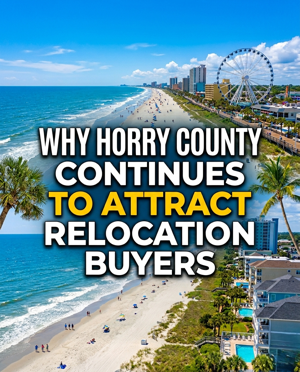
The Atlantic coast in Horry County stretches from Little River down through North Myrtle Beach, Myrtle Beach, Surfside Beach, and into Garden City. That gives buyers access to roughly 60 miles of beach without the congestion and steep pricing of Florida. Many out-of-state buyers are surprised to learn they can purchase a quality single-family home a short drive from the ocean for less than they would pay for a small condo elsewhere on the Atlantic.
Buyers who want to live closer to the action can look at Myrtle Beach for resort-style communities and oceanfront condos. Those who prefer a quieter setting often gravitate toward Little River, where boating, fishing, and a small fishing-village feel still define everyday life. Either way, the proximity to the water shapes how people spend their weekends, and that lifestyle is one of the biggest reasons buyers stay once they make the move.
Diverse Communities for Different Lifestyles
One of the things that makes Horry County so attractive to relocation buyers is that it does not feel like one big city. It feels like a collection of distinct towns that each have their own personality.
Conway for Small-Town Charm
Conway, SC sits along the Waccamaw River and offers a walkable downtown, historic homes, and a strong community feel. Families relocating with children often choose Conway because the schools, parks, and slower pace make for an easier transition. Buyers who want to be close to the beach without paying coastal prices appreciate that they can drive to the ocean in under thirty minutes.
Myrtle Beach for Coastal Living
Myrtle Beach is the heart of the Grand Strand and the most recognizable name in coastal South Carolina real estate. Relocation buyers here find everything from oceanfront condos to single-family homes in golf course communities such as Grande Dunes, Carolina Forest, and Market Common. Retirees and remote workers especially love the access to dining, healthcare, and entertainment.
North Myrtle Beach and Little River for Boaters and Retirees
North of the action, North Myrtle Beach offers beach communities such as Cherry Grove and Ocean Drive that feel more residential and less touristy. Just inland, Little River draws relocation buyers who want canal homes, marina access, or quick connections to the Intracoastal Waterway. Both areas continue to attract retirees and second-home buyers.
What Relocation Buyers Should Know Before Moving
Coastal South Carolina living comes with its own set of practical considerations. Wind and hail coverage, flood zones, and HOA fees all behave a little differently here than in inland markets up north. Buyers moving from areas without hurricanes should plan to learn about insurance early in the process, since the right coverage and the right home age can affect monthly carrying costs significantly.
A few things worth thinking through:
- Insurance: Wind, hail, and flood policies vary widely by zone and home age, and are usually separate from a standard homeowner policy near the coast.
- Home age and construction: Older homes can be wonderful but may need updates to wind-resistant materials or roofing.
- HOA and master-plan fees: Resort communities often have several layers of fees that cover amenities like pools, golf access, or beach parking.
- Property taxes: Owner-occupied homes pay a much lower assessment ratio than second homes, which is important for second-home and investment buyers to plan around.
A good local agent will walk through these factors before you fall in love with a specific home, and that early conversation can save thousands over the life of the purchase.
Strategy for Buyers Coming From Out of State
The most successful out-of-state buyers in Horry County treat the search as a two-trip process. The first trip is for orientation. Visit several towns, drive between them, see how long the commute to the beach feels, and pay attention to noise, traffic, and the seasonal rhythm. The second trip is for serious shopping, with a sharper short list and a lender already in place.
Reading market data from a distance can be misleading. Two homes a few streets apart may sit in completely different flood zones, school districts, or HOA structures. Connecting with a Horry County agent who knows the day-to-day differences between Carolina Forest, Conway, Cherry Grove, and Little River makes that distance much less of a disadvantage. Many buyers also lean on an agent for help with the buying process so that everything from financing to inspections lines up smoothly with a long-distance closing.
Key Takeaways
Horry County continues to attract relocation buyers because it delivers a rare mix of coastal lifestyle, affordable real estate, and welcoming small-town communities. South Carolina’s tax structure and lower overall cost of living give buyers from northern and midwestern states more home for their money, while the geographic variety inside the county lets each buyer match their lifestyle to a town that fits. The most important takeaway is that planning ahead, understanding insurance and HOA realities, and working with a local agent who knows every corner of the Grand Strand will make a Horry County relocation feel less like a leap and more like a smart, supported move.
About Greg Harrelson
Greg Harrelson is a seasoned Realtor® with more than 30 years of experience serving the Myrtle Beach and Grand Strand markets. As the founder of Century 21 The Harrelson Group, Greg has built his career helping buyers, sellers, and investors achieve success in every corner of the coastal Carolina real estate market. His expertise spans residential homes, investment properties, land development, and coastal condos. Known for his deep local knowledge, innovative marketing strategies, and commitment to personal service, Greg consistently helps clients reach their real estate goals while navigating the ever-changing market with confidence and precision.