Little River has quietly become one of the more interesting stories on the Grand Strand. The population has climbed, new construction has picked up, restaurant options have multiplied, and the buyer inquiries I take about Little River have shifted from occasional to routine. What used to be a niche fishing town at the north edge of Horry County has grown into a real destination, and the growth pattern shows no signs of slowing. Here's what's actually driving the shift and what buyers should know about the current Little River market.
What Changed About Little River
Twenty years ago, Little River was primarily known for the marinas, the fishing charters, and the seasonal casino boats. It was a slow, small waterfront town at the end of the strand. What changed:
Highway 31 shortened the effective drive to North Myrtle Beach and Myrtle Beach dramatically. Little River is now 15-20 minutes from North Myrtle Beach and 25-30 minutes from Myrtle Beach proper.
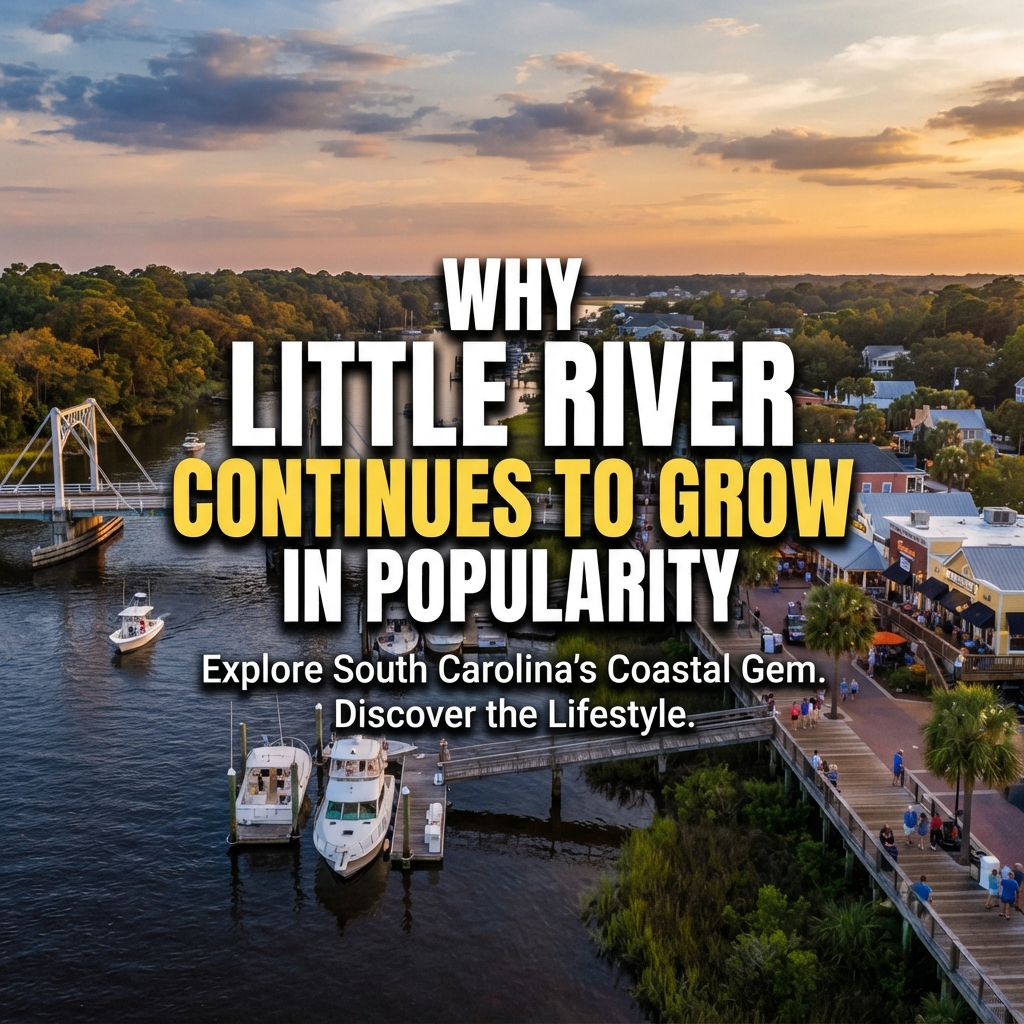
The waterfront restaurant and entertainment scene grew up. Little River Waterfront has restaurants that compete with any on the strand, and the working-town character has been preserved even as the tourism grew.
Retirees discovered the value gap. A waterfront-adjacent Little River home costs meaningfully less than a comparable North Myrtle Beach home, and the retirees who spent one season in the area often decided to stay.
Barefoot Resort expanded into a real amenity anchor for the area, pulling second-home buyers and full-time residents alike.
Insurance and flood zone math generally works out friendlier than in the immediate ocean-front pockets to the south.
Who's Actually Buying in Little River
The Little River buyer pool has broadened significantly. From what I've watched over the last five years:
Retirees from the Northeast and Midwest. This has been the largest buyer group historically and continues to be. Little River offers coastal proximity at prices that make retirement math work.
Boat owners. The Little River real estate corridor has genuine boat access via the Intracoastal Waterway, and the marina infrastructure attracts buyers whose lifestyle is centered on the water.
Second-home buyers who priced North Myrtle Beach and shifted north for the value.
Remote workers looking for water-oriented lifestyles at inland-adjacent price points.
Investors targeting long-term rental income in a growing market with steady demand.
The Marina Community Anchors
The marina communities have been central to Little River's growth story. Coquina Harbour Condos anchor the working-harbor feel. Carolina Yacht Landing offers a more polished amenity package. Cypress Bay gives buyers a more affordable entry point.
What makes the marina communities work: they attract buyers who genuinely use the water, which creates a community that reinforces itself. Full-time boaters, weekend boaters, and vacation-mode boaters all sharing docks and coffee shops and restaurants.
The Inland and Golf Course Expansion
Little River's growth hasn't been limited to the waterfront. The inland corridor has expanded with communities like Bridgewater Cottages, Big Landing, and the various country-club-adjacent developments. These offer traditional single-family homes on manageable lots at price points that compete favorably with Longs and Loris.
The Eastport golf community — including Eastport Golf Homes and Eastport Golf Condos — pulls a specific golf-focused buyer. River Hills is another golf-oriented community with a more residential feel.
The Restaurant and Retail Growth
What surprises many buyers on their first visit: Little River has grown into a real restaurant town. The Little River Waterfront restaurants compete with anything on the strand. The Highway 17 corridor has picked up chain retail and grocery options that didn't exist a decade ago. The daily-life convenience has caught up to the desirability of the location.
That said, for specialty shopping and certain services, the drive to North Myrtle Beach or Myrtle Beach is still real. Little River hasn't become urban — it's a more convenient small coastal town than it used to be.
What Little River Growth Has Not Changed
The character has held. Even with the growth, Little River has retained the working-harbor identity that made it distinct in the first place. Fishing charters still leave from the marinas. The Blue Crab Festival still happens. The Old-Timer's Festival still draws locals. The parts of town that felt like a small coastal community 20 years ago still feel like a small coastal community.
The buyers who fall in love with Little River are typically responding to that combination — real growth in convenience without the loss of character. It's a rare balance on the Grand Strand.
Price Bands in the Current Little River Market
Realistic numbers:
Condos in marina-adjacent buildings: $200,000 to $500,000 depending on view, floor, and bedroom count.
Single-family homes in inland Little River communities: $300,000 to $550,000 for most family-sized inventory.
Golf course homes at Eastport or River Hills: $400,000 to $700,000 depending on lot and home condition.
Waterfront single-family on the ICW or marina channels: $650,000 to well past $1 million for premium properties with docks.
Homes with deeded boat slips: consistently commanding premium over comparable inventory without slip access.
What Little River Buyers Should Verify
The specific items that matter here:
Flood zone and elevation, particularly for waterfront and channel-fronting properties.
Dock and slip permits — what conveys, what's transferable, what would need reapplication.
HOA rules on rentals if you're considering short-term or long-term investment use.
Boat access practicality — water depth at low tide, distance to the ICW channel, restrictions on dock size.
The commute to your daily-life destinations — Myrtle Beach International, medical care, specialty shopping.
For broader comparison, browsing North Myrtle Beach real estate alongside Little River inventory clarifies the value trade-offs quickly.
Two Things I Tell Every Buyer Considering Little River
First, spend a weekday morning at one of the marinas before you commit. Coffee at the working harbor, conversation with the dockmaster, a walk along the waterfront. The version of Little River you see there is the version you'll live with year-round, not the summer-tourist version. If it feels right at 8 a.m. on a Tuesday in October, you're a Little River buyer.
Second, if you're not a boater, be honest about whether you really want to live in a boat-culture town. Little River works best for people who at least enjoy being near boats and water even if they don't own one. Buyers who don't care about the water and are just chasing the value math sometimes find the local culture confusing.
Key Takeaways
- Little River's growth story is real and structural, driven by Highway 31 access, waterfront restaurant expansion, retiree discovery, and the Barefoot Resort anchor
- The buyer pool has broadened from primarily retirees to include boaters, second-home buyers, remote workers, and investors
- Marina communities (Coquina Harbour, Carolina Yacht Landing, Cypress Bay) remain the heart of the town's identity
- Inland and golf course communities have expanded with Eastport and River Hills as notable options
- The town has grown in convenience while preserving the working-harbor character
- Realistic price bands run from $200,000 marina condos to $1M+ waterfront single-family with docks
- Verify flood zone, dock permits, HOA rental rules, and boat access practicality before committing
- The town works best for buyers who genuinely value water-oriented lifestyles, even casual ones
About Greg Harrelson
Greg Harrelson is a seasoned Realtor® with more than 30 years of experience serving the Myrtle Beach and Grand Strand markets. As the founder of Century 21 The Harrelson Group, Greg has built his career helping buyers, sellers, and investors achieve success in every corner of the coastal Carolina real estate market. His expertise spans residential homes, investment properties, land development, and coastal condos. Known for his deep local knowledge, innovative marketing strategies, and commitment to personal service, Greg consistently helps clients reach their real estate goals while navigating the ever-changing market with confidence and precision.