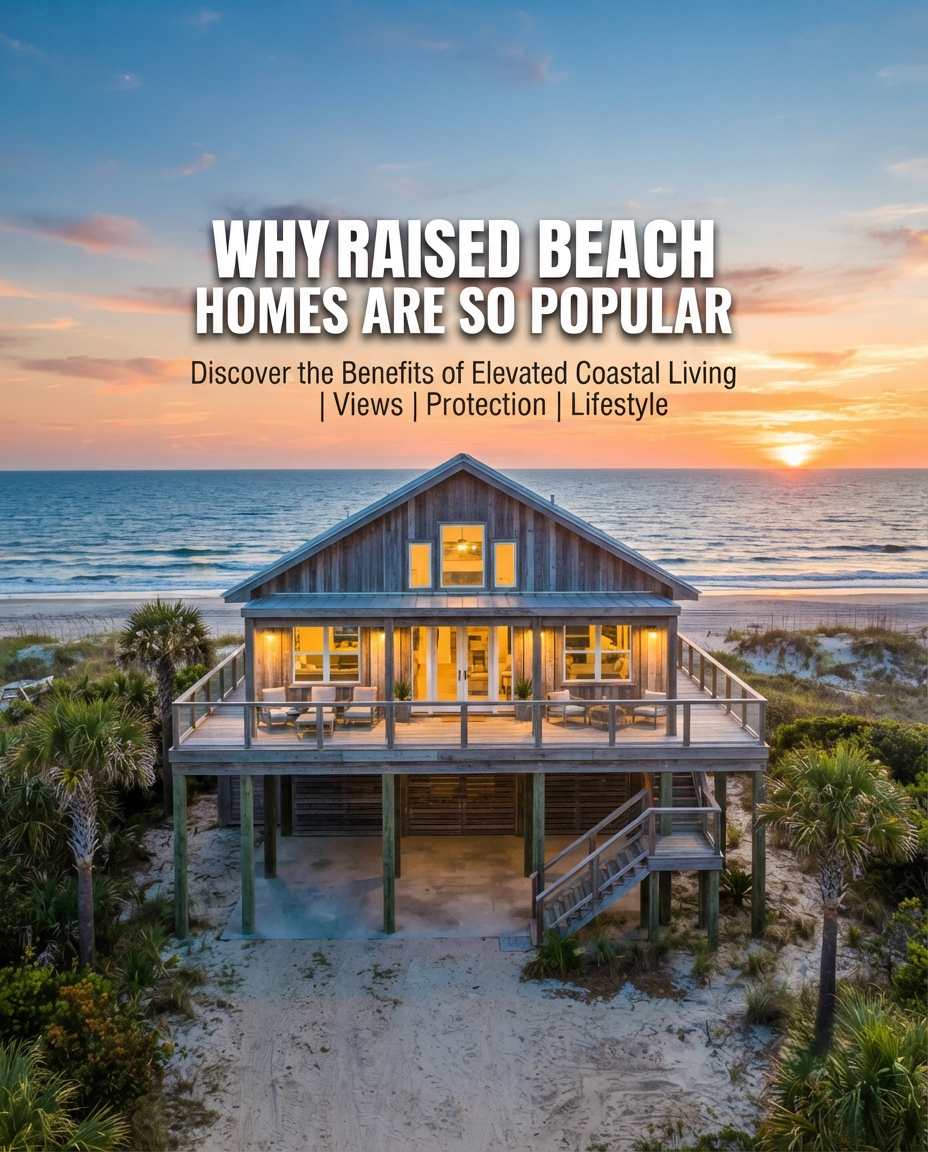
Drive Cherry Grove, Ocean Drive, Garden City, or any of the immediate beach blocks along the Grand Strand and you'll see them everywhere — homes built on tall pilings with parking and storage underneath, the living space starting 10 to 15 feet above ground level. Raised beach homes have become the dominant coastal building style for good reasons. They aren't just a stylistic choice. They're a code requirement, an insurance strategy, and a smart design response to the actual risks of coastal ownership. After thirty-plus years of selling along the Strand, I've watched raised beach homes consistently outperform their slab-built neighbors on resale, and I want to explain what actually drives that pattern and what buyers should know before choosing this style.
Why Raised Homes Exist in the First Place
The primary driver is flood zone regulation. Most coastal blocks in Cherry Grove, Ocean Drive, Garden City, and the immediate oceanfront corridor sit in AE or VE flood zones. FEMA and local building codes require new construction and substantial renovations to place the finished floor above the base flood elevation. On many oceanfront and near-oceanfront lots, that requirement pushes the finished floor 10 to 15 feet above grade — which means the structure has to sit on pilings, columns, or engineered elevated foundations.
That's how the design started. But the reasons buyers now specifically seek raised beach homes have expanded well beyond the original code requirement.
Insurance Math Favors Raised Homes
Flood insurance premiums are set based partly on the elevation of the lowest finished floor relative to the base flood elevation. A home with the finished floor 12 feet above grade in an AE zone pays a fundamentally different premium than a comparable slab home in the same zone. Sometimes the raised home's flood insurance runs 60-80 percent lower than the slab home right next door.
Over a 15-year ownership window, that premium difference can add up to $20,000 to $60,000. That math shows up in resale value as future buyers price in expected ownership costs.
Wind and hail policies also often price raised construction slightly more favorably because the elevated design typically incorporates modern engineering — better roof-to-wall connections, hurricane straps, impact-rated windows in newer builds. All of these carry insurance discounts.
The Storm Recovery Story
After Hurricane Florence in 2018 and various tropical storm events since, the local memory of which homes survived and which needed major repairs is real. Raised beach homes with proper elevation and construction consistently came through those events with less damage than slab-built comparables.
The buyers who lived through Florence — either as owners or by watching neighbors — took that lesson seriously. Raised beach homes now carry a real market premium partly because buyers recognize storm resilience as a genuine feature.
The Practical Benefits Buyers Discover After Moving In
Beyond insurance and storm resilience, raised beach homes deliver real lifestyle benefits:
The under-house parking. Two to four vehicles fit under most raised homes, protecting them from sun, salt spray, and weather. Some homes also fit boats or trailers.
Real storage. The under-house area works for beach gear, coolers, kayaks, bikes, outdoor equipment, and everything a beach household accumulates.
Elevated views. Ten to fifteen feet of elevation transforms what buyers see from the living room. Ocean views, marsh views, or just distant tree canopies all become more compelling.
Breezes. Elevated homes catch coastal air movement that ground-level homes don't. The natural cooling in spring and fall reduces electricity bills materially.
Kids and dogs have real outdoor freedom underneath the house — shaded, cooler, and protected from direct weather.
What Buyers Should Look For
Not all raised beach homes are equal. Key features to evaluate:
Piling type and condition. Pressure-treated wood pilings are common but require inspection for rot and insect damage. Concrete pilings last longer with less maintenance. Steel pilings are the most durable but least common.
Finished floor elevation. Check the elevation certificate. Higher above the base flood elevation means better insurance rates.
Enclosure details. If the ground level has an enclosed area, it needs breakaway walls that give way in flood conditions without damaging the structure above.
Access. How you get from the ground to the living level — exterior stairs, interior stairs, or an elevator. Retirees should specifically evaluate the aging-in-place implications of stair-only access.
Under-house drainage. Water needs to move through the under-house area without pooling. Look at how the ground grades and whether previous flooding shows staining or damage.
For broader context on coastal home considerations, browsing Cherry Grove real estate and North Myrtle Beach real estate inventory shows how raised beach homes actually price versus other coastal options.
The Elevator Question
An increasing share of newer raised beach homes include residential elevators. For retirees, buyers with mobility considerations, and anyone planning long-term ownership, this can be a significant feature.
What buyers should know:
Residential elevators cost $25,000 to $50,000 to install after construction, more if the home wasn't designed for one.
Maintenance runs $200-$500 annually with occasional larger repairs.
Salt air corrodes elevator components faster than inland environments — factor in higher maintenance cycles.
Homes designed with a future elevator shaft (framed but not equipped) offer a middle path.
Price Premium and Resale Value
Raised beach homes on comparable coastal lots typically command 15-30 percent premiums over slab homes right next door. On resale, that premium has held or expanded over the last decade as insurance costs on slab coastal homes have climbed and buyer awareness of the flood/wind math has grown.
The homes that hold value best combine: proper elevation, modern construction with wind mitigation features, quality piling material, exterior maintenance appropriate for salt exposure, and thoughtful outdoor space that leverages the elevated design.
What Buyers Underestimate About Raised Beach Living
Two patterns I've watched:
Groceries and daily-life items require stair navigation. Bringing home a big grocery run to a home with 15 stairs to the living level is a real daily task. Retirees and buyers with children think about this differently than young couples.
Salt air corrosion on the underside. The elevated position exposes the underside of the home to sea salt and moisture. Structural elements need inspection more frequently than ground-level homes. Budget for periodic maintenance of the underside.
Two Things I Tell Every Buyer Considering a Raised Beach Home
First, get a proper structural inspection of the pilings, connections, and underside. Standard home inspections cover a lot but sometimes give the raised construction elements a lighter review than they deserve. A specialty structural inspector's evaluation adds real due diligence for a modest cost.
Second, plan your daily life honestly. Raised beach homes require you to move up and down stairs multiple times daily. If you love the elevated views and beach lifestyle but hate stairs, either commit to installing an elevator or reconsider whether the raised design is the right choice for your household.
Key Takeaways
Raised beach homes have become the dominant coastal Grand Strand building style for structural, insurance, and lifestyle reasons that reinforce each other. FEMA flood zone regulations drive the requirement for new construction, but insurance math, storm resilience, under-house storage, elevated views, natural breezes, and improved resale value all reinforce the appeal. Buyers should evaluate piling condition and material, finished floor elevation, enclosure design, access, and salt-air maintenance history when considering specific properties. Elevators, when present, add significant value for aging-in-place ownership. Price premiums over slab construction typically run 15-30 percent and have held well through market cycles. The homes work best for buyers who value the elevated lifestyle and can accept the daily reality of stair navigation, or who commit to elevator installation from the start. For coastal Grand Strand ownership, raised beach construction is genuinely a smarter long-term bet than slab construction on flood-zone lots, and buyers who understand that math consistently outperform buyers who ignore it.
About Greg Harrelson
Greg Harrelson is a seasoned Realtor® with more than 30 years of experience serving the Myrtle Beach and Grand Strand markets. As the founder of Century 21 The Harrelson Group, Greg has built his career helping buyers, sellers, and investors achieve success in every corner of the coastal Carolina real estate market. His expertise spans residential homes, investment properties, land development, and coastal condos. Known for his deep local knowledge, innovative marketing strategies, and commitment to personal service, Greg consistently helps clients reach their real estate goals while navigating the ever-changing market with confidence and precision.