Conway, SC Real Estate News 

Century 21 McAlpine Blog

The Agents and Staff at Century 21 McAlpine love our area and one another! We hope to share some of our daily activities with you and see how we might better serve our community!


June 23, 2026

Cherry Grove Real Estate: What Buyers Should Know

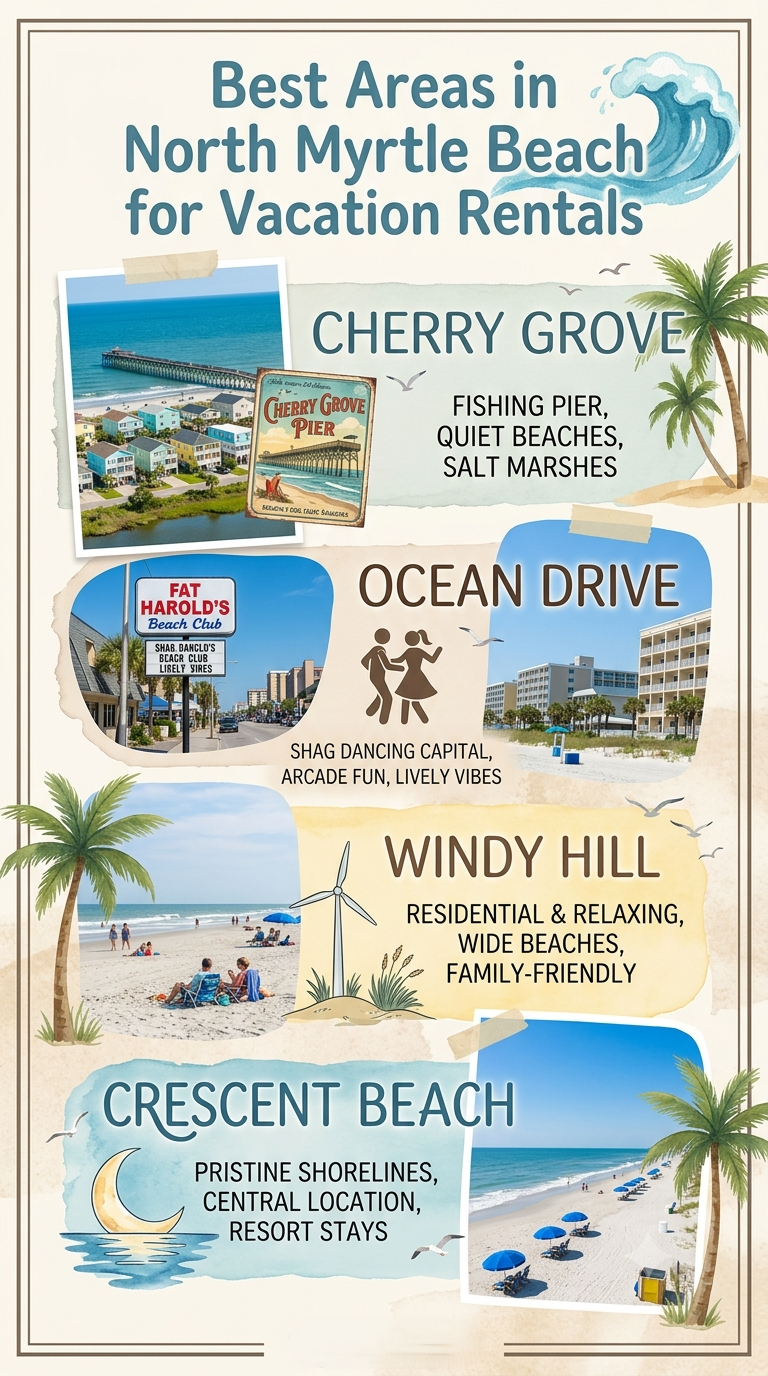
Cherry Grove sits at the north end of North Myrtle Beach, just before you cross into North Carolina, and it's one of the most distinct micro-markets along the entire Grand Strand. The canal homes, the raised beach houses, the pier, and the marsh-side lots all behave differently than the rest of the strip. After thirty-plus years writing offers along this coast, I've learned to slow down and talk through the specifics whenever a buyer mentions Cherry Grove, because what looks like a beach town on the surface has a lot of moving parts underneath. Here's what I want every buyer to understand before they shop here.

Where Cherry Grove Actually Begins and Ends

Cherry Grove runs from roughly 38th Avenue North up to the marsh at the very top of the strand. The ocean side is one piece. The intracoastal-facing channel side is another. The maze of canals in between is the part that really makes Cherry Grove different from anything south of here. Some streets are five blocks long and dead-end at a channel. Others run a quarter mile back from the beach with a different feel every block.

If you're shopping Cherry Grove real estate for the first time, drive both Sea Mountain Highway and Ocean Boulevard end to end before you commit to a section. The differences between 36th Avenue and 53rd Avenue are real, even though they're only a mile apart on the map.

The Canal Homes Are Their Own Market

The canal network on the channel side of Cherry Grove is the single feature that makes this area different from any other point on the Grand Strand. Owners with a canal-fronting lot can keep a small boat at a private dock and run out to the channel in minutes, which is a much shorter trip than what oceanfront owners get when they want to go boating.

The canal market has its own quirks worth knowing:

  • - Dock permits and bulkhead conditions vary widely from lot to lot — never assume a dock conveys without confirming the permit is current and transferable
  • - Water depth at low tide is the make-or-break detail; some canals run deep, some get too shallow at low tide for a real boat
  • - Tidal flow affects insurance, dock maintenance, and even the smell of certain channels in late summer
  • - HOA presence varies — some pockets have associations, many do not, and that affects bulkhead repair responsibility

Raised Beach Homes and Elevation Matter Here

Most of the residential Cherry Grove stock east of Sea Mountain Highway sits in AE or VE flood zones, which is why so many homes are built on tall pilings with parking and storage underneath. The raised beach style isn't aesthetic — it's a code requirement for new construction and a real value driver on resale.

Older single-story Cherry Grove cottages on slabs still exist, but they've been hit harder over the years by flooding and they carry higher insurance bills. The price difference at resale between a properly-elevated raised beach home and a comparable slab cottage on the same block can be substantial.

When you tour Cherry Grove, pay attention to the elevation of the finished floor. A house with the first floor 12 feet above grade tells a different insurance story than a house with the first floor at 5 feet.

The Vacation Rental Reality

Cherry Grove is one of the most active short-term rental markets on the Grand Strand. Plenty of buyers come specifically to buy a beach home that pays for itself through summer rental income. The market works, but the math is more nuanced than the listing photos suggest.

What I've watched consistently:

  • - Properly-positioned ocean-block homes (within 2-3 blocks of the beach) carry the strongest rental performance
  • - Canal-side homes rent well to families who bring boats or want a quieter experience
  • - Direct-oceanfront homes pull the highest gross rates but carry the highest insurance and maintenance costs
  • - Property management commissions, cleaning fees, and platform fees take 25-35% off gross rent
  • - Years with strong hurricane activity can take 4-8 weeks out of the rental calendar overnight

The buyers who do best treat rental income as a partial subsidy of ownership rather than as a true investment return. Some of mine net out positive year after year. Some break even. Some net a small loss but still benefit from appreciation. Run conservative numbers.

Cherry Grove vs. Ocean Drive: Buyers Mix Them Up

Out-of-town buyers sometimes treat Cherry Grove and Ocean Drive as one market. They aren't. Ocean Drive (south end of North Myrtle Beach) has a different vibe — golf cart culture, the SOS shag dance heritage, a tighter restaurant cluster. Cherry Grove is quieter, more family-rental focused, and less centrally walkable. Both sit inside the broader North Myrtle Beach real estate market, but the buyer pools and the price patterns aren't identical.

If you're choosing between the two, walk both during a weekday in shoulder season (April or October works best). You'll see immediately which feels like home.

Price Bands Right Now

Realistic numbers for Cherry Grove inventory as of right now:

  • - Older slab cottages a few blocks back from the ocean: $400,000 to $600,000
  • - Mid-tier raised beach homes 2-4 blocks from the ocean: $650,000 to $950,000
  • - Ocean-block raised beach homes: $1,000,000 to $1,800,000
  • - Direct oceanfront: $1,500,000 and up, with the high end exceeding $3,000,000 for newer custom builds
  • - Canal homes with permitted docks: $600,000 to $1,400,000 depending on lot, dock, and elevation

The market has held up well through the last several cycles. Cherry Grove inventory turns at a steady pace year-round.

Two Things I Tell Every Cherry Grove Buyer

First, the elevation certificate matters more than the listing photo. A raised home with a properly-documented elevation certificate carries a materially better insurance picture and a stronger resale story. Ask for the elevation certificate before you remove the inspection contingency, and if one doesn't exist, factor the survey cost into your offer.

Second, walk the block during a major rain event if you possibly can. The drainage in Cherry Grove varies street by street. Some streets clear water within an hour of a heavy storm. Some hold standing water for days. You won't see this in a sunny-day showing, but it tells you more about owning the property than almost anything else.  

Cherry Grove Real Estate: What Buyers Should Know

Key Takeaways

  • - Cherry Grove sits at the north end of North Myrtle Beach with a distinct mix of ocean-block, raised beach, and canal homes
  • - The canal network on the channel side is what makes Cherry Grove different — dock permits, water depth, and bulkhead conditions vary from lot to lot
  • - Raised beach homes carry better insurance and resale than older slab cottages on the same block
  • - Vacation rental income works if you run conservative numbers and account for 25-35% management costs plus storm-season exposure
  • - Cherry Grove and Ocean Drive feel different despite being in the same city — walk both before choosing
  • - Price bands run from $400,000 older cottages to over $3,000,000 for newer oceanfront custom builds
  • - Pull the elevation certificate and walk the block during a heavy rain before going firm

About Greg Harrelson

Greg Harrelson is a seasoned Realtor® with more than 30 years of experience serving the Myrtle Beach and Grand Strand markets. As the founder of Century 21 The Harrelson Group, Greg has built his career helping buyers, sellers, and investors achieve success in every corner of the coastal Carolina real estate market. His expertise spans residential homes, investment properties, land development, and coastal condos. Known for his deep local knowledge, innovative marketing strategies, and commitment to personal service, Greg consistently helps clients reach their real estate goals while navigating the ever-changing market with confidence and precision.

Posted in For Buyers
June 22, 2026

Why Golf Communities Remain Popular Along the Grand Strand

The Grand Strand has been a golf market since long before it was a relocation market, and that history shapes how the real estate works today. There are over 90 courses spread between Pawleys Island and Calabash, and many of them anchor neighborhoods that were designed around the fairways. Decades after the original golf boom of the 80s and 90s, these communities haven't faded the way some predicted. If anything, the buyer interest has broadened. Here's how I think about golf community real estate after thirty-plus years of selling along the Strand, and which pockets are worth a serious look right now.

Why the Buyer Pool for Golf Communities Hasn't Shrunk

A lot of national real estate writers assumed golf communities would lose appeal as younger buyers turned away from the sport. That hasn't happened on the Grand Strand, and there are specific reasons:

The amenity package isn't just golf. Modern Grand Strand golf communities have layered in clubhouses with restaurants, multiple pools, fitness facilities, pickleball, tennis, walking trails, social calendars, and gated security. A buyer who never picks up a club still uses the pool, the gym, and the dining room every week.

The lot quality is usually better than the surrounding market. Fairway lots, water-feature lots, and conservation-area lots inside golf communities offer views and buffers that non-golf subdivisions can't replicate. Even non-golfer buyers respond to the view.

The HOA covenants tend to be stricter, which protects resale values. The neighborhoods don't get visually neglected the way some open subdivisions do, because the architectural and landscaping rules are enforced.

And the resale buyer pool is broader than people think. Even if a future buyer doesn't golf, they'll value the same things current owners value: established trees, predictable maintenance, security, and a real community feel. That broad pool is what holds prices up.

Wild Wing Plantation: Conway's Anchor Golf Community

Wild Wing Plantation has been the anchor golf community on the Conway side of the market for years. The Avocet course is the centerpiece, but the lakes, the pool complex with water slides, and the clubhouse drive a lot of the amenity appeal. Inventory ranges from townhomes in the low $300s to custom waterfront builds well past $700,000. Wild Wing pulls families, retirees, and second-home buyers at the same time, which is rare for a single community and a real strength on resale.

The Long Bay Pocket on the North End

Long Bay Golf Course up near Longs has anchored a steady residential community for decades. The Park at Long Bay and The Reserve at Long Bay both pull a steady mix of full-time retirees and second-home buyers. The course itself has held up well, and the HOA in this pocket is more active than most Longs communities. Buyers either appreciate that or find it heavy, depending on temperament.

Eastport and the Little River Golf Pocket

Little River has its own golf community history. Eastport Golf Homes and Eastport Golf Condos sit on a course that's been part of the Little River market for years. The condo product gives buyers a lower-entry-price option to live inside a golf community, which works particularly well for snowbirds who don't need the full single-family footprint. River Hills is another option in this corridor with its own course and a more residential feel.

The Conway Golf Course Market More Broadly

Beyond Wild Wing, Conway has a broader collection of homes on or near courses. The Burning Ridge area, the Quail Creek pocket, and various properties around Conway Country Club all show up in the Conway golf course homes inventory. These are often smaller-community options that may not carry the full amenity package of Wild Wing but offer fairway lots and the same lifestyle at lower price points.

 Why Golf Communities Remain Popular Along the Grand Strand

What to Look At When Considering a Golf Community

Beyond the obvious "is the course nice" question, the items I push buyers to evaluate are:

The financial health of the course itself. Some Grand Strand courses are owned by the HOA. Others are owned by separate operators who lease the land or operate on independent terms. A course that's struggling financially can close, and a closed course immediately drops the surrounding home values noticeably. Ask hard questions about ownership structure and recent revenue trends before you commit.

The HOA's mandatory club membership rules. Some golf communities require all residents to pay club dues, golf or not. Others make membership optional. The required-dues model can be a real ongoing cost for non-golfers — sometimes $200 to $600 a month above the basic HOA. Make sure you know exactly what's required.

The maintenance cycle on the course infrastructure. Greens, cart paths, irrigation systems, and clubhouse buildings all wear out and need capital reinvestment. Communities that have just completed major course renovations are in a healthier position than communities about to face that bill.

The proximity to non-golf life. Buyers sometimes pick a beautiful community 30 minutes from the nearest grocery store and discover the convenience math doesn't work for full-time living. Drive the route to the places you'd actually go before deciding.

How Golf Community Values Have Held Up Through Recent Cycles

Through the 2008 downturn, the 2015 floods, the 2018 hurricane, and the 2022 rate spike, the Grand Strand golf communities held up better than most segments. Wild Wing and the Long Bay pocket in particular have shown steady appreciation over the last decade.

The communities that have struggled tend to share a few patterns: course ownership changes that introduced uncertainty, mandatory membership rules that priced out non-golfer buyers, and aging amenity packages that newer communities outclassed. The healthy communities have actively reinvested in the amenity layer to stay competitive.

For buyers comparing options against the broader market, browsing Conway real estate inventory alongside golf community listings often clarifies whether the amenity premium is worth it for that specific buyer. Some are happy paying the premium. Some realize they value the amenities less than they thought.

Two Things I Tell Every Golf Community Buyer

First, talk to a current resident before you commit. Not the listing agent. Not the community sales representative. An actual neighbor. The picture you'll get in fifteen minutes is more honest than a brochure. Ask about the HOA, the course conditions, the social calendar, and whether they'd buy again today. The answer to that last question is usually the most useful piece of information you'll find.

Second, decide honestly whether you're really a golfer or whether you just like the idea of golf. Buyers who play four times a year don't get the value out of mandatory membership communities. Buyers who play three times a week do. There's no wrong answer, but the decision changes which community fits.

Key Takeaways

Grand Strand golf communities have held their popularity through multiple market cycles because the amenity package, lot quality, HOA covenant strength, and broad resale appeal all reinforce each other. Wild Wing Plantation anchors the Conway side. The Long Bay pocket leads on the north end with The Park and The Reserve. Eastport and River Hills give Little River buyers two solid options. The broader Conway golf course home market offers fairway lots at lower price points without the full amenity package. Buyers who do best look hard at the financial health of the course, understand exactly what the HOA requires, evaluate the proximity to daily-life amenities, and talk to an actual resident before committing. The communities that have struggled are usually the ones where course ownership changed, mandatory membership priced out non-golfers, or the amenity package aged without reinvestment. The healthy ones keep performing because they keep investing.

About Greg Harrelson

Greg Harrelson is a seasoned Realtor® with more than 30 years of experience serving the Myrtle Beach and Grand Strand markets. As the founder of Century 21 The Harrelson Group, Greg has built his career helping buyers, sellers, and investors achieve success in every corner of the coastal Carolina real estate market. His expertise spans residential homes, investment properties, land development, and coastal condos. Known for his deep local knowledge, innovative marketing strategies, and commitment to personal service, Greg consistently helps clients reach their real estate goals while navigating the ever-changing market with confidence and precision.
Posted in For Buyers, Lifestyle
June 19, 2026

The Hidden Costs of Owning a Coastal Property

The price on the listing is the part buyers see first. The price of owning the home over the next ten years is the part that catches people off guard. I've sat at hundreds of closings along the Grand Strand, and the patterns I see in buyer surprise are consistent enough that I want to lay them out before anyone signs a contract. None of these costs make coastal ownership a bad idea. They just make it a more expensive idea than the listing price implies. Here's what you should be budgeting for if you're shopping anywhere from Cherry Grove down through Pawleys.

Insurance Is the Biggest One

The insurance bill on a coastal South Carolina property is typically two to four times what buyers were paying inland. The reason is structural: standard homeowner's policy, separate wind and hail coverage, flood insurance where applicable, and sometimes a separate hurricane deductible inside the wind policy.

For a $500,000 coastal single-family home, the combined annual insurance bill commonly runs $3,500 to $7,500, and that's before any rate cycles. Buyers from inland states often walk in expecting $1,500 a year. The gap funds a lot of the post-closing surprise.

A separate but related cost: deductibles on wind and hail policies are usually a percentage of dwelling coverage, not a flat dollar amount. A 2 percent deductible on a $500,000 home is $10,000 out of pocket before insurance pays anything. After a hurricane, that math matters. For deeper background, the Conway property insurance page is a useful starting point even for buyers shopping outside Conway.

Salt Air and What It Does to Houses

If you've never owned within a few miles of the ocean, the maintenance pace is the second surprise. Salt air corrodes metal at a rate that inland owners don't deal with. HVAC condensers, exterior door hardware, light fixtures, deck screws, outdoor grills, and metal roofing all wear faster than they would in Charlotte or Atlanta.

Realistic line items to budget annually for a coastal home within five miles of the ocean:

  • - $500 to $1,500 per year in incremental maintenance directly attributable to salt exposure
  • - HVAC condenser replacement every 10 to 12 years rather than 15 to 18 years
  • - Exterior paint cycle of 5 to 7 years rather than 8 to 10 years
  • - More frequent gutter cleaning because of constant tree debris and salt-driven corrosion

The Hidden Costs of Owning a Coastal Property

Property Taxes Aren't Always Friendly

South Carolina's primary-residence tax structure is genuinely advantageous — assessed at 4 percent of value. But second homes and investment properties are assessed at 6 percent, which more than doubles the property tax bill for a buyer who isn't filing for the legal residence exemption.

On a $400,000 coastal property, the annual tax difference between a primary residence and a second home commonly runs $3,000 to $5,000 per year. Buyers who plan to make the home a primary residence within a few years often miss the window to refile, and the higher bill stays in place longer than it needed to.

HOA Dues and Special Assessments

Coastal condos and many planned communities along the Grand Strand carry HOA dues. The monthly number on the listing is the easy part. The harder part is what isn't yet a line item: special assessments for roofs, balconies, dock work, pool replastering, elevator overhauls, and exterior paint cycles.

Over a typical 10-year coastal condo ownership, I've watched owners face one or two special assessments that ran $5,000 to $25,000 each. Some buildings have done their reserve work and are unlikely to hit owners with surprises. Others are sitting on aging mechanical systems and the surprise hasn't dropped yet. Reading the last three years of HOA meeting minutes and the most recent reserve study is the single best way to estimate which category your building falls into. Myrtle Beach real estate shoppers should factor this carefully when comparing condo buildings.

The Cost of Storm Preparation and Recovery

Even when a storm doesn't hit hard, the cost of preparing is real. Plywood, hurricane shutters, generator fuel, evacuation accommodations, and time off work all add up. Owners in North Myrtle Beach real estate and Cherry Grove real estate areas budget $500 to $1,500 per year on average for storm preparation and minor recovery expenses, even in calm years.

The other piece is opportunity cost. After a major storm, recovery contractors are booked out months in advance. A small repair that should take two weeks can take six months. That gap costs owners directly in rental income, indirectly in stress, and sometimes in property value if the repair is visible from the road.

Mortgage and Financing Quirks

Coastal mortgages sometimes carry quirks buyers from inland markets don't expect:

  • - Some condo buildings don't qualify for conventional financing because of HOA reserves or owner-occupancy ratios
  • - Lenders sometimes require additional reserves at closing for hurricane-prone properties
  • - Insurance escrow accounts run higher than inland buyers expect, often $500 to $800 added to the monthly payment
  • - Refinancing later may be harder if the building's HOA status changes

None of these are usually deal-breakers, but they shift the closing math and the ongoing payment math.

Utilities and Services Are Different Too

Electricity bills run higher year-round because of humidity and the need to run HVAC for moisture control even in mild weather. Trash service may be subscription-based in some neighborhoods. Internet options can be limited, particularly in older coastal blocks where infrastructure hasn't been upgraded.

Vacation rental management, if you plan to rent the property, takes another 20 to 30 percent off gross rental income. That's after platform fees, cleaning, restocking, and management commissions. Buyers who count gross rent as net income end up with a much worse return than they expected.

Two Things I Tell Every Coastal Buyer About True Cost

First, build a 10-year ownership budget before you make an offer. Take the listing price, the realistic insurance, the property tax (at primary or second-home rate), the HOA dues, the maintenance budget, and any special assessment exposure, then total it for the next ten years. The number is usually 25 to 40 percent above what buyers initially expect.

Second, ask the seller for their last three years of insurance, tax, and HOA invoices. These documents tell you exactly what the carrying cost has been. They aren't always perfect predictors of the next three years, but they're better than spreadsheet estimates.

Key Takeaways

  • - Coastal SC insurance commonly runs 2-4x what buyers paid inland, plus percentage-based deductibles on wind/hail policies
  • - Salt air shortens the life of HVAC, paint cycles, hardware, and exterior finishes by 25-30% versus inland markets
  • - South Carolina taxes primary residences at 4% but second homes at 6%; the difference on a $400,000 property can run $3,000-$5,000 per year
  • - HOA special assessments are the biggest single budget surprise for coastal condo owners; read meeting minutes and reserve studies before buying
  • - Storm preparation, recovery contractor delays, and minor weather-related expenses commonly add $500-$1,500 per year
  • - Some coastal condo buildings can't be financed conventionally; ask about HOA reserve health and owner-occupancy ratio before signing
  • - Vacation rental management typically takes 20-30% of gross rent; budget net income, not gross
  • - Build a 10-year ownership budget before making an offer; the realistic carrying cost usually runs 25-40% above buyer expectations

Frequently Asked Questions

How much should I budget annually for maintenance on a coastal home?

A common industry rule of thumb is 1 percent of home value per year, but coastal properties usually need 1.5 to 2 percent due to salt exposure and weather wear. For a $500,000 home, plan on $7,500 to $10,000 per year, with some years lower and some years much higher when systems need replacement.

Are wind and hail premiums higher for older homes?

Yes. Newer construction often qualifies for wind mitigation discounts that older homes don't. The gap can be significant — sometimes 30 to 50 percent — depending on the structure's design, roof age, and whether it has hurricane shutters or impact-rated windows.

Can I avoid the 6% second-home property tax rate?

Only by making the home your primary residence and filing for the legal residence exemption with Horry County. The home must be your actual primary residence — vehicle registrations, voter registration, and similar documents typically need to match the address.

How long does insurance typically take to process a coastal claim after a hurricane?

It depends on the storm. A major event like Hurricane Florence in 2018 saw some claims take a year or more to fully resolve because adjusters were working tens of thousands of files simultaneously. Smaller storms with localized damage typically resolve in 60 to 120 days.

What's the most underestimated cost for first-time coastal owners?

Honestly, it's the cumulative effect of all the smaller items, not any single line item. Buyers expect insurance to be expensive. They don't expect the cumulative effect of insurance plus higher property tax plus HOA dues plus salt-driven maintenance plus storm preparation to total 30 percent more than their inland carrying cost. The shock is the total, not the individual pieces.

About Greg Harrelson

Greg Harrelson is a seasoned Realtor® with more than 30 years of experience serving the Myrtle Beach and Grand Strand markets. As the founder of Century 21 The Harrelson Group, Greg has built his career helping buyers, sellers, and investors achieve success in every corner of the coastal Carolina real estate market. His expertise spans residential homes, investment properties, land development, and coastal condos. Known for his deep local knowledge, innovative marketing strategies, and commitment to personal service, Greg consistently helps clients reach their real estate goals while navigating the ever-changing market with confidence and precision.
June 18, 2026

Why Waterfront Homes Continue to Hold Their Value

Whenever the market wobbles — and over thirty years I've watched it wobble more than a few times — waterfront homes hold up better than almost anything else in our inventory. It happened after 2008. It happened after the 2015 floods. It happened through the rate spike of 2022 and 2023. The pattern is consistent enough now that I treat waterfront pricing differently when I list one. Here's what's actually driving that resilience along the Grand Strand and the Waccamaw corridor, and how I help buyers think about whether the premium is worth it.

What "Waterfront" Actually Covers in This Market

Waterfront in our market isn't one thing. The price-per-square-foot math and the buyer pool are different for each:

Oceanfront condos along the Myrtle Beach and North Myrtle Beach strip command the highest gross prices but the smallest per-foot premiums versus the inland market, because so much inventory exists at every price point. The premium for an oceanfront condo over a comparable inland condo is closer to 60 to 90 percent in most price bands.

Direct-Intracoastal homes — the homes with a private dock backing up to the Intracoastal Waterway — are the rarest single category. These pull a serious premium, often 50 to 100 percent over a comparable home one street back, and they sell in any market. Demand always exceeds supply.

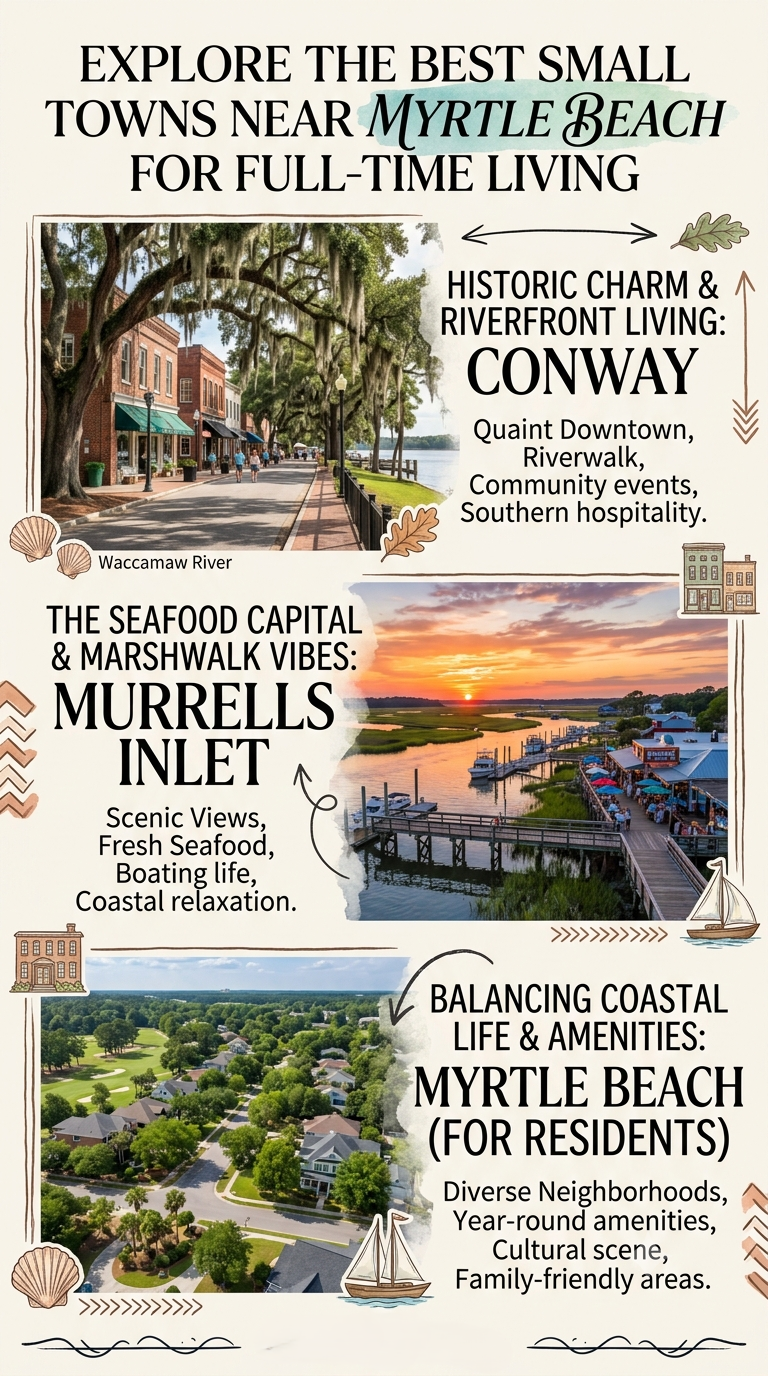
Waccamaw River and Conway riverfront homes sit in their own category. Freshwater, blackwater, cypress canopy. The buyer is different from the oceanfront buyer. Conway riverfront homes tend to attract long-term holders rather than the second-home crowd, which actually contributes to the price stability.

Marsh-front and tidal creek homes around Murrells Inlet, Pawleys, and the south end have their own dynamics. Less direct boat access in many cases but iconic views and protected wildlife frontage that keeps the lot value high.

Lake-front and pond-front homes inside planned communities are the "soft waterfront" category. They behave more like premium-lot homes than true waterfront, but they still command a meaningful premium.

Why the Value Holds Up Even in Bad Markets

A few specific dynamics drive this:

Supply is fixed. Nobody builds new oceanfront. Nobody manufactures new Intracoastal Waterway frontage. The river bank along the Waccamaw is finite. When demand softens, supply doesn't grow to meet it the way it does in inland subdivision markets, which means prices stabilize rather than collapse.

The buyer pool is broader. Waterfront homes appeal to local buyers, regional second-home buyers, investors, and out-of-state relocators all at the same time. When one of those buyer groups pulls back, the others fill the gap. That diversity insulates the market.

Cash dominates the high end. A meaningful share of waterfront transactions above $750,000 close with substantial cash down or all-cash offers. When rates spike, financed buyers pull back, but cash buyers shop harder for the same inventory. The market quiets but doesn't collapse.

Emotion is part of the math. Waterfront buyers usually aren't shopping on a spreadsheet. They've been dreaming about a particular type of home for years. That emotional commitment means they pay more, they negotiate less aggressively, and they hold longer once they own.

Why Waterfront Homes Continue to Hold Their Value

Where Waterfront Value Doesn't Always Hold

I want buyers to understand the soft spots too. Waterfront value can be hurt by:

Catastrophic storm damage that requires elevation upgrades to rebuild. After Hurricane Florence in 2018, certain low-elevation oceanfront and marsh-side homes lost real value because the cost to rebuild to current code exceeded what the rebuild could be priced at.

HOA-driven oceanfront condo buildings with deferred maintenance. A building with a fresh special assessment for a roof, balcony, or elevator project can sit at a discount for two or three years until the work is completed. Buyers shy away from in-progress projects.

Marshes and creeks where access has changed. Some tidal frontage that used to support a small boat dock now doesn't due to silt or regulation. If the boat access changes, the value follows.

Areas where insurance has become genuinely unaffordable. We're not there yet in most of Horry County, but a few specific oceanfront blocks now carry insurance bills that limit the buyer pool. When the pool shrinks, the premium compresses.

What I Look For When I Help a Buyer Choose

If a buyer is serious about waterfront, I push them toward the categories that have shown the most price stability over the last three cycles:

Direct-Intracoastal homes with a permitted, transferable dock and proper elevation. These hold value through almost any market.

Conway riverfront on the Waccamaw at proper elevation, with a known flood history. Buyers who pick these correctly often see five to seven years of compounding appreciation.

Higher-floor oceanfront condos in buildings with healthy HOA reserves and updated common elements. Premium views with low building risk are a much better hold than a corner unit with a view but a building that hasn't done its dock work.

Properties at marinas like Little River real estate communities with deeded boat slips. The slip itself adds resale value and the inventory is finite.

The Insurance Conversation Is Part of the Value Conversation

Insurance is the wild card on coastal waterfront. Wind and hail, flood, and standard homeowner's all come into play. The premium itself isn't usually a deal-breaker, but a buyer who hasn't priced it correctly before they go under contract can be surprised at closing. I tell every waterfront buyer to get a real insurance quote during the contingency period, not after. For a refresher on how coastal insurance actually works, the Conway property insurance reference is a useful read regardless of which waterfront category you're shopping.

Two Things I Tell Every Waterfront Buyer

First, buy the long-term hold, not the trade. Waterfront homes reward patient owners. The buyers who plan to hold for five to ten years almost always come out well. The buyers who plan to flip in 18 months are taking a risk that the market may or may not cooperate with their timeline.

Second, the dock or slip is its own asset. Confirm in writing that the dock or slip conveys with the property, that the permit is current, and that the rights transfer cleanly. A home with a properly-permitted dock that conveys is materially more valuable than the same home with a question mark.

Key Takeaways

Waterfront homes along the Grand Strand and the Waccamaw corridor have held their value through multiple market cycles for structural reasons: fixed supply, diverse buyer pools, cash-heavy transactions at the high end, and emotional buyer commitment. The premium varies by category — direct-Intracoastal pulls the strongest premium, oceanfront condos behave differently than oceanfront homes, and Conway riverfront has its own steady appreciation pattern. Soft spots show up in storm-damaged elevations, HOA-troubled condo buildings, and areas where insurance has begun to compress the buyer pool. The best long-term holds are properly-elevated homes with permitted docks or slips, high-floor oceanfront condos in healthy buildings, and riverfront properties with known flood histories. Insurance is part of the value math, not separate from it, and the buyers who do best treat waterfront as a long-term hold rather than a short-term trade.

About Greg Harrelson

Greg Harrelson is a seasoned Realtor® with more than 30 years of experience serving the Myrtle Beach and Grand Strand markets. As the founder of Century 21 The Harrelson Group, Greg has built his career helping buyers, sellers, and investors achieve success in every corner of the coastal Carolina real estate market. His expertise spans residential homes, investment properties, land development, and coastal condos. Known for his deep local knowledge, innovative marketing strategies, and commitment to personal service, Greg consistently helps clients reach their real estate goals while navigating the ever-changing market with confidence and precision.
Posted in For Buyers
June 17, 2026

Why Buyers Love Small-Town Living in Aynor

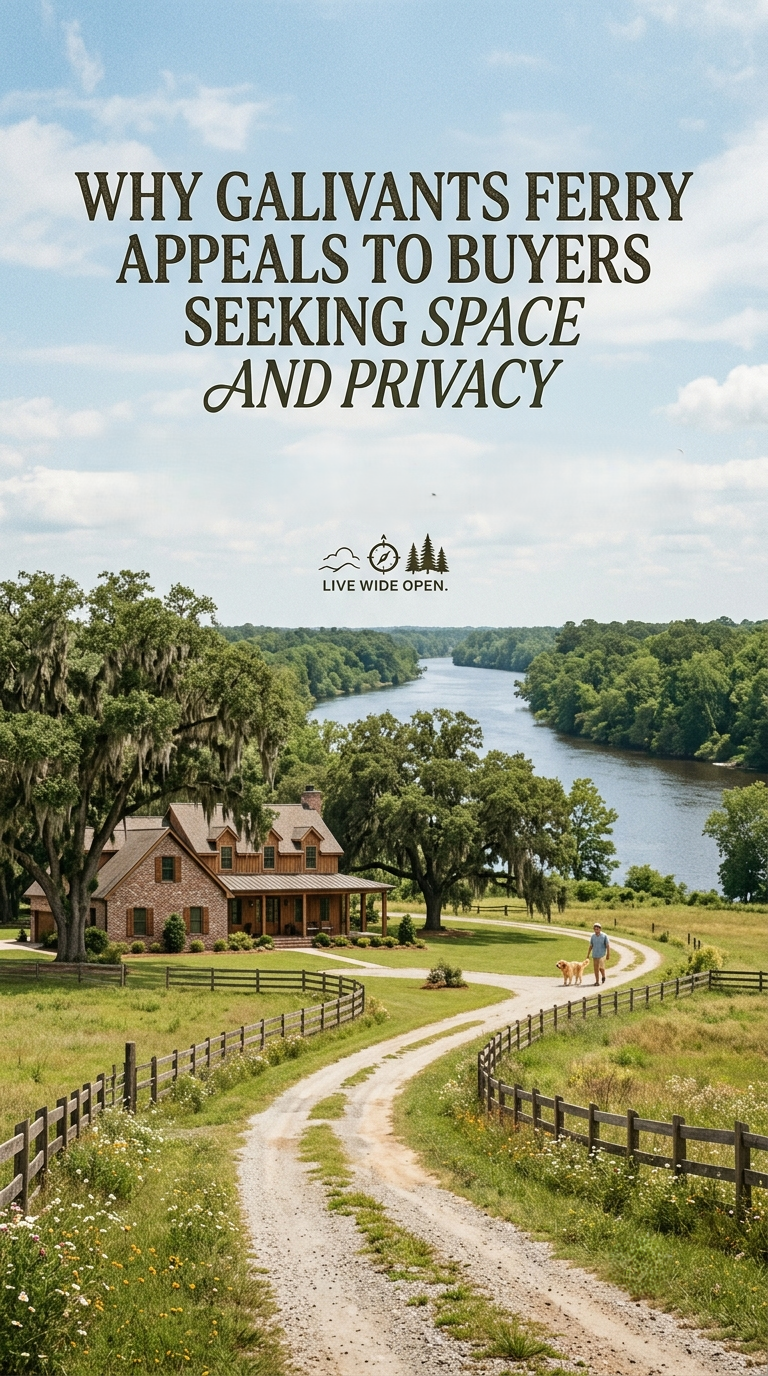
Aynor doesn't get the marketing attention Conway or Myrtle Beach gets, and the people who live in Aynor like it that way. It's a real small town in the original sense — the kind where the high school football game is the social event of the week, the same families have farmed the same land for four generations, and the speed limit through the middle of town is genuinely 35 because the kids do walk along Main Street. I've sold homes in Aynor for decades, and the buyers who fall for it are usually a specific kind of buyer. Here's what they're responding to and what the market actually looks like.

Where Aynor Sits and Why That Matters

Aynor is about 25 minutes west of Conway and 40 minutes from Myrtle Beach. Highway 501 runs through it, which gives residents a direct shot to the coast or further west toward Marion and Florence. That location is part of the appeal. You're close enough to the Grand Strand for a day at the beach, but far enough inland that the tourist economy doesn't shape your daily life. The Aynor area sits at higher elevation than Conway, which translates to fewer flood concerns and lower insurance bills than you'd find one county over.

The Aynor Harvest Hoe-Down every September is one of the better small-town festivals in this part of the state, and the volume of out-of-town traffic for one weekend is the most "city" the place ever gets. Otherwise, the rhythm of life is quiet, agricultural, and unmistakably rural.

The Aynor School Identity

This is the piece that brings families to Aynor specifically rather than just "rural Horry County." Aynor High School has a long-standing reputation that draws families who want the small-school experience. Class sizes are smaller. Teachers know their students. Athletic programs punch above their weight class for a school of that size. I've had multiple families tell me they bought in Aynor specifically because they didn't want their kids to be one of 2,000 students in a large suburban high school.

The catch for new buyers: school attendance zones in Horry County are address-specific, not subdivision-specific. A home a mile down the wrong county road may zone into a different school. Verify the assignment by exact street address with Horry County Schools before you write an offer.

What Aynor Homes Actually Look Like

Inventory in Aynor splits roughly into three categories:

Older homes on real acreage. Brick ranches built in the 1970s and 1980s on one to ten acres of land. These are the homes that long-time Aynor families own. Price points often look surprisingly reasonable until you remember most are on well and septic. Worth every penny if the systems are healthy, but build the inspection cost into your offer.

Newer subdivision homes. Communities like Baylee Estates, Keighley Estates, King Farm Estates, and Spring Grove have brought newer construction to the Aynor market over the last decade. These offer the modern layouts and HVAC efficiency that older Aynor homes don't, while still keeping the small-town zip code.

Land. Aynor has more pure land inventory than almost any pocket in our market. Buyers can find 2, 5, 10, or 25 acres at prices that wouldn't buy a quarter-acre in Carolina Forest. A real custom build on Aynor acreage is one of the more practical paths to the home buyers actually want.

Who Actually Buys in Aynor

The buyer mix has shifted over the last five years. It used to be almost entirely local move-up buyers and families with farming or extended-family ties to the area. Now I'm seeing:

  • - Out-of-state families specifically seeking smaller schools and rural pace
  • - Remote workers who want acreage and don't need a daily commute
  • - Retirees who tried coastal living for a few years and decided the inland pace was a better fit
  • - Investors buying land for future development as growth pushes west from Conway
  • - Younger first-time buyers priced out of Conway and looking for affordability with character

The shift means competition is higher than it used to be, especially on the better-priced acreage parcels. A clean Aynor home on usable land doesn't sit long.

Why Buyers Love Small-Town Living in Aynor

What Buyers Underestimate About Aynor

The drive into Conway or Myrtle Beach is the first thing most newcomers undercount. Conway is 25 minutes on a good day. The beach is 40 to 45. That's fine if you don't need to make that trip daily, but it adds up if you're commuting in twice a week for healthcare appointments or shopping.

The internet has improved but is still spotty in pockets. Before you commit to a remote-work move, confirm the specific address gets fiber or reliable wireless. The maps don't always match reality on rural Aynor roads.

Trash service and utilities work differently than buyers from city backgrounds expect. Most homes don't have city water — they're on well — and trash is either subscription service or a county convenience center. None of this is a problem once you adjust, but the first month is a learning curve.

Two Things I Tell Every Aynor Buyer

First, drive the property to the nearest gas station, grocery store, and the kids' school. Aynor's geography fools people. Two homes that look close on a map can have very different daily-life implications based on which county road they connect to. Time the drives at school-bell hour, not at 11 a.m. on a Saturday.

Second, talk to a neighbor before you commit. Aynor is small enough that you can knock on a nearby door and have a real conversation about the area. The local knowledge you'll pick up in 15 minutes can save you serious frustration later. A long-time resident will tell you which roads flood, which neighbors keep dogs that bark at night, and which builders cut corners in the local subdivisions.

For broader Aynor market context, browse current Aynor real estate inventory to get a feel for active price points and home styles in your target band.

Key Takeaways

  • - Aynor sits about 25 minutes west of Conway and 40 minutes from Myrtle Beach, with higher elevation and friendlier insurance than coastal pockets
  • - The Aynor school identity drives a meaningful share of family buyer interest, but attendance zones are address-specific, not subdivision-based
  • - Inventory splits roughly into older brick ranches on acreage, newer subdivisions (Baylee Estates, Keighley Estates, King Farm Estates, Spring Grove), and pure land
  • - Buyer mix has shifted from mostly local to a real share of out-of-state families, remote workers, retirees, and investors
  • - Most Aynor homes are on well and septic — factor inspection costs and ongoing maintenance into your numbers
  • - Internet, drive times, and utility services are the three things newcomers underestimate; confirm each by exact address before closing

About Greg Harrelson

Greg Harrelson is a seasoned Realtor® with more than 30 years of experience serving the Myrtle Beach and Grand Strand markets. As the founder of Century 21 The Harrelson Group, Greg has built his career helping buyers, sellers, and investors achieve success in every corner of the coastal Carolina real estate market. His expertise spans residential homes, investment properties, land development, and coastal condos. Known for his deep local knowledge, innovative marketing strategies, and commitment to personal service, Greg consistently helps clients reach their real estate goals while navigating the ever-changing market with confidence and precision.
Posted in For Buyers
June 16, 2026

Why More Families Are Leaving Big Cities for Horry County

The relocation calls I take now don't sound the way they used to. Five or six years ago I'd hear from retirees a decade out from their last working year, calling because a friend bought in Myrtle Beach and they wanted to see what was available. Today I'm talking to families in their thirties and forties with remote jobs, school-age kids, and a real plan to move within the next twelve months. They're coming from the Northeast, the Mid-Atlantic, the Midwest, and increasingly from South Florida. The pattern is consistent enough now that I want to lay out what's driving it, what they're finding when they get here, and where they're actually landing.

Why Horry County Specifically

Buyers don't usually start by searching "Horry County, SC." They start by searching Myrtle Beach. What pulls them inland is the same thing that's pulled in-state buyers off the immediate coast for years: more land, lower property taxes, milder insurance costs, and neighborhoods that actually feel like neighborhoods. By the time these families have visited two or three times, they've usually figured out that Conway, Carolina Forest, Longs, and Aynor offer a different lifestyle than the resort strip.

South Carolina's property tax structure is part of the math too. Primary residences here are assessed at 4 percent of value, which is substantially friendlier than the property tax bills these families are leaving in New Jersey, Long Island, suburban Chicago, or northern Virginia. On a $400,000 home, the annual property tax difference between Horry County and many of those origin markets can run $4,000 to $8,000 a year. That's real money that ends up paying for kids' activities or a vacation.

What's Actually Driving the Move

The job piece is the unlock. Remote and hybrid work didn't fade after 2022 the way some people predicted. The families relocating to Horry County now are mostly in roles where 100 percent or 80 percent remote is permanent. The 20 percent in-office days, when they exist, are often a flight away rather than a daily commute. Myrtle Beach International handles the major hubs well enough that a once-or-twice-a-month commute is workable.

School-age kids matter too. Horry County Schools has invested heavily in new construction over the last decade. Buyers shopping Carolina Forest real estate almost always cite the schools as the primary draw. Families looking for smaller-town schools land in Conway real estate or further west toward Aynor real estate, where the school identity is part of the appeal.

Cost of housing is the obvious one. A 2,400 square-foot home with a yard runs roughly half of what the same house costs in the better suburbs these families are leaving. That difference, plus the tax difference, often funds the down payment and the move itself.

Where Families Are Actually Landing

From what I've watched closing after closing, the landing zones split fairly cleanly:

Carolina Forest pulls the buyers who want newer construction, predictable HOA amenities, and tighter school zone identity. The trade-off is smaller lots and a more suburban feel. For families coming from a corporate suburb, this is the most familiar landing pattern.

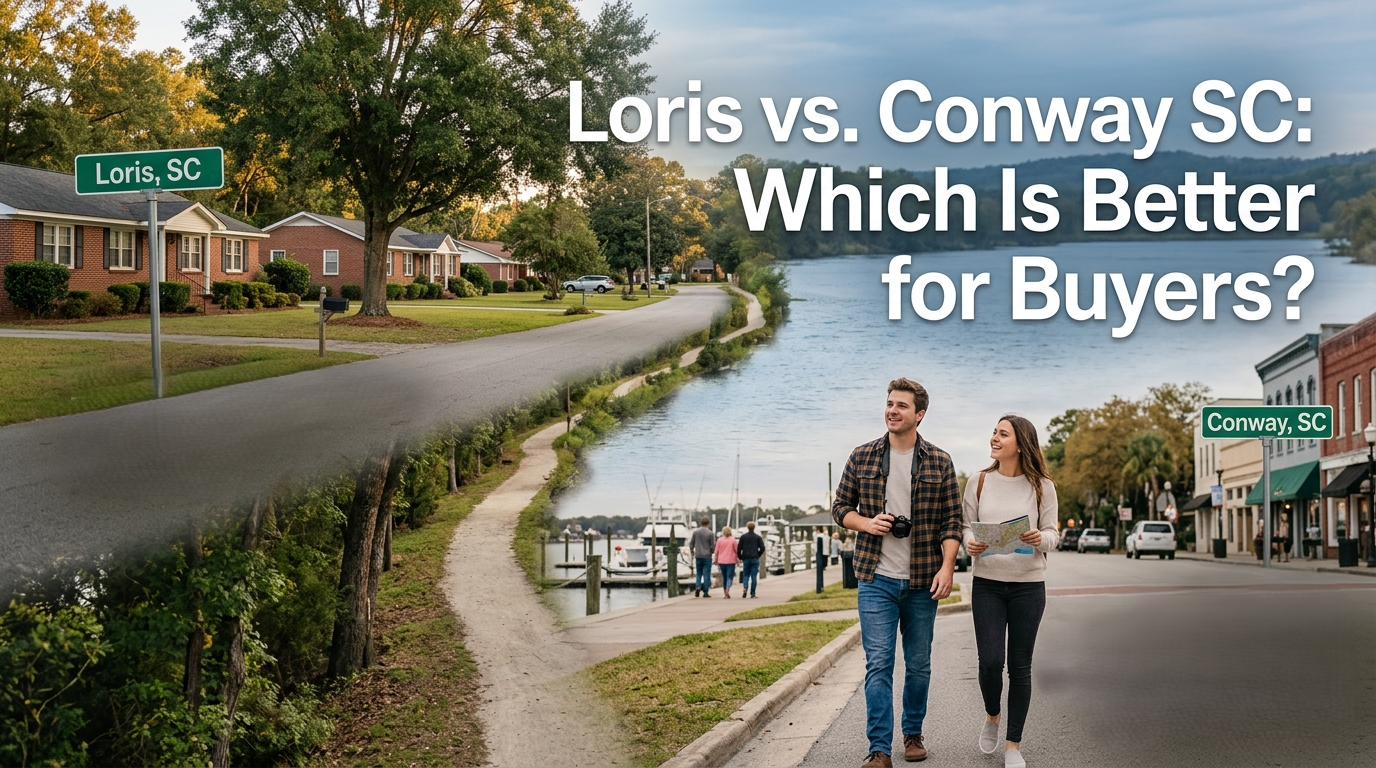
Conway pulls the buyers who want a real downtown, a historic district, more lot variety, and a slightly slower pace. CCU shapes the rhythm of the town and the buyers who land here tend to value that. Wild Wing Plantation, Carsens Ferry, and the historic streets near Main Street are the most common pockets.

Longs pulls the buyers who want new construction at a lower price point with a short drive to North Myrtle Beach. The Highway 31 connector changed the math for this area and families realized they could live in Longs real estate communities and still be at the beach in fifteen minutes.

Aynor and Loris pull the buyers who want acreage, privacy, and a school identity that hasn't been diluted by rapid growth. These buyers are usually a step further removed from city life in their origin too — they weren't living in dense urban cores, they were in semi-rural exurbs already.

Why More Families Are Leaving Big Cities for Horry County

The Trade-Offs Families Discover After They Move

I always tell families honestly: the move isn't free. The trade-offs that come up most often after closing are:

Healthcare specialists. Grand Strand Medical Center, Conway Medical Center, and McLeod Loris are all solid, but for very specialized care, families sometimes drive to Charleston or fly to Charlotte. If you have a complex medical condition in the family, factor this in before you commit.

Shopping and culture. Big-box and chain retail is everywhere along the Highway 17 and 501 corridors, but specialty retail, museum-quality cultural institutions, and certain international cuisines are limited compared to a major metro. Families adjust, but the first six months can be a shift.

The driving. Distances are short by Northeast standards but a lot longer than what some buyers expect. Conway to North Myrtle Beach is 30 minutes. Conway to the Charleston suburbs is over two hours. Plan accordingly.

Two Things I Tell Every Relocating Family

First, rent before you buy if you can. Even a three-month rental in Conway or Carolina Forest gives you the chance to learn which side of town actually fits your daily life. I've watched families buy on a single weekend visit and end up wishing they'd landed five miles in a different direction.

Second, visit in August. The Conway heat and humidity in late summer is real. The bugs are real. The tropical weather is real. If a family decides they still love it in August, they're going to love it the rest of the year. If August breaks them, better to know before closing.

For buyers in earlier stages of the research process, exploring the broader Myrtle Beach real estate map alongside the inland options is the comparison most families need to make their final landing-zone decision.

Key Takeaways

The wave of families leaving big cities for Horry County is no longer a pandemic story — it's a structural one driven by remote work, the South Carolina property tax structure, school investment, and the housing cost gap with the markets they're leaving. They're landing in four main pockets: Carolina Forest for newer construction and tight school zones, Conway for downtown character and lot variety, Longs for affordability with beach access, and Aynor or Loris for real space and rural character. The trade-offs after the move are healthcare specialists, specialty retail, and slightly longer drives than buyers expect. The families who do best rent before they buy and visit at least once in late summer. Horry County keeps absorbing this growth, but the right landing-zone fit depends on what these families actually value once the relocation excitement settles down.

About Greg Harrelson

Greg Harrelson is a seasoned Realtor® with more than 30 years of experience serving the Myrtle Beach and Grand Strand markets. As the founder of Century 21 The Harrelson Group, Greg has built his career helping buyers, sellers, and investors achieve success in every corner of the coastal Carolina real estate market. His expertise spans residential homes, investment properties, land development, and coastal condos. Known for his deep local knowledge, innovative marketing strategies, and commitment to personal service, Greg consistently helps clients reach their real estate goals while navigating the ever-changing market with confidence and precision.
June 15, 2026

When is the best time to sell a Conway, SC condo

Conway condos sell on a different calendar than Conway single-family homes, and the difference matters when you're trying to decide when to list. The buyer pool is more split: parents shopping housing for Coastal Carolina University students, snowbirds who want a low-maintenance second home, downsizing retirees, and investors looking for steady long-term tenants. Each of those buyer types has its own seasonal pattern, and a condo seller who understands all four can pick the timing that maximizes price. Here's how I help condo sellers in Conway think about it after three decades of listing in this town.

The Short Version for Conway Condo Sellers

The strongest window to list a Conway condo runs late February through early June, with a real spike in May and June driven by parents finalizing housing for CCU's fall semester. The second-best stretch is mid-September through mid-November, when snowbirds and downsizing retirees make their decisions. The slowest stretch is mid-November through January, similar to the single-family market but a few weeks longer because investors rarely close around the holidays.

The mid-summer slowdown that hits Conway single-family homes is less pronounced in the condo market because parent-buyers shopping for CCU students push real activity into June and July. That's a genuine difference worth knowing.

The CCU Effect on Condo Timing

This is the biggest single difference between Conway condos and Conway single-family homes. Parents who decide to buy a condo instead of paying student housing for four years tend to start shopping seriously in April. They want to close in June or July so their student can move in before the fall semester. That demand window pushes condo activity from May through July in a way that doesn't happen for traditional family homes.

If your Conway condo is within a 10-minute drive of campus, list in early-to-mid April to catch the bulk of this parent-buyer wave. The units that sell fastest in this window are 2- and 3-bedroom layouts under $300,000 — that's the sweet spot for the parent math.

The Snowbird and Retiree Cycle

Snowbirds who spend summers in the Northeast and Midwest start touring Conway condos in earnest from late September through November. They've already lived through one cold-weather season and decided to buy. They've spent the summer talking with their adult kids about it. By October, they're ready.

This buyer is often a strong one. They tend to be cash buyers or have substantial down payments. They've done their research. They close quickly. The downside for sellers is the pool is smaller than the spring pool, but the conversion rate from showing to offer is noticeably higher.

For condos in walkable areas — particularly the few units near downtown Conway and the Riverwalk — this fall window often outperforms spring on price per square foot. Browsing the current Conway condos for sale inventory gives you a sense of how competitive your specific price band looks heading into either window.

The Investor Buyer's Calendar

Investors shopping Conway condos run their own clock. Two windows tend to drive their activity: spring tax season, when refunds and 1031 exchange decisions kick in, and end-of-year, when investors look for a December 31 closing to pull deductions into the current tax year. The end-of-year investor window is one of the few reasons to list in late November or December despite the otherwise slow market.

Investor buyers care almost entirely about rental income, HOA dues, and rental restrictions. The best move when targeting them is to have actual rental history or comparable rent data ready in the listing package, plus a fresh copy of the HOA's rental rules. I've watched investor offers come in 5% to 8% higher than equivalent owner-occupant offers when the seller comes prepared with that information.

When is the best time to sell a Conway, SC condo

HOA Activity Affects Your Timing

One thing condo sellers underestimate: special assessments, dock or roof projects, and any HOA action that's pending can quietly kill a listing's momentum. Buyers and their lenders will pull the HOA's documents during the contingency period, and a fresh assessment dropping in the middle of escrow is a deal-breaker more often than not.

If you know your building has a vote coming on a major project, time your listing to either close before it or wait until the assessment is finalized and the dollar amount is known. Selling in the limbo between "they're talking about it" and "it's been voted on" is the worst possible spot.

Which Conway Condo Segments Move Fastest

The 2-bedroom, 2-bathroom layout in the $180,000 to $260,000 range remains the most active segment year-round. That price point hits the CCU parent buyer, the downsizing retiree, and the rental investor all at once. Three of the four buyer types are looking in this band.

Higher-end Conway condos (above $350,000) move more on the snowbird and second-home calendar than the CCU calendar. List those in October if possible.

For sellers comparing their condo to the broader market, the Conway real estate inventory gives you context on how condos are pricing relative to single-family homes in similar bands.

Two Things I Tell Every Conway Condo Seller

First, the condo HOA disclosure package is part of your listing strategy, not a closing-period afterthought. Pull the bylaws, the rental rules, the last two years of meeting minutes, the most recent reserve study, and the current dues and assessment history before you go live. Buyers who can review that package in the first 48 hours decide to write offers faster than buyers who have to wait two weeks.

Second, photograph the condo with the actual buyer in mind. A condo that targets CCU parents should show the bedrooms as bedrooms, not as workspaces. A condo that targets snowbirds should show the living space relaxed, not staged like a rental. The photo set that works for an investor (showing space and durability) is different from the photo set that works for a retiree (showing comfort and easy living). Pick your primary buyer first, then shoot for that buyer.

Key Takeaways

  • - The strongest window to list a Conway condo runs late February through early June, peaking in May-June for CCU parent buyers
  • - Mid-September through mid-November is the second-best window, dominated by snowbirds and downsizing retirees
  • - Investors run on tax-driven cycles: spring tax season and December year-end closings
  • - 2-bedroom, 2-bathroom condos in the $180k-$260k range are the most active segment year-round
  • - Higher-end condos above $350,000 follow the snowbird calendar more than the CCU calendar; October listings often work best for these
  • - HOA activity (special assessments, pending votes, dock or roof projects) can kill a listing's momentum; time around the HOA calendar, not just the market calendar
  • - Pull the full HOA document package before listing, not during escrow — buyers move faster when they can review it on day one

About Greg Harrelson

Greg Harrelson is a seasoned Realtor® with more than 30 years of experience serving the Myrtle Beach and Grand Strand markets. As the founder of Century 21 The Harrelson Group, Greg has built his career helping buyers, sellers, and investors achieve success in every corner of the coastal Carolina real estate market. His expertise spans residential homes, investment properties, land development, and coastal condos. Known for his deep local knowledge, innovative marketing strategies, and commitment to personal service, Greg consistently helps clients reach their real estate goals while navigating the ever-changing market with confidence and precision.
Posted in For Sellers
June 12, 2026

When is the best time to sell my Conway, SC home

Almost every seller I sit down with in Conway asks the same question before we talk about anything else: when should I list? It's the right question to ask, and the answer is more nuanced than the generic "spring is best" advice you'll read online. Conway's market has its own rhythm, driven by Coastal Carolina University's academic calendar, the relocation buyers coming down from the Northeast and Midwest, the snowbird cycle, and the school zones inside Horry County. After thirty-plus years of listing homes in this town, here's how I actually think about timing.

The Short Version

For most Conway single-family homes, the strongest months to list are mid-February through early May. That window captures the spring relocation buyers, the families trying to close before the next school year, and the snowbirds who've decided over the winter to make Conway their full-time home. A close second is mid-September through early November, when school-year buyers who didn't pull the trigger in spring come back to the table and out-of-state retirees finalize their move before the holidays.

The weakest stretches are late June through August (when families with kids in school have already moved or paused) and mid-November through early January (when the holidays slow everyone down). That doesn't mean don't list — sometimes there's a real reason — but it does mean expect a longer market time.

Why Conway's Spring Window Works So Well

Buyers who drove down to Conway over Thanksgiving and Christmas often spend December and January talking themselves into making the move. By February they've made the decision and are reaching out to agents. By March and April they're under contract. If your home is listed in early March, you catch this wave at exactly the right moment.

The school calendar drives a real piece of this. Families with kids want to close, move, and settle in before the new school year. Horry County schools start in August, which means closing by mid-July is the goal. Work backwards: that's a contract in May or June, which means listing in late February or March if you want to be the home they pick.

The yard works in your favor in spring too. Conway's azaleas, dogwoods, and crepe myrtles bloom March through May. Listing photos shot in late March show your property at its best, and curb appeal moves homes in this market more than people realize.

The Fall Window Most Sellers Underestimate

September through November is the second-best stretch and it's quieter, which means less competition. Snowbirds who summer in the Northeast and Midwest spend September and October making decisions for the coming winter. Retirees finalizing their relocation want to be closed and moved before the holidays. The buyers in this window are usually more decided, less price-sensitive, and faster to close.

For sellers in the historic Conway district or near downtown, fall can actually outperform spring on price per square foot. The buyers who come down in October already know they want walkable Conway. They aren't shopping fifteen properties — they're shopping three or four.

When is the best time to sell my Conway, SC home

What Actually Slows Down Summer

July and August get hot, humid, and slow. The buyers who needed to be closed before school started already are. The buyers thinking about a relocation usually wait until fall when the weather cools and their kids are settled. Showing activity drops noticeably in these months, and homes that sit on the market through August tend to require price adjustments to draw fall buyers back.

There's a Conway-specific layer here too: hurricane season. Buyers from out of state get nervous about closing during peak season (August and September). Even when nothing major is forecast, I've watched offers slow down for two weeks after every named storm in the Atlantic, regardless of whether it actually threatens us.

Which Conway Neighborhoods Buck the Pattern

Family-friendly neighborhoods like Wild Wing Plantation, Carsens Ferry, and Astoria Park follow the school-year pattern most strictly. Spring is the clear winner, with a strong fall second.

Historic Conway and the downtown-adjacent streets follow a different rhythm. Those homes pull more retirees, second-home buyers, and CCU faculty — buyers who don't have school-year pressure. Late summer and early fall actually work well in these pockets.

The no-HOA homes in Conway and rural properties off Highway 905 follow yet another pattern. Land-and-acreage buyers move year-round, and winter listings often sell because the buyer pool isn't seasonal.

Two Things I Tell Every Conway Seller About Timing

First, list a week before the comparable inventory hits the market, not the same week. If everyone in your neighborhood waits until the first week of March, you list at the end of February. Being the first fresh listing in a price band brings showings that the second and third listings have to compete for.

Second, your home only gets one shot at being a "new listing." The first two weeks on market generate the most showing activity by a wide margin, and a price adjustment three weeks in never recovers what a properly-priced launch would have captured. The right list date with the right price beats the best date with the wrong price every single time.

For sellers who want to study current comparable activity before deciding on timing, browsing the Conway real estate map gives you a feel for how many homes are sitting in your price band right now and how recently they listed.

Key Takeaways

For most Conway single-family homes, mid-February through early May is the strongest listing window, with mid-September through early November as a quieter but often higher-quality second window. The school calendar, the snowbird cycle, and the Coastal Carolina University rhythm all drive these patterns. Summer is slower, especially July and August, and the holiday window from mid-November through early January is the weakest stretch of the year. Family neighborhoods follow the school cycle most strictly. Historic downtown Conway, rural acreage, and no-HOA properties follow looser patterns and can do well outside the typical windows. The best advice I give every seller is to list a little earlier than the rest of your neighborhood, price the home correctly from day one, and treat the first two weeks on the market as the only first impression you get.

Frequently Asked Questions

How long does the average Conway home take to sell?

It depends heavily on price band and condition, but in a balanced market, well-priced Conway homes under $400,000 typically go under contract within 30 to 45 days of listing. Higher price points (above $600,000) generally take 60 to 90 days. A home that sits much longer than the local average usually has a price or condition issue, not a timing issue.

Should I list before or after I move out?

If you can list while still living in the home and keep it show-ready, that's usually preferable — occupied homes show more naturally and buyers respond better to a lived-in feel. If you're moving for work or buying out of the area first, vacant is fine, but invest in light staging and lawn care. Empty homes with neglected yards lose buyer interest fast.

Does the Coastal Carolina University academic calendar affect Conway home sales?

Yes, particularly for homes within 10 minutes of campus. Parent-buyer activity peaks May through July as families lock in housing for the fall semester. Faculty relocation activity peaks late spring. If your home appeals to either buyer pool, listing in March or April catches both.

Are summer listings really worse, or is it just slower for everyone?

Both. Showings drop in July and August, but inventory drops too, which means well-priced summer listings still sell. The difference is that mediocre listings don't get the buyer urgency they would in spring, so summer is unforgiving on overpricing.

How much does listing in spring versus winter actually change my sale price in Conway?

From the data I track, spring listings in Conway typically sell within 1% to 3% of asking price, while winter listings often close with 3% to 6% in price reductions before going under contract. The dollar difference on a $400,000 home can run $8,000 to $20,000 depending on how disciplined the pricing is.

About Greg Harrelson

Greg Harrelson is a seasoned Realtor® with more than 30 years of experience serving the Myrtle Beach and Grand Strand markets. As the founder of Century 21 The Harrelson Group, Greg has built his career helping buyers, sellers, and investors achieve success in every corner of the coastal Carolina real estate market. His expertise spans residential homes, investment properties, land development, and coastal condos. Known for his deep local knowledge, innovative marketing strategies, and commitment to personal service, Greg consistently helps clients reach their real estate goals while navigating the ever-changing market with confidence and precision.

Posted in For Sellers
June 11, 2026

Best New Construction Communities in Longs

Longs has quietly become one of the busiest new construction pockets in our entire market. Drive up Highway 9 or out Highway 905 past Loris on any weekday morning, and you'll see grading crews working three or four subdivisions inside a five-mile stretch. The Longs growth story has been building for over a decade, but the last three years have changed the inventory mix in real ways. Buyers who priced themselves out of North Myrtle Beach and Little River keep landing here. Here's how I help them sort through what's worth a look.

Why Longs Took Off in the First Place

Longs sits roughly 15 to 20 minutes inland from North Myrtle Beach, which is the sweet spot for buyers who want coastal access without the property tax bill and traffic of the immediate beach corridor. The land was cheaper than it should have been for years, which is why the national builders moved in heavy. You also get easier flood zone designations than the coastal pockets — most of Longs sits in Zone X — and that simplifies financing and insurance.

The road network finally caught up too. Highway 31 connects Longs to the south end of North Myrtle Beach in about 12 minutes once you're on it. That single road changed the math for buyers comparing Longs to communities ten miles closer to the water. 

Best New Construction Communities in Longs

Polo Farms

Polo Farms is the community I bring up first with most buyers who want a balance of newer construction, larger lots, and amenities. Lots run noticeably bigger than the typical national builder community. The price points have crept up but still tend to land in the high $300s to mid $500s for what you get. The trade-off is the drive to grocery and shopping is longer than buyers expect on the first visit.

The Park and The Reserve at Long Bay

Long Bay has been delivering homes for years and matured into one of the more recognizable golf community options on the north end. The Park at Long Bay and The Reserve at Long Bay sit next to the course and pull a steady mix of full-time retirees and second-home buyers. The HOA is more active than most Longs communities, which buyers either appreciate or find heavy depending on temperament.

Heritage Park

Heritage Park at Longs has been one of the steadier sellers for D.R. Horton-style buyers — predictable layouts, predictable pricing, decent amenity package. Inventory turns reasonably quickly and the pool is genuinely used. The community gets a lot of relocation buyers from the Northeast and Midwest who want something move-in ready without the volatility of waiting on a custom build.

Cypress Ridge and Chestnut Farms

These are two pockets I send buyers to when they want a quieter feel and a slightly older "new" — meaning homes built in the last 5 to 8 years that have settled, but still have plenty of life left. Cypress Ridge is on the more affordable side and works well for first-time buyers or downsizers. Chestnut Farms offers slightly larger floor plans for the same price band.

Newer Pockets to Watch

A few smaller communities are growing quickly enough that they're worth knowing about even if they aren't quite as established yet:

  • - Carrington Woods and Avery Woods — both filling in steadily with mid-tier single-family product
  • - Colonial Charters — a more established option that still has resale opportunity
  • - Chestnut Estates at Mesa Raven — newer subdivision worth a drive-through
  • - Pine Needle Estates — quieter pocket with a different feel
  • - Ivy Woods and Buck Creek — popular with relocation buyers wanting smaller lots and lower maintenance

For the broader picture, browse the full inventory of Longs real estate to see what's currently for sale across all of these. The market in Longs moves quicker than buyers expect on competitively-priced homes, and the active listings list updates frequently.

Two Things I Tell Every Longs New Construction Buyer

First, the lot premium is real and worth thinking through. A standard interior lot might list at base, but a corner, pond view, or wooded buffer lot can add $5,000 to $25,000. Some lots are worth the premium for resale and some aren't. Pond views, in particular, hold up well on resale; corner lots are more of a personal preference call.

Second, the design center adds up faster than buyers realize. National builders price the base home aggressively because they know the average buyer will add $20,000 to $50,000 in finishes. The buyers who finish under that average usually walk in with a clear list and stay disciplined. The buyers who pick options room by room blow through it.

Key Takeaways

  • - Longs has become one of the fastest-growing new construction pockets in Horry County, driven by Highway 31 access to North Myrtle Beach and easier flood zone designations
  • - Polo Farms, The Park at Long Bay, and The Reserve at Long Bay lead the higher-amenity options
  • - Heritage Park, Cypress Ridge, and Chestnut Farms cover the predictable mid-tier price band
  • - Newer growth pockets to watch include Carrington Woods, Avery Woods, Colonial Charters, Chestnut Estates at Mesa Raven, Pine Needle Estates, Ivy Woods, and Buck Creek
  • - Most price points land in the mid $200s to mid $500s, with amenity-heavy communities running higher
  • - Lot premiums and design center upgrades typically swing the final number more than the base price; budget accordingly

About Greg Harrelson

Greg Harrelson is a seasoned Realtor® with more than 30 years of experience serving the Myrtle Beach and Grand Strand markets. As the founder of Century 21 The Harrelson Group, Greg has built his career helping buyers, sellers, and investors achieve success in every corner of the coastal Carolina real estate market. His expertise spans residential homes, investment properties, land development, and coastal condos. Known for his deep local knowledge, innovative marketing strategies, and commitment to personal service, Greg consistently helps clients reach their real estate goals while navigating the ever-changing market with confidence and precision.

Posted in For Buyers
June 10, 2026

How Flood Zones Affect Home Values in Horry County

I've been writing offers in Horry County for more than thirty years, and the question that keeps coming up over and over is the same one: how much does this flood zone actually hurt the value? It's a fair question, because the answer changes a lot depending on the street, the elevation, the lender, and frankly, how recent the buyer's memory of Hurricane Florence happens to be. Here's how I walk people through it when they bring me a Horry County address and ask if they should be worried.

What "Flood Zone" Actually Means Here

FEMA divides Horry County into mapped flood hazard areas. The labels that matter most in our market are:

  • - Zone X — minimal flood risk. Most homes inland of the Intracoastal in places like Carolina Forest, the higher pockets of Conway, and most of Aynor sit here.
  • - Zone AE — a 1% annual chance of flooding, also called the 100-year floodplain. Comes with a base flood elevation the building has to meet or beat.
  • - Zone A — high risk, but no detailed elevation data, so insurance pricing depends more on the structure than the published number.
  • - Zone VE — coastal high hazard, where wave action is in play. Mostly tight bands along the oceanfront.
  • - Floodway — the channel itself. Very limited rebuild rights.

The Waccamaw River corridor, the Intracoastal, and the tidal stretches near Murrells Inlet and Pawleys carry the most AE and VE designations. After the 2015 floods and Florence in 2018, FEMA also updated maps in spots people didn't expect, which moved some long-standing Conway and Bucksport homes from X into AE almost overnight.

How Flood Zone Shows Up in the Sale Price

The honest answer: it depends on the buyer pool. From watching closings, here's what I see consistently:

An AE zone home in a flood-aware neighborhood usually sells for about 5% to 12% less per square foot than a comparable Zone X home one street over. The discount widens when the home is older and on a slab. It narrows when the home is on tall pilings and clearly elevated above the base flood line.

A floodway designation is a different conversation. Those homes often sell well below the surrounding market, sometimes 20% or more, because the rebuild rules make insurance, financing, and future remodels harder. A few of my investor clients specifically hunt these properties when the price drops far enough.

Coastal VE zone homes don't fit the same pattern. Oceanfront buyers usually accept the zone and price it into the deal. The view does most of the heavy lifting on value, and the insurance is a known cost. For coastal buyers shopping Myrtle Beach real estate directly on the sand, the flood line isn't usually a deal-breaker — it's just a budget item.

The Insurance Math That Drives Resale

What really sets the value impact is the annual insurance bill, not the zone label itself. Two homes on the same street can have wildly different premiums because of:

  • - First finished floor elevation relative to the base flood elevation
  • - Whether there's an enclosure or breakaway walls below
  • - The age of the structure and whether it's pre-FIRM (pre-1974 in most of Horry County)
  • - Whether the current owner has a grandfathered NFIP policy that may not transfer cleanly

That last one trips up more buyers than people realize. An owner paying $1,200 a year may sell to a buyer who immediately gets quoted $3,800 because the grandfathered rate didn't follow the property. Always pull an elevation certificate and a fresh quote before you remove the inspection contingency.

For broader insurance background that matters in this market, the Conway property insurance page is a useful reference, and your insurance agent can pull the elevation certificate from the seller or order a new one.

Specific Pockets of Horry County to Know

Conway: most of the city is Zone X, but the Waccamaw-adjacent neighborhoods carry AE designations, and Bucksport sits in mixed AE/X depending on elevation. Properties one block off the river can sit in completely different rate classes.

Carolina Forest: largely Zone X, which is one reason it has been the easier-financing pocket of the market for a decade. Some communities, including Carolina Forest-area builds near the Waterway, do touch AE on the back property line, so always pull the parcel map.

Longs and inland Loris: mostly Zone X. A few low-lying spots near tidal creeks fall into AE. If you're shopping Longs real estate, the elevation differences across a single subdivision can be a few feet, which matters more than it sounds.

North Myrtle Beach, Cherry Grove, and Garden City: mixed AE and VE depending on proximity to the dunes and inlet. Cherry Grove canal homes are a special case because of the tidal effect on insurance pricing.

Two Things I Tell Every Buyer in a Flood Zone

First, the listing agent's flood zone answer is not enough. I have my buyers pull the FEMA Map Service Center result by exact street address and request the elevation certificate before they go firm. Verbal answers from anyone, including me, are just starting points.

Second, look at what the home survived, not just what the zone says. A house that came through Florence and Matthew dry is worth more in my eyes than a house in a "safer" zone that hasn't been tested yet. Ask the neighbors. Pull the seller's disclosure twice.

How Flood Zones Affect Home Values in Horry County

Key Takeaways

  • - Flood zones in Horry County range from Zone X (minimal) to Zone VE (coastal high hazard), with AE and A being the most common designations along the Waccamaw and Intracoastal
  • - AE-zone homes typically sell at a 5% to 12% per-square-foot discount versus Zone X comparables, with the gap widening for older slab homes
  • - Floodway designations carry the steepest value impact, often 20% or more, because of rebuild and lending restrictions
  • - The real value driver is the insurance premium, not the zone label — elevation certificate, finished-floor height, and grandfathered NFIP policies all matter
  • - Conway, Bucksport, Cherry Grove, and Garden City have the most flood-zone activity; Carolina Forest, inland Longs, and Aynor are largely Zone X
  • - Always pull the FEMA map by exact street address and get a fresh insurance quote before removing the inspection contingency

Frequently Asked Questions

Do I have to buy flood insurance in Horry County?

If your home is in Zone A, AE, or VE and you have a federally-backed mortgage, flood insurance is required. In Zone X, it's optional but increasingly recommended after the 2015 and 2018 events showed how much rain falls outside the mapped floodplain.

Does a flood zone designation always lower the resale price?

Not always. Elevated newer construction on tall pilings can sell at or above comparable Zone X homes because buyers see the structure itself as proof of risk management. The hit shows up most clearly on older slab homes that haven't been elevated.

Can I appeal a flood zone designation?

Yes, through a Letter of Map Amendment or Letter of Map Revision filed with FEMA. It typically requires a surveyor's elevation certificate showing the lowest adjacent grade is above the base flood elevation. The process takes several months but can change a home's insurance picture materially.

How do I find out my exact flood zone?

Use the FEMA Map Service Center website and search by full street address. The result will tell you the zone, the panel number, and the base flood elevation if one applies. Don't rely on a community-level designation — the line between zones can run through a single block.

What is an elevation certificate and why does it matter?

It's a survey document that records the home's lowest finished floor elevation relative to the base flood elevation. Insurance carriers use it to set premiums. A favorable elevation certificate can save thousands a year in flood insurance, and a missing one usually means the carrier prices in worst-case assumptions.

About Greg Harrelson

Greg Harrelson is a seasoned Realtor® with more than 30 years of experience serving the Myrtle Beach and Grand Strand markets. As the founder of Century 21 The Harrelson Group, Greg has built his career helping buyers, sellers, and investors achieve success in every corner of the coastal Carolina real estate market. His expertise spans residential homes, investment properties, land development, and coastal condos. Known for his deep local knowledge, innovative marketing strategies, and commitment to personal service, Greg consistently helps clients reach their real estate goals while navigating the ever-changing market with confidence and precision.